

Key takeaways
- Compare the best pastry cutters for clean blending in 2026, from sturdy blade blenders to a classic wire cutter, for flakier crusts, biscuits, and scones.
As an Amazon Associate, we earn from qualifying purchases made through links on this page, which helps support our work at no extra cost to you.
A good pastry cutter does one simple job extremely well: it cuts cold fat into flour without melting it. That single step is the difference between a tough, bready crust and the tender, flaky layers everyone wants in pies, biscuits, scones, and crumb toppings. Warm fingers smear butter into the flour and ruin the texture before the dough even reaches the oven, which is why bakers have relied on this humble hand tool for generations. A pastry cutter, also sold as a dough blender or pastry blender, keeps your hands off the dough while it chops butter or shortening into pea-sized pieces that stay distinct in the mix.
The market splits into two camps: blade-style blenders with flat stainless steel blades, and wire-style cutters that use a row of curved wires. Blades power through fridge-cold butter and firm shortening with less flex, while wires glide through softer fats and delicate mixtures with a gentler touch. Handle design matters just as much, because cutting in a full batch of biscuit dough takes dozens of firm presses, and a handle that digs into your palm will slow you down fast.
Below, we explain how to choose the right style for the way you bake, then review five pastry cutters that cover the main approaches: a comfort-grip best seller, a heavy-duty workhorse, a commercial-style classic, a pie-focused specialist, and a compact everyday pick.
How to Choose a Pastry Cutter
Blades vs. wires
Blade blenders use four or five flat metal blades that slice through cold butter cleanly and hold their shape under pressure. They are the better choice for firm butter straight from the refrigerator, stiff shortening, and larger batches where you need leverage. Wire cutters use heavy-gauge wires instead of solid blades. Wires flex slightly, which makes them gentler on softer fats, lard, and crumb toppings, and many traditional bakers prefer the feel. The trade-off is that thin wires can bend if you force them through very hard, cold butter.
Blade and wire material
Look for stainless steel, which resists rust and will not react with acidic ingredients. Thicker blades with a rigid bridge between the blade row and the handle flex less, so the tool keeps cutting instead of bouncing. On wire models, heavyweight wires anchored firmly at both ends last far longer than thin wires that loosen after a few months.
Handle comfort and grip
You will press this tool down and rock it hundreds of times in a year of baking. A broad, cushioned, non-slip handle spreads pressure across your palm and is far easier on wrists than a thin wooden dowel. Wooden handles have a classic feel and suit bakers who like a traditional tool, but they need hand washing and can become slippery with floury hands. If you bake big batches or have grip issues, prioritize a soft, oversized handle with a shape that fills your palm.
Size and bowl fit
Most pastry cutters measure around four to five inches across the blade row. A medium head suits standard mixing bowls and typical pie and biscuit batches. Extra-large models cover more flour per pass and speed up double batches, but they can feel clumsy in small bowls. Check that the curve of the blades roughly matches the curve of your usual mixing bowl so the tool reaches the bottom without leaving an uncut ring of butter.
Cleaning and storage
Dishwasher-safe, all-metal or metal-and-synthetic models are the easiest to live with, because butter loves to hide between blades. Wood handles should be washed by hand and dried right away to prevent swelling and cracking. Whatever you choose, a quick rinse immediately after use keeps dough from drying into the gaps, and the tool is small enough to live in a utensil drawer.
Beyond pastry
A sturdy pastry cutter earns its drawer space with side jobs: mashing eggs for egg salad, breaking up ground meat, mashing avocados, bananas, and berries, chopping nuts, and cutting butter into crumble toppings. Heavier blade models handle these tasks best.
The Best Pastry Cutters for Clean Blending
1. OXO Good Grips Stainless Steel Dough Blender and Cutter
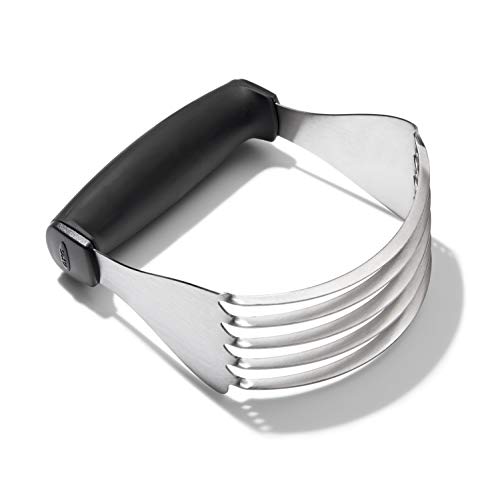
- Specs: Five stainless steel blades; broad soft non-slip handle designed to absorb pressure; dishwasher safe; model 1124200
OXO built its reputation on handles, and this dough blender shows why. The wide, cushioned grip fills your palm and absorbs the downward pressure of cutting in cold butter, so your hand does not ache halfway through a double batch of scones. The five stainless steel blades are stiff enough to slice fridge-cold butter into even, pea-sized pieces without bending, and the blade row has a gentle curve that follows the bottom of a standard mixing bowl.
In use, the OXO feels controlled rather than aggressive. It cuts quickly, but the blades are spaced so the mixture stays loose and floury instead of packing into a paste. It also moonlights well as a masher for eggs, avocados, and bananas. When you are done, it goes in the dishwasher and comes out clean, with no butter trapped along the handle joint.
Pros:
– Exceptionally comfortable, pressure-absorbing handle for long batches
– Sturdy blades that stay straight on very cold butter
– Fully dishwasher safe with no wood to maintain
Cons:
– Slightly bulky for small hands or narrow bowls
– Blades can hold dough that needs a tap on the bowl rim to release
2. Spring Chef Dough Blender, Medium, Black

- Specs: Heavy-duty stainless steel blades; soft-grip rubber handle; medium size for standard bowls; dishwasher safe
The Spring Chef dough blender is the heavy-duty option for bakers who found lighter cutters too flimsy. Its blades are noticeably thick and rigid, so the tool powers through cold butter and firm shortening without the flexing or wobbling that makes cheap blenders smear fat instead of cutting it. The rubber grip handle is shaped to sit securely in the palm, giving you the leverage to work through dense biscuit dough without your hand slipping.
This medium size hits the sweet spot for everyday baking: wide enough to cut in butter for a pie crust in a couple of minutes, small enough to maneuver in a regular mixing bowl. It doubles as a sturdy masher for potatoes, eggs, and fruit, and the all-metal-and-rubber build goes straight into the dishwasher afterward. If you bake often, this is the blender that feels overbuilt rather than delicate.
Pros:
– Extra-thick blades resist bending on the coldest butter
– Secure rubber grip gives strong leverage with less effort
– Dishwasher safe and built for frequent use
Cons:
– Medium head feels small for very large double batches
– Firm grip shape may feel wide for smaller hands
3. Norpro Deluxe Pastry Blender

- Specs: Commercial-quality stainless steel construction; rolled handle design; hand washing recommended; model 3247
Norpro takes the opposite approach to the cushioned-grip crowd: this deluxe pastry blender is an all-metal, commercial-style tool with a rolled handle and a unique blade arrangement that cuts through butter and shortening with a simple rocking motion. There is no rubber to degrade and no wood to swell, just stainless steel built to kitchen-supply standards, which is why this design has stayed in production for so many years.
The rolled handle is more comfortable than it looks, spreading pressure along your palm, and the lighter weight makes the tool easy to control for bakers who prefer finesse over force. It excels at pie dough, biscuits, and crumb toppings, and rinses clean in seconds. Norpro recommends hand washing, which takes little time given the open blade layout. Choose this one if you want a simple, durable cutter with a professional feel and no parts to wear out.
Pros:
– Commercial-grade stainless steel with nothing to crack or peel
– Lightweight and easy to control with a rocking motion
– Open design rinses clean quickly
Cons:
– Hand washing recommended rather than dishwasher cleaning
– Bare metal handle is less cushioned than soft-grip rivals
4. Kitchen Innovations Perfect Pie Dough Blender and Pastry Cutter
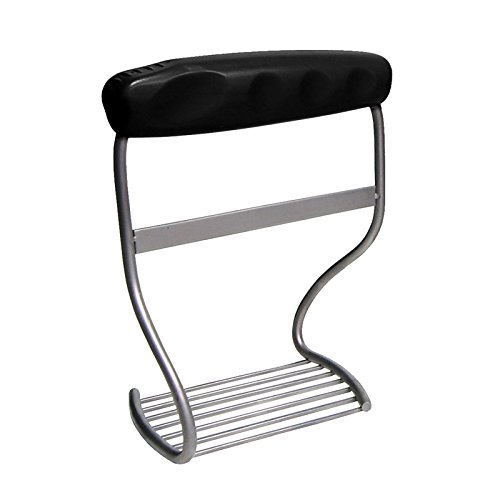
- Specs: Heavy-duty stainless steel blades; ergonomic soft-grip handle; designed for pie, pizza, and cookie doughs; model FBA_KI-100101
As the name promises, the Perfect Pie blender from Kitchen Innovations is tuned for pie bakers. Its heavy-duty stainless blades are arranged to cut butter into flour quickly and evenly, which matters for pie dough because overworking is the enemy of a flaky crust. The faster the fat reaches pea-sized pieces, the less time the butter spends warming up, and the flakier the finished crust bakes.
The ergonomic soft-grip handle keeps the tool comfortable through the short, firm strokes pie dough calls for, and the blade spacing clears flour well instead of clogging. Although it is aimed at pies, it handles pizza dough, cookie dough, biscuits, and crumb toppings with the same ease, and it works as a quick masher for soft fruits and eggs. Bakers who make pies regularly will appreciate how purpose-built it feels compared with generic cutters.
Pros:
– Fast, even cutting that protects pie dough from overworking
– Comfortable soft grip for firm, repeated strokes
– Versatile across pies, pizza, cookies, and toppings
Cons:
– Pie-focused shape is less ideal for very deep bowls
– Handle is best suited to medium and larger hands
5. ALLTOP Pastry Blender Cutter, Black

- Specs: Stainless steel blades; soft-grip handle sized for small to medium hands; dimensions 4.5 x 3.9 x 1.8 inches; weight 3.84 ounces
The ALLTOP pastry blender is the compact everyday pick, sized to fit small to medium hands comfortably and to tuck into a crowded utensil drawer. Do not let the light weight fool you: the stainless steel blades are rigid enough to cut cold butter and shortening into flour for biscuits, scones, pie crusts, and crumb toppings without bending, and the soft-grip handle keeps the tool from twisting in a floury palm.
Because it is small and easy to control, this cutter is a kind pick for new bakers learning the rocking, cut-and-lift technique, and for anyone who mostly makes single batches. It also handles the usual side jobs, mashing eggs, bananas, and avocados, and breaking up cooked ground meat. Cleanup is simple, and the modest footprint means it is always within reach rather than buried in a gadget drawer.
Pros:
– Compact size suits smaller hands and tight drawers
– Lightweight but rigid blades for single batches
– Comfortable soft grip at an everyday level of effort
Cons:
– Small head means more passes on double batches
– Less leverage than oversized heavy-duty models
FAQs
What is the difference between blade and wire pastry cutters?
Blade cutters use flat stainless steel blades that slice firmly through cold butter and stiff shortening, making them the stronger choice for most modern recipes. Wire cutters use curved wires that flex slightly, which suits softer fats, lard, and delicate crumb mixtures. If you usually bake with fridge-cold butter, choose blades; if you work with shortening and prefer a traditional feel, wires work well.
Can I use a pastry cutter for more than pie dough?
Yes. A sturdy pastry cutter mashes hard-boiled eggs, avocados, bananas, and berries, breaks up ground meat as it cooks, chops nuts, and blends crumb and streusel toppings. Blade-style models with rigid construction handle these extra jobs best, often replacing a fork, a masher, and a food processor for small tasks.
How do I keep the butter from melting while I blend?
Start with very cold butter, cut it into small cubes, and work quickly with short pressing and rocking motions rather than prolonged mixing. Some bakers chill the flour and the pastry cutter itself on hot days. Stop as soon as the fat reaches pea-sized pieces with some smaller crumbs; those distinct pieces are what create flaky layers in the oven.
Are pastry cutters dishwasher safe?
Models made entirely of stainless steel, or steel with synthetic rubber handles, are generally dishwasher safe, including most blade blenders in this guide. Cutters with wooden handles should be washed by hand and dried immediately, since soaking and dishwasher heat can swell or crack the wood and loosen the blades or wires over time.
Conclusion
The right pastry cutter comes down to the fat you use and the batches you bake. The OXO Good Grips blender is the most comfortable all-rounder for most kitchens, the Spring Chef brings heavy-duty rigidity for frequent bakers, and the Norpro Deluxe offers commercial-style simplicity that lasts. Pie specialists will like the Kitchen Innovations Perfect Pie, while the compact ALLTOP suits smaller hands and everyday single batches. Whichever you choose, cold butter, a sturdy blade row, and a handle that fits your palm will give you the clean blending and flaky results you are after.
More from Amazon
Programs that pair well with the guide above. Offers and eligibility are set by Amazon and may change.
Collect the home and kitchen items you want in one registry that guests can shop from.
Create a wedding registrySet up recurring deliveries of everyday items on eligible products. Terms and savings are set by Amazon.
Explore Subscribe & SaveFree shipping on eligible items, Prime Video and more. Eligible new members can start with a free trial.
Start a Prime free trialAudiobooks and podcasts to listen to on the go. Eligible new members can start with a free trial.
Try Audible freeAs an Amazon Associate we earn from qualifying purchases.


Write Your Review
No reviews yet. Be the first to share your experience!