

Key takeaways
- Compare five heavy tarte tatin pans for deep, even caramel and a confident flip, from enameled cast iron to nonstick steel and classic ceramic.
As an Amazon Associate, we earn from qualifying purchases made through links on this page, at no extra cost to you.
Tarte tatin asks more of a pan than almost any other dessert. The same vessel has to melt sugar into an even amber caramel on the stovetop, cradle a tight spiral of apples without scorching them, slide into a hot oven, and then survive the most nerve-testing moment in baking: the flip. A thin or flimsy pan warps under caramel heat, cooks the sugar unevenly, and flexes at exactly the moment you need a steady, confident turn. That is why heavy pans dominate this recipe. Thick cast iron, sturdy coated aluminium, and dense ceramic all hold heat steadily, so the caramel colours gradually instead of racing from pale to burnt in patches.
A dedicated tarte tatin pan is shallow, round, and built for the stovetop-to-oven journey, with short handles that stay out of the way and a profile low enough for pastry to puff above the rim. In this guide we compare five heavy pans that suit the job, from classic French enameled cast iron to a compact oven dish and a nonstick tatin mould, and explain what matters when you choose: material, diameter, handles, cooktop compatibility, and the release.
How to Choose a Tarte Tatin Pan
Start with weight and heat behaviour. Caramel is unforgiving of hot spots. A heavy base spreads heat across the whole floor of the pan, so the sugar melts at a similar pace everywhere and you can judge the colour as one even sheet. Enameled cast iron is the traditional choice because it heats slowly, holds temperature through the oven stage, and keeps the finished tart warm at the table. Coated aluminium heats faster and feels lighter, while ceramic diffuses heat gently but needs a flame-rated design for the stovetop stage.
Check the diameter against your recipe. Most classic tatin recipes are written for a pan between 20 and 26 cm. A 24 to 26 cm pan suits a tart serving six to eight, while a 20 cm dish makes a smaller, taller tart for about four. Buy too large and the caramel layer spreads thin and can overcook; too small and the apples mound above the rim and steam instead of caramelising.
Look at the handles, because the flip decides everything. Short loop handles on both sides are the safest design: they give two balanced grip points close to the pan, they fit easily in the oven, and they do not tempt you into a one-handed turn. Long single handles work, but they put torque on one wrist at the heaviest moment.
Confirm cooktop and oven compatibility. The caramel stage starts on the hob, so the pan must be rated for your cooktop. Cast iron suits every heat source including induction. Tinned copper and many coated pans exclude induction. Ceramic needs an explicit flame or induction rating from the maker. Also confirm the oven ceiling: tatin bakes hot, and coatings or linings may cap the safe temperature below what bare iron allows.
Think about the release. A glossy enamel or a sound nonstick surface lets the caramel sheet slide free as one glossy disc. Bare seasoned iron releases well once properly seasoned, but a neglected surface can grip. Shallow, slightly sloped sides help the tart leave the pan cleanly, and a short rest after baking lets the caramel set just enough to hold the apples in place.
The 5 Best Tarte Tatin Pans
1. Le Creuset Enameled Cast Iron Tatin Dish, 2 Quart, Shallot (ASIN: B0BXM32VLW)
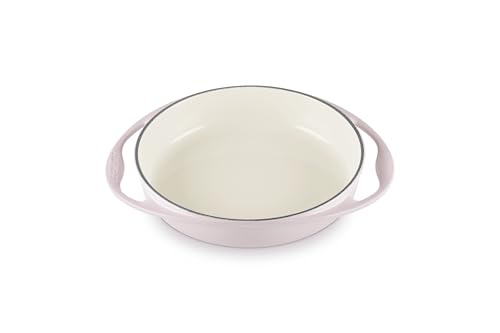
- Specs: Enameled cast iron; 2 quart capacity; about 10.2 inches across and 1.7 inches deep; inverted loop handles; suitable for all cooktops including induction; oven safe to 500 degrees F; dishwasher safe
This is the pan most bakers picture when they picture tarte tatin, and the design shows why. The dish is shallow with gently sloped sides, so a standard batch of apples sits in a single snug layer and the pastry drapes neatly over the top. The inverted handles are the clever detail: they angle upward in a way that gives your thumbs a secure purchase during the flip, yet stay compact in the oven. The enamel interior is light in colour, which matters more than it sounds, because you can watch the caramel pass from straw to amber to deep mahogany and pull the pan at the right shade. Cast iron carries the tart from hob to oven without temperature shock concerns, and the finished tart usually releases with a gentle shake. It also doubles as a roasting and serving dish for gratins and frittatas.
Pros:
– Purpose-built shallow shape with flip-friendly inverted handles
– Light enamel makes caramel colour easy to judge
– Works on every cooktop, induction included
Cons:
– Heavy in the hand when full of apples and caramel
– Enamel needs non-metal utensils to stay unmarked
2. Le Creuset Enameled Cast Iron Tarte Tatin Dish, 2 Quart, Cerise (ASIN: B00005QFN5)

- Specs: Enameled cast iron; 2 quart capacity; model L2129-2567; shallow round dish with inverted handles; about 7 pounds; oven safe to 500 degrees F; suitable for all cooktops including induction
The Cerise listing is the long-running classic version of the same heritage tatin dish, in the deep red that has defined the brand for decades. Under the colour, the formula matches what makes the design work: a thick cast iron core for slow, even caramel, a smooth enamel cooking surface that resists sticking and staining, and the signature upturned handles shaped for a two-handed inversion. If you already cook with this maker in Cerise, this is the matching tatin piece; functionally it mirrors the Shallot dish above, so choose on colour and listing.
Pros:
– The original heritage tatin dish in classic Cerise
– Even, slow caramelisation from the thick iron core
– Oven-to-table looks with easy-clean enamel
Cons:
– An older listing, so current seller options vary
– Duplicates the Shallot version if you already own it
3. Staub Round Cast Iron Oven Dish, 20 cm, Graphite Grey (ASIN: B0040Q90H4)

- Specs: Enameled cast iron; 20 cm diameter; 0.75 litre capacity; matte enamel interior; two side handles; about 1.5 kg; suitable for all hobs including induction; oven safe
Not every tatin needs to feed a crowd, and this compact Staub dish is the pick for smaller households. At 20 cm it bakes a neat tart for about four people, with the apples packed tightly enough to hold their spiral after the flip. The cast iron body behaves exactly as you want under caramel: steady heat, no warping, and strong retention that keeps the tart warm at the table. Two short handles give a balanced grip, and the low profile lets pastry crisp above the rim. One honest caveat is the dark interior enamel. It hides staining beautifully and releases food well, but it also hides the caramel itself, so you judge colour by the edges and by smell rather than by eye. Experienced tatin bakers manage this easily; first-timers may prefer a lighter interior.
Pros:
– Ideal size for smaller tarts and smaller households
– Heavy iron base gives steady, even caramel heat
– Matte enamel releases food and hides staining
Cons:
– Dark interior makes caramel colour harder to judge
– 20 cm is too small for standard large recipes
4. de Buyer Choc Ceramica Tarte Tatin Mold, 24 cm (ASIN: B00172E538)

- Specs: Thick aluminium with a ceramic-based nonstick coating; 24 cm diameter; reference 8237.24; suitable for all heat sources except induction; oven safe; dishwasher safe per maker guidance
De Buyer builds this mould for bakers whose first priority is a clean release. The thick aluminium body heats quickly and evenly, and the ceramic-based nonstick surface lets the finished tart slide out as one piece, caramel sheet intact, which makes it a reassuring first tatin pan. At 24 cm it matches the most common recipe size, and its lighter weight makes the flip noticeably less daunting than with cast iron. The trade-offs are clear. The coating excludes induction hobs, so the caramel stage needs gas, electric, or a radiant hob, and like all nonstick surfaces it rewards gentle utensils and storage without stacking unprotected. Buyers who want a coating-free pan should choose iron instead, since the surface here is a ceramic-based nonstick layer over a hard base. For everyone else, this is the low-stress route to a glossy tatin.
Pros:
– Nonstick surface gives the most forgiving release
– Lighter than cast iron, so the flip feels easier
– Classic 24 cm size matches most recipes
Cons:
– Not compatible with induction cooktops
– Coating needs gentle utensils and careful storage
5. Lodge Cast Iron Pie Pan, 9 Inch (ASIN: B0971N66PD)

- Specs: Pre-seasoned cast iron; 9 inch diameter; shallow round pan with helper handles; suitable for stovetop, oven, grill, and campfire use; seasoned with vegetable oil
This heavy pie pan is the improviser’s route to tarte tatin, and it works better than you might expect. The cast iron floor is thick enough to melt sugar evenly on the stovetop, the shallow walls hold a single layer of apples under a pastry lid, and the seasoned surface, kept in good condition, releases the tart with the caramel attached to the fruit rather than the pan. At 9 inches it sits between the compact Staub and the full-size moulds, a comfortable size for a family dessert. Because it is bare seasoned iron rather than enamel, it asks for the usual cast iron habits: dry it on the hob after washing and wipe it with a whisper of oil before storage. In return you get a pan with no coating to damage and a second life baking pies and cornbread between tatins.
Pros:
– Thick iron floor caramelises sugar evenly on the hob
– No coating or lining to damage or outgrow
– Doubles as an everyday pie and baking pan
Cons:
– Needs seasoning care that enamel pans do not
– Release depends on the seasoning being in good shape
FAQs
Can I make tarte tatin in a regular frying pan instead of a tatin pan?
Yes, provided the pan is heavy, oven safe, and has no heat-sensitive handle or coating. A cast iron skillet is the common substitute. What you give up is the shallow profile and paired handles of a dedicated pan, which make the flip more controlled.
What size tarte tatin pan should I buy first?
A pan between 24 and 26 cm suits most published recipes and serves six to eight people, so it is the safest first purchase. Choose a 20 cm dish only if you regularly bake for two to four, and scale the apples and caramel down so the fruit still packs tightly in one layer.
How do I stop the caramel from sticking when I flip the tart?
Let the baked tart rest for a few minutes so the caramel thickens slightly, run a thin knife around the edge, then flip in one confident motion onto a rimmed plate. Enamel and nonstick surfaces release most easily, while seasoned iron needs its seasoning maintained. If a few apple pieces stay behind, lift them out and patch the top while the caramel is still warm.
Does a tarte tatin pan work on an induction cooktop?
Cast iron pans, enameled or bare, work on induction because the iron itself is magnetic. Ceramic pans need an explicit induction rating from the maker, and many coated aluminium or tinned copper moulds are not induction compatible at all, so check your exact model before the caramel stage.
Conclusion
The right tarte tatin pan is the one that removes fear from the flip. For most bakers, the Le Creuset tatin dish in either colour is the complete package: purpose-built shape, flip-friendly handles, a light interior for judging caramel, and compatibility with every cooktop. The Staub 20 cm dish scales the same confidence down for smaller households, as long as you accept judging caramel in a dark pan. The de Buyer mould trades the romance of iron for the easiest release in the group, while the Lodge pie pan proves that a heavy, well-seasoned staple you may already own can turn out a fine tatin. Whichever you choose, prioritise a thick base, two secure grip points, and a diameter that matches your recipes, and the caramel will reward you.
More from Amazon
Programs that pair well with the guide above. Offers and eligibility are set by Amazon and may change.
Collect the home and kitchen items you want in one registry that guests can shop from.
Create a wedding registrySet up recurring deliveries of everyday items on eligible products. Terms and savings are set by Amazon.
Explore Subscribe & SaveFree shipping on eligible items, Prime Video and more. Eligible new members can start with a free trial.
Start a Prime free trialAudiobooks and podcasts to listen to on the go. Eligible new members can start with a free trial.
Try Audible freeAs an Amazon Associate we earn from qualifying purchases.

Write Your Review
No reviews yet. Be the first to share your experience!