

Key takeaways
- Compare the best kuih bahulu molds for golden Malaysian sponge cakes, from cast aluminum tea cake pans to classic shell and cakelet molds for home bakers.
As an Amazon Associate, we earn from qualifying purchases made through links on this page. This helps support our work at no extra cost to you.
Kuih bahulu is the little egg sponge cake that anchors festive tables across Malaysia and Singapore, baked by the dozen for Hari Raya, Chinese New Year, and afternoon tea the rest of the year. The batter could hardly be simpler, just eggs beaten with sugar until ribbon-thick, folded with flour and a whisper of vanilla, yet the mold is what turns that batter into bahulu. Traditionally the cakes are baked in heavy brass or cast metal molds over charcoal, in shapes with names of their own: bahulu cermai, the star or button shape; bahulu ikan, the little fish; and flower and shell forms that echo the cake’s Portuguese-era roots in the French madeleine.
A good mold does three jobs at once. It heats fast and evenly, because bahulu batter goes into a preheated mold and needs an immediate set to form the signature crisp, golden shell around a soft, dry crumb. It releases cleanly, because the cakes are lifted out with a skewer while hot. And it stamps a sharp pattern, because half the pleasure of bahulu is the detail pressed into its surface.
Authentic hand-cast brass molds are mostly sold through Malaysian marketplaces, so this guide focuses on the molds Amazon shoppers can actually buy that do the same work: cast aluminum tea cake and cakelet pans whose small, deep, patterned cavities behave like the brass originals, plus classic shell pans in carbon steel and tin-plated steel. Every pick below was chosen for small cavity size, strong heat conduction, and clean release.
How to Choose a Kuih Bahulu Mold
Material decides crust and release. Brass is the traditional choice because it holds fierce, steady heat and gives bahulu its deep golden crust, but it is heavy, needs seasoning, and is hard to source outside Malaysia. Cast aluminum is the closest widely available substitute: it heats quickly, browns well, and modern non-stick finishes release the delicate cakes without the repeated oiling brass demands. Carbon steel shell pans heat fast and are inexpensive, while tin-plated steel is the old-school European option, excellent for browning but in need of careful drying to prevent rust. Silicone molds release effortlessly, yet they insulate rather than conduct, so the cakes come out paler and softer than bahulu should be.
Cavity shape is the identity of the cake. Bahulu is defined by its small molded shapes, so look for pans with individual cavities roughly two to three inches across. Shell cavities give the classic scalloped bahulu that most resembles a madeleine. Mixed-shape tea cake pans, with stars, flowers, and fluted rounds on one tray, are the nearest equivalent to the assorted brass plates used at festive markets. Deep cavities matter more than wide ones, because the batter should puff into a domed cake with enough body to stay moist inside its crisp shell.
Preheating behavior separates good molds from frustrating ones. The defining technique of bahulu is filling a hot, oiled mold so the batter sizzles on contact. That means the pan must tolerate being heated empty in the oven and handled with mitts while you pipe or spoon batter quickly. Heavy cast pans hold that heat through a full tray of filling; thin pans cool as you work and the last cakes stick. Avoid any pan whose coating is not rated for the 375 to 400 degree range bahulu recipes use.
Batch size and care round out the choice. Festive baking means volume, so a pan that turns out twelve or more cakes per batch saves real time. Non-stick cast aluminum should be hand washed and never cut in, carbon steel should be dried thoroughly, and tin-plated steel benefits from a light film of oil before storage. All of the molds below reward a brush of oil and a few minutes of preheating with cakes that pop out under a skewer tip.
The 5 Best Kuih Bahulu Molds
1. Nordic Ware Bundt Tea Cakes Pan (ASIN: B087CDK43L)
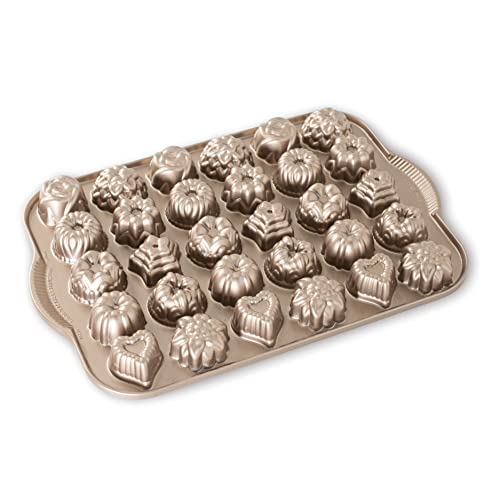
- Specs: Cast aluminum with non-stick finish; 2.5 cup total capacity; miniature Bundt-style tea cake shapes; Toffee color; 14.13 x 9.5 x 1.13 inches; model 59449AMZ.
This is the closest thing on Amazon to a traditional assorted bahulu plate. The pan casts a tray of miniature cakes in the fluted shapes of Nordic Ware’s full-size Bundt pans, and those small, deep, patterned cavities are exactly the format bahulu batter wants: lots of metal contact, sharp detail, and a size that bakes through in minutes. Cast aluminum heats evenly across the whole tray, so the cakes at the corners brown at the same rate as the ones in the center.
In practice, preheat the pan empty, brush each cavity with oil, and fill about three-quarters full. The non-stick finish releases the cakes with a skewer lift and a gentle twist, and the Toffee exterior keeps the pan looking presentable enough to carry to the table for tea. It is the best single purchase for a baker who wants festive variety from one batter.
Pros:
– Cast aluminum heats evenly, the closest behavior to traditional brass
– Assorted miniature shapes mimic market-style mixed bahulu trays
– Non-stick finish releases delicate cakes cleanly
– Generous 2.5 cup capacity for batch baking
Cons:
– Miniature Bundt shapes are a Western pattern rather than fish or star forms
– Hand washing recommended to protect the finish
2. CHEFMADE Madeleine Mold Cake Pan, 12-Cavity (ASIN: B089XYZ96P)

- Specs: Carbon steel with non-stick coating; 12 shell-shaped cavities; champagne gold finish; spherical scallop shell design.
Bahulu’s family tree runs straight through the madeleine, and this twelve-cavity shell pan bakes the shell-shaped version with real authority. CHEFMADE builds the pan from sturdy carbon steel with a smooth non-stick coating, so the scalloped ridges stamp sharply and the cakes slide out without tearing. The champagne gold finish is more than cosmetic; the mid-tone surface browns sponge batter evenly without the scorching a very dark pan can cause at bahulu temperatures.
Twelve cavities per pan keep a festive batch moving. Carbon steel heats quickly, so the pan returns to temperature fast between batches, though it also cools faster than cast aluminum while you fill it, so work briskly between loads.
Pros:
– Classic shell shape closest to bahulu’s madeleine roots
– Sharp scallop detail with clean non-stick release
– Twelve cavities per batch for festive volume
– Even browning from the champagne gold finish
Cons:
– Carbon steel cools faster than cast pans during filling
– Shell shape only, no assorted patterns
3. Fox Run Madeleine Pan, Tin-Plated Steel, 12 Molds (ASIN: B001ET5ZME)

- Specs: Tin-plated steel; 12 shell molds; model 4729; traditional European construction.
Before non-stick coatings existed, pans like this one were how shell cakes got their crust, and tin-plated steel still does something modern coatings cannot quite match: it browns sponge batter to a deep, even gold with a faintly crisp edge that is pure bahulu character. The Fox Run pan presses twelve classic shells, and the tin surface, brushed with oil and preheated, releases the cakes reliably.
This is the purist’s pick and it asks for purist habits in return. Tinplate must be dried thoroughly after washing and stored with a whisper of oil, because a damp cupboard will rust it. Treat it well and it will outlast several non-stick pans, and many bakers find the ritual of greasing a tin mold part of the pleasure of traditional baking.
Pros:
– Tin-plated steel gives deep, even browning and a crisp edge
– Traditional construction that rewards careful bakers
– Twelve classic shell molds per pan
– Durable, repairable, and free of coatings that wear out
Cons:
– Must be dried carefully and oiled before storage to prevent rust
– Release depends on thorough greasing rather than a coating
4. Nordic Ware Autumn Delights Cakelet Pan (ASIN: B01L7NJI4C)

- Specs: Cast aluminum; 2 cup total capacity; 12 cakelets in pumpkin, acorn, pine cone, and walnut shapes; Bronze finish.
Festive bahulu is all about the shape, and this cakelet pan is a shape specialist. Its twelve cavities cast little pumpkins, acorns, pine cones, and walnuts, the sort of charming molded forms that make a tray of small cakes feel like an occasion. The cast aluminum body delivers even heat, and the cavities are sized right for two-bite sponge cakes that bake quickly and release with their detail intact.
The harvest theme is admittedly an American autumn one rather than a Malaysian festive one, but the baking mechanics are identical to a patterned brass plate: preheat, oil, fill, and bake hot and fast.
Pros:
– Distinctive molded shapes give festive trays real character
– Cast aluminum for even browning across all twelve cavities
– Small cakelet size matches traditional bahulu portions
– Sturdy one-piece casting with no seams to trap batter
Cons:
– Autumn shapes suit harvest themes more than Hari Raya tables
– Smaller 2 cup capacity means more batches for large gatherings
5. Nordic Ware Evergreen Cakelets Pan (ASIN: B09B4FW619)

- Specs: Cast aluminum; 2.5 cup total capacity; petite fir tree cakelets; made for miniature decorated cakes.
The Evergreen cakelet pan turns out a grove of small fir trees, and its petite, deeply carved cavities show why cast aluminum suits molded sponge cakes. The batter fills the fine branches of each tree, the metal sets it quickly, and the finished cakes carry crisp detail that takes a dusting of powdered sugar beautifully.
With a 2.5 cup capacity it matches the batch size of the tea cakes pan at the top of this list, and the same technique applies: a hot pan, a brush of oil, and batter filled promptly so every tree bakes with the same golden base.
Pros:
– Intricate tree detail releases sharply from cast aluminum
– 2.5 cup capacity suits generous festive batches
– Even heat gives uniform color across the whole tray
– Finished cakes decorate beautifully with a simple sugar dusting
Cons:
– Tree shape is Christmas-specific rather than year-round
– Fine branch detail needs careful oiling to release perfectly
FAQs
What is the difference between kuih bahulu and madeleines?
The two cakes share a family tree, since bahulu descends from the Portuguese bolu tradition that also shaped the madeleine, but the batters differ in a way that changes the crumb. Madeleine batter is rich with butter, while bahulu uses no butter at all, relying on well-beaten eggs and sugar for structure, which gives it a lighter, drier, more sponge-like crumb with a crisp shell. That is why the same shell pan can bake both cakes yet produce noticeably different results.
Do I really need to preheat the mold before filling it?
Yes, preheating is the single most important technique in bahulu baking. A hot, oiled mold makes the batter sizzle and set the moment it lands, which builds the crisp golden crust and stops the cakes from sticking. Filling a cold mold gives pale cakes that cling to the cavities and tear when you lift them out, so heat the empty pan in the oven for ten to fifteen minutes and work quickly once it comes out.
Can I bake bahulu in a silicone mold instead of metal?
You can, and the cakes will release easily, but they will not be quite the same. Silicone insulates the batter instead of driving heat into it, so the crust stays pale and soft rather than crisp and golden, and the cakes tend to dome less evenly. If silicone is what you have, place the mold on a preheated baking sheet to add some bottom heat, and expect a gentler, more muffin-like result.
How should I store and reheat kuih bahulu after baking?
Bahulu keeps well because its crumb is naturally on the dry side. Cool the cakes completely, then store them in an airtight container at room temperature for several days, keeping them away from moisture, which softens the crust. A few minutes in a moderate oven restores the crisp shell and makes day-old bahulu taste freshly baked again, and the cakes also freeze well in a sealed bag for longer storage.
Conclusion
The right kuih bahulu mold is the one that reproduces what brass does over charcoal: fast, even heat, a hot start for the batter, and a patterned cavity that lets go of the finished cake. The Nordic Ware Bundt Tea Cakes Pan is the best all-round choice, with cast aluminum heat and miniature shapes that echo a market tray of mixed bahulu. The CHEFMADE and Fox Run shell pans serve bakers who want the classic scalloped form, one with modern non-stick ease and the other with old-school tinplate browning. The two Nordic Ware cakelet pans round out the list for festive baking where the shape is the celebration. Whichever you choose, preheat it well, oil it generously, and lift the cakes out hot, and your bahulu will come out golden and crisp-shelled.
More from Amazon
Programs that pair well with the guide above. Offers and eligibility are set by Amazon and may change.
Collect the home and kitchen items you want in one registry that guests can shop from.
Create a wedding registrySet up recurring deliveries of everyday items on eligible products. Terms and savings are set by Amazon.
Explore Subscribe & SaveFree shipping on eligible items, Prime Video and more. Eligible new members can start with a free trial.
Start a Prime free trialAudiobooks and podcasts to listen to on the go. Eligible new members can start with a free trial.
Try Audible freeAs an Amazon Associate we earn from qualifying purchases.

Write Your Review
No reviews yet. Be the first to share your experience!