
Key takeaways
- A dining set sells to whoever finds it first, and buyers find it by the words in your title. How to build a Craigslist title from seat count, material, style and size, with worked examples.
As an Amazon Associate we earn from qualifying purchases.
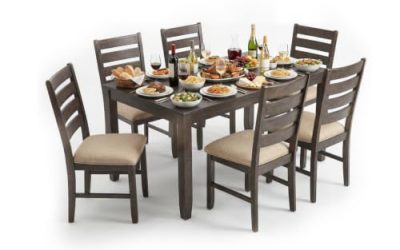
Selling a dining room set is not really a pricing problem or a photography problem. It is a matching problem. Somewhere in your city there is a buyer who wants a six-seat oak set with a leaf, or a small round table for a first apartment, and that buyer is typing those exact words into the Craigslist search box. Your title is the only part of the listing that search reads and the only line a scrolling buyer sees, so a vague title does not just undersell the set. It hides the set from the one person already looking for it.
This guide is for anyone listing a set they own: families replacing a table before a move, sellers clearing an inherited set, flippers moving a refinished piece, and anyone whose first listing sat silent for two weeks. It breaks a strong title into its four working parts, shows finished examples for the set types that come up most often, and matches title styles to common selling situations, so you can rebuild your own title in one pass.
How to Choose
Start With the Set Itself, Not a Sales Pitch
The first words of the title should say what the thing is, in the order a buyer searches for it: the furniture type, then the seat count. “Dining table with 6 chairs” tells a searcher more in five words than a full sentence of enthusiasm, because seat count is the first filter most households apply. A couple furnishing a small flat skips eight-seat sets without reading further, and a family of five does the same with four-seat ones. Words like beautiful, gorgeous, stunning and must-see spend your opening characters on claims every listing makes, and claims are not searchable. Nobody types “stunning” into the search box. Put the plain facts first and let any descriptive language earn a place later in the line, once the set has identified itself.
Name the Material and Style Buyers Search For
After the basics, the highest-value words in a dining set title are the material and the style, because those are the terms buyers use to narrow a long list of results. Solid oak, walnut, glass top, marble-look, metal frame: each one either pulls your listing into a filtered search or leaves it out. Style words work the same way. Mid-century modern, farmhouse, Queen Anne, mission, industrial and coastal all describe real search behavior, since people furnishing a room usually know the look they are matching. Be accurate rather than generous. Calling a veneer set “solid wood” or a generic traditional set “mid-century” may win a click, but the buyer spots the mismatch in the first photo and leaves, and the listing has spent its one first impression on the wrong person.
Add the Measurements That Rule Sets In or Out
Size is where dining set sales quietly succeed or fail, because the buyer’s room decides before their taste does. A title that carries the table’s length, or notes that it extends, answers the question every serious buyer is asking: will this fit through my door and into my dining space? Round and pedestal tables suit small rooms, long rectangular tables suit open plans, and an extending table with a stored leaf is a genuinely different product from a fixed one, so the title should say which it is. You do not need every dimension in the title; the full measurements belong in the listing body. One size signal, the tabletop length or the extended length, is enough to separate your set from listings that leave buyers guessing.
Finish With Condition and Pickup Signals
The last few words of a title are the place for honest condition and logistics, the two things that decide whether a browser becomes a buyer. “Smoke-free home,” “pet-free home,” “like new,” and “light wear” are all phrases buyers actively scan for, and a set that has been in daily family use reads differently from one kept in a formal room that hosted four dinners a year. Pickup signals matter just as much for furniture this bulky. “Ground floor pickup,” “help loading,” or “can deliver locally” removes the objection that stops more dining set sales than any other: how do I get this home? Keep these signals truthful and specific. A buyer who arrives expecting ground-floor loading and finds a third-floor walk-up will walk away, and the set goes back on the market with its momentum gone.
Titles That Work, and Why
“Solid Oak Dining Table With 6 Chairs and Leaf”
This is the template most family sets should start from. The material leads, the seat count is unmissable, and the leaf is named because an extending table solves the holiday-hosting problem that motivates a large share of used-set purchases. Nothing in the line is decorative. Every word either matches a search term or answers a filter, which is exactly what a title for a mainstream, well-kept set should do. If your set resembles this one, copy the structure and swap in your own facts rather than inventing a new formula.
“Mid-Century Modern Walnut Dining Set, Seats 4”
Style-led titles work when the style is the set’s real selling point. Here the style and wood species come first because the buyer for this set is searching by both, and the smaller seat count, which might look like a weakness, is stated plainly at the end where it filters honestly instead of disappointing later. Notice what the title leaves out: no condition claims, no urgency, no adjectives about beauty. A set with genuine design appeal does not need them, and the spare line reads as confidence next to listings shouting in capital letters.
“Farmhouse Dining Table, Bench and 6 Chairs, Seats 8”
Large rustic sets live or die on capacity, so this title spends its words on the seating arrangement. Naming the bench matters: buyers looking for bench seating search for the word, and buyers who dislike benches can rule the set out without a wasted message exchange. Seats 8 closes the line with the number a big-family buyer is scanning for. The one thing this title assumes is room to spare, and that is fine. A title does not have to appeal to everyone. It has to reach the households whose dining room this set actually fits.
“Round Pedestal Dining Table With 4 Chairs, 42 Inch”
Small-space sets should say so, in numbers. The shape comes first because round and pedestal are the two words apartment buyers use to find tables that leave walking room, and the diameter in inches confirms the fit before the buyer opens the listing. A title like this one will get fewer clicks than a vague “cute dining set,” and that is the point. Nearly every click it does get comes from someone whose room the table can actually furnish, which is why specific titles produce shorter, more serious message threads.
“Extendable Dining Set, Seats 6 to 10, Smoke-Free Home”
Some sets sell on flexibility rather than looks, and this title is built for them. The mechanism leads, the seat range does the persuading, and the closing condition note targets the concern used-furniture buyers mention most. If the set is a known brand, the brand name belongs at the very front, ahead of everything else here, but only when the set genuinely is that brand. Borrowing a maker’s name for a lookalike set is the fastest way to get a listing flagged and a buyer angry at the door.
Which One Fits Your Situation
You Are Selling a Solid Wood Family Set
Lead with the material and seat count, then the leaf or extension if it has one. Sets like this appeal to buyers who plan to keep them for years, and those buyers read titles closely and message with real questions. A plain, complete title in the pattern of the first example above suits you best. Save the detail, the chair style, the finish, the story of the set, for the listing body, where an interested buyer will actually read it.
Your Set Has a Recognizable Style or Brand
Put the style or brand first and let the facts follow. Shoppers hunting a mid-century, mission or farmhouse set browse by those words, and a genuine brand name is the single strongest search term a used listing can carry. Keep the rest of the line factual: seat count, material, one condition note. Resist padding the title with neighbouring style terms to catch extra searches. A title that claims three styles describes none of them, and style buyers are the quickest to notice.
The Set Is Big and Needs the Right House
Capacity and dimensions are your headline. State the seat count, the extended length, or both, and consider naming the seating mix if a bench is involved. Your buyer pool is smaller than average and that is unavoidable, so the title’s job is not reach, it is precision. Every message you get should come from a household that already knows the set fits. Adding a loading or delivery note at the end of the title will do more for a large set than any adjective.
You Need It Gone This Week
Urgency belongs in the title only when it is real, and it works best as a fact rather than a shout. “Moving, must sell this week” attached to an otherwise complete, factual title tells buyers the seller is motivated and responsive, which are the two things a fast buyer wants to know. What does not work is stripping the facts out to make room for the urgency. A title that is all deadline and no description reaches nobody, because it matches no search a buyer would run.
Common Mistakes
- Writing the whole title in capital letters or stacking exclamation marks, which reads as noise and pushes the listing down in buyers’ estimation before they see a single photo.
- Leading with adjectives like beautiful, lovely or must-see instead of the set’s type and seat count, spending the most valuable characters on words nobody searches for.
- Leaving the seat count out entirely, forcing every interested buyer to message and ask the most basic question, and losing the ones who will not bother.
- Claiming a material, style or brand the set does not have, which wins the wrong clicks, wastes everyone’s time at pickup, and can get the listing flagged.
- Burying a real flaw that the photos clearly show, instead of naming the wear honestly in the title or the first line of the description where buyers expect to find it.
Frequently Asked Questions
How long should a Craigslist title be?
Long enough to carry the set’s type, seat count, material or style, one size signal and one condition or pickup note, and no longer. Most strong dining set titles land between eight and fourteen words. If the line runs past that, the words to cut are adjectives and repetition, never the facts. A buyer scanning a results page reads titles in about two seconds each, so the line should make its whole case inside that window.
Should the price go in the title?
Craigslist gives every listing its own price field, and that field is what appears beside the title in search results, so repeating the amount inside the title itself wastes characters that facts could use. Spend those characters on the seat count or the material instead. The one exception is a genuinely free set being given away, where the word free in the title is the entire appeal and will move the set faster than any description could.
What if my dining set has visible damage?
Say so, briefly and specifically. “Scratch on tabletop” or “one chair recovered” in the title or the first line of the description filters for buyers who refinish furniture or simply do not mind, and it protects the sale from collapsing at pickup when the buyer spots the flaw in person. Undisclosed damage is the most common reason used-furniture deals fall apart at the door, and the seller loses the next buyer in line while relisting.
Can I reuse the same title on other marketplaces?
Yes, and you should keep the same factual core, because the set’s type, seat count and material do not change between platforms. What can change is the emphasis. One marketplace’s buyers may search brand names more, another’s may filter harder on size. Adjust the order of the facts to suit where you are posting, keep every claim accurate on all of them, and update or remove the other listings the moment the set sells.
More from Amazon
Programs that pair well with the guide above. Offers and eligibility are set by Amazon and may change.
Collect the home and kitchen items you want in one registry that guests can shop from.
Create a wedding registrySet up recurring deliveries of everyday items on eligible products. Terms and savings are set by Amazon.
Explore Subscribe & SaveFree shipping on eligible items, Prime Video and more. Eligible new members can start with a free trial.
Start a Prime free trialAudiobooks and podcasts to listen to on the go. Eligible new members can start with a free trial.
Try Audible freeAs an Amazon Associate we earn from qualifying purchases.







Write Your Review
No reviews yet. Be the first to share your experience!