

Key takeaways
- Rims: Chips commonly result from contact with faucets, plates, sink walls, and neighboring glasses in the dishwasher.
- Decorative finishes: Printed patterns, metallic bands, and colored coatings may fade or wear with repeated washing.
- Double-wall seals: Moisture between the walls indicates damage and is a reason to retire the glass.
- Plastic surfaces: Scratches and cloudiness accumulate faster than they do on glass and can retain food odors.
- Base stability: A thin or uneven base may wobble before the rest of the tumbler shows damage.
Best Drinking Glass Sets
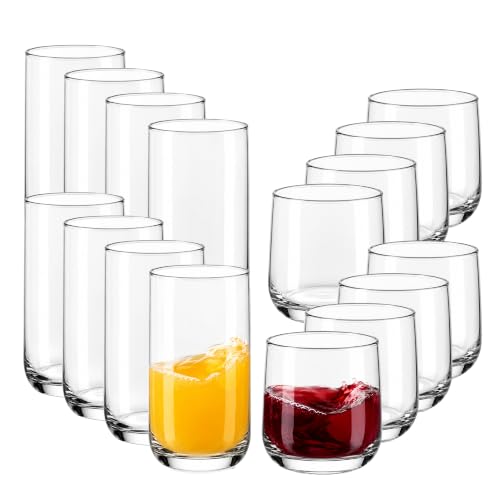
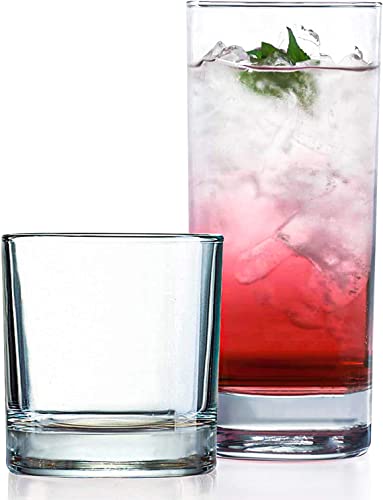
The best drinking glasses sets for most households are a six-piece set of 14- to 16-ounce tempered glass tumblers: large enough for water and iced drinks, durable enough for daily use, dishwasher-safe, and inexpensive to replace one glass at a time.
The right choice changes with your cabinet space, household size, drinking habits, and tolerance for breakage. A compact four-piece set suits a small kitchen, while an eight- or twelve-piece set is better value for a busy family or anyone who regularly hosts guests. Before buying, compare usable capacity rather than headline capacity, because a 16-ounce glass filled to the rim is rarely practical once you add ice.
Our top picks


As an Amazon Associate we earn from qualifying purchases at no extra cost to you. Ratings are shown as listed on Amazon.
Quick comparison of the best drinking glasses sets by use
| Best for | Recommended set | Useful capacity | Typical material | Approximate market range |
|---|---|---|---|---|
| Small kitchen or couple | 4 glasses | 10–12 oz | Tempered soda-lime glass | $12–$25 |
| Everyday family use | 6 glasses | 14–16 oz | Tempered soda-lime glass | $18–$40 |
| Large household or entertaining | 8–12 glasses | 14–20 oz | Tempered or thick soda-lime glass | $30–$75 |
| Very limited cupboard space | 4–6 stackable tumblers | 10–14 oz | Tempered glass or durable plastic | $15–$45 |
| Hot and cold drinks | 4–6 double-wall glasses | 10–13 oz | Borosilicate glass | $25–$70 |
Choose the set size before the style
A four-piece set is enough when two people share a kitchen and wash dishes daily. It also reduces the cost of replacing a broken glass. Its limitation is that two glasses can disappear into the dishwasher while the others are in use, leaving no spare for an unexpected guest.
Six-piece sets are the most balanced choice for many homes. They provide one glass per person in a household of four, plus two extras. They are also easier to store than larger collections. For a family of four that often serves iced tea, juice, or water at dinner, six 14- to 16-ounce tumblers usually cover normal use without encouraging oversized portions or excessive cabinet clutter.
Eight- to twelve-piece sets make sense for households that entertain, have children, or prefer to run the dishwasher only every few days. The lower price per glass can be attractive, but calculate where the extras will live. A set that fits only by stacking unstable columns or filling a second cabinet is not a practical bargain.
A simple quantity calculation
Estimate the number of glasses needed with this formula: household members plus one spare per two people, then add two if you regularly host guests. For four people who entertain occasionally, that is 4 + 2 + 2, or eight glasses. For two people who wash dishes every evening, four glasses may be sufficient.
Capacity: large is not always better
For water, a 12- to 16-ounce glass is the useful middle ground. A 10-ounce glass is comfortable for children, juice, and smaller servings, but may require frequent refills. A 20-ounce tumbler accommodates ice and chilled beverages well, yet takes more room in the dishwasher and can feel heavy when full.
Pay attention to usable capacity. If a tumbler holds 16 ounces to the rim, a comfortable fill level may be closer to 13 or 14 ounces. A narrow, tall shape often looks generous while holding less than a wide glass of the same advertised capacity. Dimensions also matter: a glass approximately 3 inches wide and 5 to 6 inches tall is more likely to fit standard cupboard shelves and dishwasher racks than an unusually tall design.
Material strength and what “durable” really means
Tempered soda-lime glass
This is the best all-purpose material for most drinking glasses. Tempering adds resistance to ordinary thermal and mechanical stress, and broken pieces generally form smaller chunks than untreated glass. It is still breakable: a hard impact on a sink, stone counter, or tile floor can chip or shatter it.
Borosilicate glass
Borosilicate glass handles temperature changes better and is common in double-wall tumblers. It is useful for drinks served hot or cold and can feel lighter than thick everyday glass. The trade-off is often a narrower shape, higher price, and more delicate rims or double-wall construction. Check the care instructions before placing it in a dishwasher.
Plastic and stainless steel
Plastic is the practical choice for patios, children, and areas where broken glass is a safety concern. Look for BPA-free, dishwasher-safe material and expect surface scratches over time. Stainless steel is highly durable and useful outdoors, but it is opaque, can retain odors if poorly cleaned, and does not provide the visual experience of glass.
Stackability versus stability
Stackable glasses save valuable shelf width, but the feature can introduce weak points. A stacking ring or slightly tapered body helps one tumbler sit inside another without the rims touching. Avoid forcing tightly nested glasses apart; twisting them can chip the rim or create a vacuum-like seal when wet.
Non-stackable glasses are often more stable and may have thicker, more comfortable rims. They need more vertical or horizontal storage space, so measure the shelf rather than guessing. Leave enough clearance to lift the top glass without striking the shelf above it.
For a small kitchen, choose a set with a base diameter of about 2.5 to 3 inches and a controlled stacking height. Six stackable tumblers that occupy 8 inches of shelf height are much easier to store than six separate glasses requiring 30 inches of shelf length.
Dishwasher safety and long-term ownership
Most ordinary tempered tumblers are dishwasher-safe, but dishwasher-safe does not mean immune to damage. Place glasses between the tines rather than over them, prevent contact with plates and metal utensils, and use a rack position that keeps them upright. A glass rattling during the cycle may develop chips long before it visibly breaks.
Hand-wash or use the manufacturer’s specified cycle for decorated, hand-blown, lead crystal, double-wall, or unusually thin glasses. Avoid sudden temperature changes, such as pouring boiling liquid into a cold tumbler or placing a hot glass directly under cold water. Cloudy film is usually mineral buildup or detergent residue rather than permanent damage; soaking in diluted white vinegar can help, followed by thorough rinsing. Do not use abrasive scouring pads on printed or polished surfaces.
What wears out first?
- Rims: Chips commonly result from contact with faucets, plates, sink walls, and neighboring glasses in the dishwasher.
- Decorative finishes: Printed patterns, metallic bands, and colored coatings may fade or wear with repeated washing.
- Double-wall seals: Moisture between the walls indicates damage and is a reason to retire the glass.
- Plastic surfaces: Scratches and cloudiness accumulate faster than they do on glass and can retain food odors.
- Base stability: A thin or uneven base may wobble before the rest of the tumbler shows damage.
Inspect glasses after washing. Retire any glass with a sharp chip, spreading crack, or damaged double-wall seal. Do not keep a chipped rim in service because it can cut the mouth and is difficult to clean reliably.
Best choice by situation
| Your priority | Look for | Avoid |
|---|---|---|
| Lowest upfront cost | Six plain tempered tumblers with common dimensions | Specialty shapes and decorative coatings |
| Minimal storage | Four or six stackable glasses under 14 oz | Wide, straight-sided tumblers |
| Children or outdoor use | Durable plastic or thick tempered glass | Thin rims and tall, unstable designs |
| Frequent dishwasher use | Plain dishwasher-safe tempered glass | Hand-painted details and metal accents |
| Easy replacement | Widely sold, simple cylindrical shapes | Seasonal collections and unusual proprietary sizes |
| Hot and cold versatility | Verified borosilicate or heat-resistant glass | Untreated glass exposed to abrupt temperature changes |
Replacement value matters more than the set price
A cheap set is not good value if one broken glass forces you to replace the entire collection. Plain, consistently shaped tumblers are usually easier to match individually than limited-edition colors or heavily sculpted designs. Before buying, search the manufacturer’s replacement policy and check whether individual glasses are sold in the same size.
For example, a $30 six-piece set costs $5 per glass initially. If one glass breaks after a year and a matching replacement costs $8, the first-year ownership cost is $38, or about $6.33 per surviving original place setting plus the replacement. A $45 set with individually available $5 replacements may cost less over several years, especially in a busy household. The calculation is simple: purchase cost plus replacements, divided by the number of years used.
Bottom line
For most people, choose six 14- to 16-ounce tempered glass tumblers with a stable base, a comfortable rim, dishwasher-safe construction, and individually replaceable pieces. Choose four smaller stackable glasses when cabinet space is the main constraint, eight or twelve when you entertain or run the dishwasher infrequently, and borosilicate double-wall glasses only when hot-drink capability justifies the additional care. The best drinking glasses sets are not necessarily the largest or most decorative; they are the ones whose capacity, storage footprint, cleaning routine, and replacement cost fit the way your household actually uses them.




Write Your Review
No reviews yet. Be the first to share your experience!