

Key takeaways
- Stated capacity: 13 ounces per glass.
- Pack size: six glasses.
- Shape: Belgian beer glass with a tulip-style bowl.
- Best beer categories: Belgian ales and other aromatic craft beers.
- Stem format: footed stemware, which separates the hand from the bowl and helps preserve serving temperature.
- Care point: follow the current package or manufacturer instructions rather than assuming every production batch has identical dishwasher guidance.
The best tulip beer glasses for most drinkers are the Libbey Entertaining Essentials Belgian Beer Glasses: their six-glass format, stated 13-ounce capacity, familiar Belgian tulip profile, and dishwasher-friendly positioning make them a practical choice for regular home use. Choose the Spiegelau Classic Tulip instead if aroma, crystal clarity, and a more refined single-glass presentation matter more than buying a larger set. For the lowest-cost route to a 16-ounce goblet shape, the Meolibour set is the sensible budget pick, while the Rastal Nucleated Teku 3.0 is the specialist choice for drinkers who want a more deliberate tasting shape and nucleation.
A tulip glass is not simply a smaller goblet. The bowl normally narrows below the rim, then opens into a pronounced lip that helps hold foam and direct aromas toward the nose. That geometry is especially useful for Belgian ales, strong ales, sours, aromatic IPAs, and other beers where fragrance and a stable head are part of the experience. It is less important for quick, cold pours where capacity and stacking convenience take priority.
The products below differ in ways that are easy to miss in a listing: some prioritize a six- or twelve-glass household supply, some use a classic goblet silhouette, and the Teku design takes a more technical approach to aroma and head retention. Because published dimensions, weights, and exact dishwasher instructions vary by production run, the comparison uses stated capacities where available and describes uncertain specifications by category rather than guessing. The most important buying decision is whether you want a durable everyday set, a larger entertaining supply, or a more specialized tasting glass.
Top 3 Picks
Best overall: Libbey Entertaining Essentials Belgian Beer Glasses, 13 oz
This six-piece Libbey set is the strongest all-purpose choice for a household that serves Belgian ales and other aromatic beers regularly. Its stated 13-ounce capacity leaves room for foam without making the glass excessively large, while the classic tulip bowl provides a useful balance between aroma concentration and practical table space.
Best budget: Meolibour 16 OZ Classic Craft Goblet Glasses
Meolibour’s four-glass set suits shoppers who want a recognizable tulip or goblet profile at a lower price tier. The stated 16-ounce capacity gives a generous serving envelope, but the larger bowl also needs more refrigerator and cabinet space than a compact tasting glass.
Best premium: Spiegelau Classic Tulip Beer Glass
Spiegelau’s European-made crystal glass is the upgrade for someone who values clarity, refined proportions, and a more polished drinking experience. It is a better fit for careful serving and gifting than for replacing a large everyday glass collection on the lowest budget.
Quick Comparison
| Product | Best for | Capacity and format | Rim, stem, and glass considerations | Price tier |
|---|---|---|---|---|
| Libbey Entertaining Essentials Belgian Beer Glasses | Best overall everyday Belgian ale set | 13 oz; set of 6 | Classic Belgian tulip category; footed stemware; verify current care directions | Mid-range |
| Meolibour Classic Craft Goblet Glasses | Budget-conscious entertaining | 16 oz; set of 4 | Classic craft goblet/tulip category; broad serving capacity; standard glass construction | Budget |
| Spiegelau Classic Tulip Beer Glass | Premium aroma-focused presentation | Capacity not specified in the product name; individual glass | European-made crystal; classic tulip form; refined stemware format | Premium |
| TRUE Beer Glasses Gift Set | Mixed-style beer tasting and gifting | Gift set; individual capacities vary by included shape | Clear tasting-oriented glassware for IPA, Belgian ale, wheat beer, stout, and porter categories | Budget |
| TRUE Classic Tulip Beer Glasses | Accessible classic tulip presentation | Set format and capacity not stated in the product name | Sparkling-clear classic tulip category; suitable for Belgian ales, sours, IPAs, and cocktails | Mid-range |
| Libbey Crafts Brew Belgian Tulip Beer Glass Set | Six-glass entertaining set | Set of 6; capacity not stated in the product name | Elegant Belgian tulip category; dishwasher-oriented listing language; footed stemware | Mid-range |
| Sabary Classic Craft Goblet Beer Glasses | Large gatherings and replacement supply | 16 oz; set of 12 | Belgian-style tulip/goblet category; high quantity; standard glass construction | Premium |
| DU VINO Nucleated Teku 3.0 by Rastal | Focused tasting and aroma evaluation | Capacity not specified in the product name; stemmed individual-style tasting glass | Nucleated base; Teku form; intended to support head retention and aroma | Budget |
How We Chose
This roundup treats a tulip beer glass as a serving tool rather than a decorative novelty. The selection criteria are the shape’s ability to support aroma, the usable capacity after allowing room for foam, the practical stability of the stem and foot, and the likely ownership burden of washing and storing multiple glasses. Product names and listing descriptions establish the stated capacities, quantities, materials, and intended beer categories; where a listing does not specify an exact measurement, no precise dimension is assumed.
We also separated three different kinds of value. A six- or twelve-piece set can be a better upgrade for regular hosting, even if an individual premium glass has more refined crystal construction. A mixed tasting set can be more useful for a drinker who serves several beer styles, while a classic tulip is more coherent for Belgian ales, sours, and aromatic IPAs. Finally, dishwasher language matters, but it should not be treated as a promise that repeated high-heat cycles will leave thin rims and stems unchanged forever. The recommendations therefore consider category fit, likely use frequency, storage, replacement cost, and the next upgrade a buyer might reasonably make.
1. Libbey Entertaining Essentials Belgian Beer Glasses – Best for everyday Belgian ale service
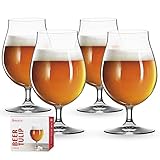
Libbey’s Entertaining Essentials set is the most balanced choice when the brief is simple: buy several recognizable Belgian beer glasses, use them often, and avoid paying premium-glass prices for every place setting. The product name states a 13-ounce capacity and a set of six, which is a useful combination for a couple who hosts small groups or a household that wants matching glasses for a flight of beers. The size is large enough for a typical beer pour with foam, yet not so large that the bowl dominates a crowded dining table.
The Belgian tulip format is most useful when the beer has noticeable aromatics or benefits from a persistent head. Pouring below the widest part of the bowl leaves room to swirl carefully, while the narrowed upper section concentrates volatile aromas. The flared lip gives the drinker a place to sip without the rim feeling as narrow as a wine glass. That makes this format more forgiving for casual use than a highly specialized tasting glass.
- Stated capacity: 13 ounces per glass.
- Pack size: six glasses.
- Shape: Belgian beer glass with a tulip-style bowl.
- Best beer categories: Belgian ales and other aromatic craft beers.
- Stem format: footed stemware, which separates the hand from the bowl and helps preserve serving temperature.
- Care point: follow the current package or manufacturer instructions rather than assuming every production batch has identical dishwasher guidance.
The main strength here is capacity discipline. A 13-ounce vessel encourages a measured pour instead of filling a large bowl to the rim, where foam and aroma have nowhere to go. Six matching glasses also make replacement and table setting easier than collecting unrelated one-off pieces. The trade-off is that this set is less of a specialist instrument than a Teku-shaped glass and less flexible for serving a large 16-ounce portion.
Pros
- Six-glass quantity is practical for entertaining and replacement planning.
- 13-ounce capacity balances foam space with cabinet efficiency.
- Classic tulip geometry suits Belgian ales, sours, and aromatic beers.
- Libbey is a familiar glassware brand with a broad household-oriented range.
Cons
- It may feel too small for drinkers who prefer a full 16-ounce serving.
- It is not the most specialized choice for structured sensory tasting.
- Exact wall thickness, weight, and current dishwasher instructions should be confirmed from the package.
Compared with the Meolibour 16-ounce set, Libbey gives up two ounces of stated capacity per glass but offers twice as many pieces. That makes Libbey the better fit for hosting and controlled pours, while Meolibour is more attractive when a larger goblet and lower initial spend matter most. Compared with the Spiegelau Classic Tulip, Libbey is the practical value choice: less focused on premium crystal presentation, but easier to deploy as a matching six-glass service.
2. Meolibour 16 OZ Classic Craft Goblet Glasses – Best for budget-friendly full pours
Meolibour’s set targets the drinker who wants a classic craft-beer goblet silhouette without moving into specialist glassware. The product name states four glasses with a 16-ounce capacity, so it is built around a more generous serving envelope than the 13-ounce Libbey set. That extra room can be useful for beers with substantial foam or for people who do not want to measure every pour, although a larger glass usually requires more shelf and dishwasher space.
The word “goblet” is important here. A goblet-style beer glass typically has a rounded or tulip-like bowl, a stem, and a foot that keeps the bowl away from the table. It is comfortable for Belgian ales and strong craft beers because the bowl can hold a head while the stem gives the drinker a place to grip. It is not automatically the same as a narrow, highly aromatic Teku shape, so buyers should choose it for capacity and everyday presentation rather than for laboratory-like tasting control.
- Stated capacity: 16 ounces.
- Pack size: four glasses.
- Shape: classic craft goblet and Belgian-style serving category.
- Best use: casual home pours, pub-style presentation, and small gatherings.
- Capacity implication: more room for foam than a smaller tasting glass, but more storage volume.
- Material detail: the listing identifies glassware but does not establish a premium crystal specification.
Its strongest argument is quantity-to-capacity value. Four 16-ounce glasses are enough for a household’s regular service without requiring the storage commitment of a twelve-piece set. The classic shape also works beyond Belgian ales: it can present some IPAs, fruit-forward sours, and strong ales attractively. The limitation is that “16 ounces” describes the vessel’s nominal capacity, not necessarily the ideal liquid fill. Leave headroom for foam and aroma rather than pouring to the rim.
Pros
- Generous stated 16-ounce capacity suits larger pours.
- Four-piece format works for a couple or a small tasting group.
- Classic goblet profile is approachable and versatile.
- Budget tier lowers the cost of putting matching stemware on the table.
Cons
- Larger bowls take more cabinet and dishwasher space.
- The listing does not establish premium crystal, exact glass thickness, or exact weight.
- Four glasses provide less coverage than six- or twelve-piece alternatives.
Against the Libbey Entertaining Essentials, Meolibour is the capacity pick, while Libbey is the quantity and everyday-efficiency pick. Against Sabary’s twelve-piece 16-ounce set, Meolibour is easier to store and less excessive for a small household; Sabary makes more sense for frequent gatherings, breakage-prone environments, or a buyer who wants many identical replacements. Neither should be selected solely because the bowl looks large: usable performance still depends on leaving space for foam.
3. Spiegelau Classic Tulip Beer Glass – Best for premium presentation
The Spiegelau Classic Tulip is the premium choice for a drinker who sees the glass as part of the tasting ritual. Its product name identifies European-made crystal and positions it for Belgian ales and IPAs, two categories where aroma and head presentation can add considerable value. It is listed as an individual-style glass rather than a large multipack, so the buying logic is different from Libbey or Sabary: this is an upgrade to the quality of the drinking experience, not the fastest way to outfit a party.
Crystal glassware is often chosen for clarity, a refined feel, and a thinner, more precise rim than ordinary thick-walled household glass. The exact thickness and weight should not be assumed without a current technical specification, but the category generally favors a more elegant drinking edge than a heavy pub tumbler. That can improve the sense of precision at the sip, while also making careful handling and appropriate storage more important.
- Material category: European-made crystal, as stated in the product name.
- Shape: classic tulip beer glass.
- Intended beers: Belgian ales and IPA beers.
- Format: premium stemmed beer glass rather than a large twelve-piece service set.
- Rim priority: refined lip and aroma-friendly bowl are central to the premium proposition.
- Care priority: confirm the current manufacturer’s cleaning guidance and avoid abrupt temperature changes.
The bowl can help hold a head while the upper opening directs aroma toward the nose. For an IPA, that can make hop fragrance more apparent; for a Belgian ale, it can highlight yeast, fruit, spice, and malt notes. The advantage is most noticeable when the beer is served at an appropriate temperature and poured with enough headspace. A premium glass cannot compensate for stale beer, a dirty film, detergent residue, or an overfilled bowl.
Pros
- European-made crystal gives the glass a premium positioning.
- Classic tulip shape suits aromatic Belgian ales and IPAs.
- Well suited to gifting, deliberate tasting, and special pours.
- Individual-glass ownership lets a buyer upgrade selectively rather than replace every glass.
Cons
- Premium single-glass format is less efficient for large gatherings.
- Refined stemware may demand more careful handling than robust everyday glasses.
- The product name does not state a capacity, weight, or exact wall thickness.
Compared with the DU VINO Nucleated Teku 3.0, Spiegelau is the more traditional tulip choice, while the Rastal Teku is more overtly engineered around aroma, head retention, and tasting. Compared with Libbey, Spiegelau offers a more premium material category but less practical coverage per purchase. Choose Spiegelau when one excellent serving glass matters; choose Libbey when six matching glasses matter more.
4. TRUE Beer Glasses Gift Set – Best for mixed-style beer tasting
TRUE’s Beer Glasses Gift Set is aimed at the drinker who does not want every beer forced into one silhouette. The product name describes a durable clear tasting kit for IPA, Belgian ales, wheat beers, stouts, and porters. That range matters: a wide, aromatic tulip can be excellent for Belgian ales, but a wheat beer, stout, or porter may present differently in a shape chosen specifically for that style.
This is therefore not the first recommendation for someone who has already decided on a matching set of Belgian tulips. It is a better fit for a new enthusiast, a gift recipient, or a household that wants to compare how different beer categories behave in different glass shapes. The listing’s “gift set” positioning also suggests variety is part of the value, although buyers should check the current box contents and capacities because the product name does not establish an exact piece count or volume for every included glass.
- Stated use categories: IPA, Belgian ales, wheat beers, stouts, and porters.
- Material category: clear glassware.
- Design purpose: tasting and presentation across several beer styles.
- Format: gift set with multiple beer-glass shapes or uses, subject to current contents.
- Durability positioning: the product name describes the set as durable, but exact wall thickness and drop resistance are not established.
The key advantage is upgrade path. Someone beginning with a mixed set can discover whether they prefer a tulip, a wheat-beer shape, or a broader vessel before buying a premium specialist glass. The drawback is storage complexity: different shapes may not nest or stack neatly, and replacing one missing glass may be harder than replacing a member of a common six-piece set. A gift set also creates an ownership question—if the household drinks only Belgian ales, several included styles may go unused.
Pros
- Addresses several major beer categories rather than one style.
- Useful for beginners who are still learning which glass shapes they prefer.
- Clear presentation supports color and foam evaluation.
- Gift-oriented format can introduce tasting without buying separate sets.
Cons
- The product name does not specify exact capacities or the full piece count.
- Mixed shapes may be harder to store and replace than identical tulips.
- Less suitable than a six-piece tulip set for a coordinated dinner table.
Compared with the TRUE Classic Tulip Beer Glasses, this set offers broader style coverage but less shape consistency. Compared with Libbey’s six Belgian glasses, TRUE is the better learning tool, while Libbey is the better solution for repeated Belgian-ale service. Choose TRUE if variety is the point; do not choose it merely because “tasting set” sounds more advanced.
5. TRUE Classic Tulip Beer Glasses – Best for versatile classic tulip service
TRUE’s Classic Tulip Beer Glasses are a versatile middle-ground option for shoppers who want the recognizable tulip silhouette without committing to a premium crystal glass or a mixed-style kit. The product name emphasizes sparkling-clear presentation and lists Belgian ales, sours, IPAs, and cocktails as suitable uses. That wider category range makes the glasses useful at a casual bar cart or dinner table where one vessel needs to serve more than one drink.
A classic tulip has a useful compromise built into its shape. The bowl is more expressive than a straight-sided pint glass, but the opening is generally more approachable than a narrow nosing glass. A flared lip can help retain a foamy head and makes the glass comfortable for normal sipping. For cocktails, the same footed silhouette can look polished, though capacity, garnish clearance, and the drink’s dilution should be considered before treating a beer glass as a universal cocktail vessel.
- Shape: classic tulip.
- Clarity: described as sparkling clear.
- Stated uses: Belgian ales, sours, IPAs, and cocktails.
- Best role: versatile household stemware for beer and occasional mixed drinks.
- Unspecified details: the product name does not establish capacity, weight, wall thickness, or exact quantity.
The broadest benefit is flexibility. Sours often reward a glass that can collect aroma without making the serving feel formal, and IPAs benefit from a bowl that leaves room for head. Belgian ales are the natural match, but the cocktail use makes the glass more valuable in a small kitchen where every shelf position has to earn its place.
Pros
- Works across beer styles and occasional cocktails.
- Classic tulip geometry is easy for new drinkers to understand.
- Clear construction displays color, carbonation, and foam.
- Mid-range positioning avoids the cost of a premium crystal upgrade.
Cons
- Exact capacity and pack size require checking the current listing.
- It is less specialized than the nucleated Teku design.
- Its versatility may be unnecessary for a buyer seeking only a large matching set.
Against the TRUE Beer Glasses Gift Set, the Classic Tulip offers consistency rather than a range of shapes. Against Libbey Crafts Brew, it is the more flexible choice if cocktails and multiple beer styles matter, while Libbey is more attractive if a six-piece Belgian set and dishwasher-oriented positioning are the priority. Against Spiegelau, TRUE gives up the premium crystal proposition but may be easier to justify as everyday glassware.
6. Libbey Crafts Brew Belgian Tulip Beer Glass Set – Best for six-place Belgian service
Libbey’s Crafts Brew Belgian Tulip set is designed for the buyer who wants an elegant Belgian-style presentation in a six-glass format. The product name identifies a set of six and uses dishwasher-oriented wording, making it particularly relevant to households that host often and want less hand-washing anxiety than they might associate with delicate specialty stemware. The listing does not state an exact capacity in the product name, so it should be compared by format and quantity rather than by an assumed ounce number.
The Belgian tulip profile is a sensible choice for beers with expressive aromatics and noticeable foam. The rounded bowl gives the beer visual presence, while the narrower upper section can gather fragrance. The flared rim helps contain the head and leaves a comfortable drinking edge. A footed stem also provides a natural grip point, although any stemmed glass should be lifted by the stem or foot rather than squeezed around the bowl.
- Pack size: six glasses.
- Shape: Belgian tulip.
- Stated care emphasis: dishwasher-oriented listing language.
- Presentation: elegant stemmed beer glass category.
- Exact capacity: not stated in the product name; verify the current specification before buying for a particular pour size.
This set is strongest as a table-setting product. Six identical glasses create a coherent service for dinner, tasting, or a small party, and the dishwasher emphasis addresses a real ownership concern: glassware that is theoretically beautiful but too inconvenient to clean often gets left in the cabinet. Even dishwasher-oriented glassware benefits from spacing, a suitable cycle, and prompt removal so that water spots and detergent film do not accumulate.
Pros
- Six-piece format works for entertaining and matching place settings.
- Belgian tulip shape supports aroma and head presentation.
- Dishwasher-oriented listing language improves everyday practicality.
- Libbey’s household focus makes it a sensible replacement-set candidate.
Cons
- The product name does not provide an exact capacity.
- It may duplicate the role of the other Libbey six-piece set.
- Dishwasher suitability does not eliminate the risk of chips, clouding, or stem damage over time.
The nearest alternative is Libbey Entertaining Essentials. The Crafts Brew set wins if the buyer values the stated dishwasher-oriented positioning and elegant presentation; Entertaining Essentials wins if the known 13-ounce capacity is more important. Compared with the Sabary twelve-piece set, Crafts Brew requires less storage and is easier to manage in a smaller home, but it provides fewer glasses for a large gathering.
7. Sabary 16 oz Classic Craft Goblet Beer Glasses – Best for large gatherings
Sabary’s set is the quantity specialist in this roundup: the product name states twelve 16-ounce classic craft goblet glasses in a Belgian-style tulip category. That combination is aimed at frequent hosts, large households, tasting events, and buyers who would rather have replacements on hand than discover that two guests have no matching glass. It is also the option most likely to expose storage and cleaning limitations, because twelve large stemmed glasses occupy considerably more shelf and dishwasher real estate than four or six smaller pieces.
The 16-ounce capacity gives each glass a generous envelope for beer and foam, but it should not be interpreted as a recommendation to fill every glass to the rim. A practical Belgian-ale pour may use less than the vessel’s nominal capacity, leaving room for a head and aroma. If a 12-ounce bottle is divided among two tasters, the large bowl may look underfilled; if a full 16-ounce can is poured aggressively, the head may overflow. The right amount depends on the beer, the pour, and the desired head.
- Stated capacity: 16 ounces.
- Pack size: twelve glasses.
- Shape: Belgian-style tulip and classic craft goblet.
- Best use: large gatherings, replacement stock, and broad household service.
- Storage issue: twelve stemmed bowls need more protected shelf space than a compact set.
The biggest ownership advantage is continuity. Breakage is less disruptive when several spare glasses remain in the cupboard, and a host can serve a group without mixing shapes. The weakness is that a high-count set makes every small care problem multiply: one water spot becomes twelve, one chipped rim may be overlooked until the next event, and a crowded dishwasher can cause stems to knock together.
Pros
- Twelve matching glasses provide excellent guest coverage.
- 16-ounce capacity accommodates generous pours and substantial foam.
- Classic goblet profile is approachable for many craft beer styles.
- Spare inventory reduces the urgency of replacing a single broken glass.
Cons
- Large quantity requires substantial storage space.
- Sixteen ounces is more capacity than many everyday pours need.
- The listing does not establish premium crystal, exact weight, or wall thickness.
- Frequent dishwasher loading requires careful spacing to protect stems and rims.
Compared with Meolibour’s four-piece 16-ounce set, Sabary is the obvious hosting choice, while Meolibour is easier for a small kitchen and a smaller household. Compared with Libbey’s six-glass sets, Sabary offers double the quantity but less certainty about whether the larger bowl is the ideal size for controlled pours. Buy Sabary when the number of guests is the problem; do not buy twelve large glasses simply because the nominal capacity sounds generous.
8. DU VINO Nucleated Teku 3.0 by Rastal – Best for aroma-focused tasting
The DU VINO Nucleated Teku 3.0 by Rastal is the specialist option for drinkers who want more than a traditional Belgian goblet. Its product name identifies a stemmed Teku 3.0 design with a nucleated base and positions it around head retention, aroma, and tasting. The nucleation is the defining feature: microscopic texture at the base encourages bubbles to release from a consistent point, helping maintain visible carbonation and a more persistent head.
A Teku-shaped glass generally combines a bowl designed for aroma with a tapered upper section and a stem that keeps the hand away from the beer. The result is more deliberate than a broad pub goblet. It can be rewarding for a strong Belgian ale, IPA, sour, or other aromatic beer, but it may feel overly formal for a quick lager or a casual backyard gathering. The product name does not state an exact capacity, so the glass should not be selected on the assumption that it accommodates a particular can or bottle without overflow.
- Shape: stemmed Teku 3.0 category.
- Base: nucleated, intended to support bubble release and head retention.
- Stated benefits: aroma and head retention for tasting.
- Brand/category association: Rastal Teku design; offered under the DU VINO product name.
- Capacity: not specified in the product name.
The nucleated base is not magic and does not improve every beer equally. It is most useful when the beer has enough carbonation and flavor complexity for a maintained head and concentrated aroma to matter. A clean, residue-free glass is essential: grease or detergent film can disrupt foam, while mineral deposits can make the nucleation look uneven. Do not scrub the textured base with a hard abrasive tool, since preserving the intended surface is more important than making it shine through aggressive cleaning.
Pros
- Nucleated base gives it a distinct technical purpose.
- Teku form is well suited to aroma-focused tasting.
- Stemmed design keeps hands away from the bowl.
- Strong upgrade path for a drinker moving beyond ordinary goblet glassware.
Cons
- More specialized than necessary for casual high-volume service.
- Exact capacity and dimensions are not established by the product name.
- Textured bases require thorough but gentle cleaning.
- One specialist glass does not solve the need for matching glasses when hosting a group.
Compared with Spiegelau’s Classic Tulip, the Teku is the more technical and tasting-oriented design, while Spiegelau offers the more traditional premium tulip experience. Compared with the TRUE Beer Glasses Gift Set, it is less versatile as a beginner’s collection but more focused as an individual upgrade. Choose it when aroma and head behavior are the reason for buying; choose Libbey or Sabary when the priority is serving several people.
How to Choose
Start with the beer you actually pour
The best tulip glass depends on the beer’s aroma, foam, serving size, and frequency of use. Belgian ales are the clearest match because many have expressive yeast, fruit, spice, malt, and alcohol notes that benefit from a bowl and a controlled opening. Sours and aromatic IPAs can also work well in a tulip. Wheat beers may prefer a taller shape, while stouts and porters can be served successfully in several forms depending on whether the goal is aroma, visual presentation, or a generous creamy head.
If Belgian ales make up most of your cellar, select a classic tulip such as the Libbey, Spiegelau, TRUE, or Crafts Brew options. If you rotate through IPA, wheat beer, stout, and porter, the TRUE gift set can be a more useful first purchase because it explores several presentation styles. If you already know that tasting and aroma are the priority, the nucleated Teku is a more purposeful upgrade than simply buying the largest goblet available.
Choose capacity by usable pour, not the number printed on the box
A stated 16-ounce capacity does not mean a 16-ounce serving should be poured to the rim. A beer glass needs headspace for foam and an air volume above the liquid so aromas can collect. As a practical rule, a glass rated at 13 ounces may be comfortable for a 10- to 12-ounce pour, depending on the beer and pour technique; a 16-ounce glass may accommodate a larger serving, but the correct fill still depends on foam production. These are serving estimates, not manufacturer specifications.
Consider a simple example. Suppose a 16-ounce bottle is shared between two people. Each receives 8 ounces of beer, plus the head generated by pouring. In a 16-ounce goblet, that serving may look modest but leaves substantial aroma space. In a 13-ounce tulip, the same serving can look more proportionate and may be easier to swirl without splashing. Conversely, if one person wants the full contents of a 16-ounce can, a 13-ounce glass will require a staged pour or a refill.
The Libbey Entertaining Essentials’ stated 13-ounce capacity is therefore efficient for measured pours and small refrigerators. Meolibour and Sabary state 16 ounces, which is better for larger servings and generous foam but less efficient for storage. For the Spiegelau, TRUE, Crafts Brew, gift set, and Teku, confirm the current capacity if the exact pour size is important.
Pay attention to rim design
The rim is where the glass meets the mouth, but it also influences aroma and foam. A flared tulip lip can help retain a head while offering a comfortable sipping edge. A narrower opening concentrates aroma more strongly, but it can feel less casual and may make large gulps awkward. A broad opening is easier to clean and drink from, but it can release aromas quickly and provide less control over the head.
Premium crystal often attracts buyers because of clarity and a refined rim. That benefit is most noticeable when the glass is clean, the beer is aromatic, and the drinker is taking time to smell before sipping. For a busy dinner party, the difference between a refined and standard rim may matter less than having six matching glasses that can be washed efficiently. Do not choose a narrow rim if several household members prefer easy, casual drinking.
Understand what a stem and foot contribute
A stem gives the hand a grip away from the bowl, reducing the chance of warming the beer quickly and keeping fingerprints off the clear surface. A foot provides stability on the table. However, a stem is also the part most likely to be stressed when a glass is lifted by the bowl, twisted while stuck in a dishwasher rack, or knocked against another glass.
For stability, look for a foot that sits flat and a stem that does not appear excessively narrow for the bowl. Exact stem dimensions are not available for every product here, so visual inspection at delivery matters. Set the glass down on a level surface and discard or return any piece that rocks, has a sharp rim, or contains a visible crack. A glass that wobbles is not worth keeping, regardless of its shape.
Compare ordinary glass with crystal carefully
Spiegelau’s product name specifically identifies European-made crystal. The other products are described by their glassware category or clear construction rather than by a stated crystal specification. Crystal is attractive for clarity and a refined drinking edge, but it should not automatically be treated as indestructible or dishwasher-proof. Thin, elegant glass can be more vulnerable to impact and thermal shock than a heavier everyday piece.
When a listing does not give wall thickness or weight, do not invent a durability ranking. Instead, judge the ownership context. A household with children, frequent outdoor use, or a crowded dishwasher may prefer a robust, replaceable set. A collector or careful host may reasonably choose crystal and wash it with more attention. The product that lasts longest is often the one whose care routine matches the owner’s habits.
Dishwasher durability is a process, not just a label
Dishwasher-oriented wording is helpful, but repeated washing exposes glasses to heat, detergent, vibration, hard-water deposits, and contact with neighboring dishes. The first things likely to show wear are often the rim, stem connection, printed decoration if present, and surface clarity—not the bowl’s ability to hold beer. A glass can remain structurally usable while becoming cloudy or developing tiny chips that make it unpleasant or unsafe to drink from.
Use this maintenance sequence:
- Rinse the glass soon after use so sugars, hops, and foam residue do not dry onto the bowl.
- Inspect the rim and stem for chips before placing it in the dishwasher.
- Keep glasses separated so they cannot touch during the cycle.
- Use the care setting recommended by the current manufacturer or package.
- Remove glasses after the cycle and allow trapped water to drain rather than stacking them wet.
- For cloudy deposits, use a glassware-safe descaling method; do not attack a nucleated base or delicate rim with abrasive scouring.
Do not force one glass inside another, even if the bowls appear to nest. Tulip shapes can lock together under pressure, and pulling them apart can snap a stem or chip a rim. Avoid pouring boiling water into a cold glass or placing a hot glass directly on a cold stone surface. Sudden temperature changes are a common and preventable source of breakage.
Match quantity to your actual hosting pattern
For one or two regular drinkers, four glasses can be enough. Meolibour’s four-piece format is easier to store than a twelve-piece set and still supports a small tasting. A six-piece set is more flexible for dinner parties, shared flights, or replacement planning; both Libbey products fit that logic. Twelve 16-ounce glasses make sense only when the household regularly serves a larger group or wants a substantial replacement reserve.
Think in terms of seats, not aspirational entertaining. If six people are likely to drink beer at the same time, six matching glasses reduce confusion and avoid half-filled mismatched vessels. If guests usually bring their own drinks and the household rarely serves more than two people, buying twelve large goblets adds clutter without improving the typical experience.
Use a decision matrix before buying
| Situation | Priority | Best fit | Why |
|---|---|---|---|
| Small kitchen, regular Belgian ales | Known capacity and efficient storage | Libbey Entertaining Essentials | 13 oz and six-piece coverage balance serving control with quantity. |
| Low initial budget, larger pours | 16 oz capacity and four-piece format | Meolibour | Generous goblet capacity without buying a large service set. |
| Premium gift or careful personal tasting | Crystal presentation | Spiegelau Classic Tulip | European-made crystal and classic tulip positioning suit deliberate service. |
| Beginner exploring many beer styles | Variety and learning | TRUE Beer Glasses Gift Set | It is described for IPA, Belgian ale, wheat, stout, and porter categories. |
| Beer and cocktail crossover | One versatile tulip silhouette | TRUE Classic Tulip | Its stated uses include Belgian ales, sours, IPAs, and cocktails. |
| Six-place entertaining with dishwasher convenience | Matching quantity and practical care | Libbey Crafts Brew | Six Belgian tulips and dishwasher-oriented listing language fit regular service. |
| Large gatherings or replacement stock | Maximum matching quantity | Sabary | Twelve 16-ounce glasses provide broad guest coverage. |
| Aroma-focused enthusiast | Nucleation and tasting geometry | DU VINO Nucleated Teku 3.0 | The listing specifically emphasizes head retention and aroma. |
Think about the upgrade path
A sensible first purchase does not have to be the final glass in a collection. A beginner might start with the TRUE gift set, learn which styles are served most often, then add a classic tulip or Teku. A household that already owns ordinary pint glasses may skip variety and go directly to six Libbey Belgian tulips. Someone who already has durable everyday stemware might buy one Spiegelau or Rastal glass for special tasting while keeping the existing set for guests.
The best upgrade is the one that fixes a real limitation. If the problem is not enough glasses, buy quantity. If the problem is foam collapsing quickly, first check cleanliness and pouring technique before buying nucleated glassware. If the problem is a lack of aroma, choose a bowl with a more controlled opening and serve the beer at an appropriate temperature. If the problem is breakage, prioritize replaceability, careful spacing, and a less crowded storage arrangement.
Frequently Asked Questions
What makes a beer glass a tulip?
A tulip beer glass generally has a rounded or bulbous bowl that narrows toward the upper section and then opens at the lip. The shape leaves room for foam and helps collect aromas above the beer. Exact proportions vary, so “tulip” describes a family of shapes rather than one universal measurement.
Are tulip glasses better than pint glasses for Belgian ales?
They can be better when aroma and head retention matter because the bowl and upper opening provide more sensory focus. A pint glass remains practical for quick service and large quantities. The best choice depends on whether the drinker values tasting detail or simple capacity and speed.
Should a 16-ounce glass be filled with 16 ounces of beer?
Not necessarily. Nominal capacity is the amount the vessel can hold, while a good serving leaves room for foam and aroma. Pouring below the rim is especially important for highly carbonated Belgian ales and beers that produce a large head.
Is the nucleated Rastal Teku suitable for every beer?
It can hold many beer styles, but its design is most useful when aroma, carbonation, and head behavior are worth observing. For a casual lager or a large party, its specialized shape may provide less practical benefit than a durable matching set. It is best viewed as a tasting-focused upgrade.
Can these glasses go in the dishwasher?
Care instructions vary by product and production version, so follow the current packaging or manufacturer guidance. Even glasses described with dishwasher-oriented language should be spaced apart, protected from contact, and removed promptly after the cycle. Premium crystal and thin stemware deserve especially careful handling.
What is the safest way to wash a tulip beer glass?
Rinse it soon after use, wash with a suitable glassware detergent, and avoid gripping the bowl and twisting the stem against resistance. Inspect the rim before use and do not use abrasive tools on a nucleated base. Sudden temperature changes should also be avoided.
How should tulip beer glasses be stored?
Store them upright on a stable shelf when possible, with enough space that rims and stems cannot strike neighboring pieces. Avoid forcing one bowl inside another. Keep premium or rarely used glasses in a protected area, but do not store any glass with a chip or crack.
Which set is best for a first-time buyer?
The Libbey Entertaining Essentials set is the most balanced first purchase for Belgian ales because it combines a stated 13-ounce capacity with six matching glasses. Choose the TRUE gift set if the drinker wants to explore several beer styles. Choose Meolibour instead if a larger 16-ounce goblet and a four-piece budget set are more useful.
For most households, choose the Libbey Entertaining Essentials six-piece set. Choose Meolibour for four larger budget goblets, Sabary for frequent large gatherings, Spiegelau for premium crystal presentation, and the DU VINO Teku for focused aroma and head evaluation. If you are still discovering your preferred beer styles, the TRUE gift set offers the most useful learning path, while the TRUE Classic Tulip is the better single-shape compromise for beer-and-cocktail service.




Write Your Review
No reviews yet. Be the first to share your experience!