

Key takeaways
- Compare five indoor herb gardens with built-in grow lights, from a compact three-pod kit to a twelve-pod hydroponic system, for fresh herbs all year.
As an Amazon Associate, we earn from qualifying purchases made through links on this page. This helps support our work at no extra cost to you.
Introduction
Fresh basil in January, mint that has not wilted in a plastic clamshell, and parsley snipped seconds before it lands on the plate are the promises that sell indoor herb gardens. These countertop systems pair a water reservoir with a full-spectrum LED light panel, so herbs grow under lights on a timer instead of depending on a sunny windowsill. The result is a small garden that fits beside the coffee maker and keeps producing through winter and in apartments with poor light.
The category splits into two camps. Soil-pod gardens, led by Click and Grow, use pre-seeded capsules that wick water from a tank and need almost no attention. Hydroponic gardens, led by AeroGarden, iDOO, and LetPot, grow plants in water with liquid nutrients and blank sponges you can seed yourself. Both beat a pot on the sill for consistency, but they differ in capacity, running costs, and noise.
This guide compares five established indoor herb gardens: a three-pod soil system for beginners, a nine-pod version for bigger harvests, a classic six-pod hydroponic unit, and two twelve-pod hydroponic systems for a full herb lineup.
How to Choose
Start with capacity. Three pods suit a cook who mainly wants basil and one or two supporting herbs. Six pods cover the classic Italian lineup of basil, parsley, dill, thyme, mint, and chives. Nine to twelve pods make sense when you also want lettuce, cilantro, or a second basil plant for pesto season. More pods mean a bigger footprint, so measure your counter and the space under cabinets first.
Next, decide between soil pods and hydroponics. Soil-pod systems are nearly silent, use no pump, and ask only for water top-ups every few weeks, but you are tied to the brand’s capsule refills. Hydroponic systems grow faster and accept generic sponges and your own seeds, lowering refill costs, though they add a quiet pump hum and a nutrient schedule every two weeks or so.
Light matters more than any other spec. Look for a full-spectrum LED panel on an automatic timer, ideally sixteen hours on and eight off; panels in the 20 to 24 watt range handle fruiting herbs and lettuce well. Height adjustment matters too, because basil and dill outgrow a fixed lamp quickly, and a light that rises at least eleven inches keeps top leaves from burning.
Finally, consider upkeep. A float gauge or low-water alert saves plants when life gets busy. A built-in fan improves airflow and strengthens stems on hydroponic models. App control is convenient for custom schedules, but a simple one-button timer is enough for most kitchens.
The 5 Best Indoor Herb Gardens
1. AeroGarden Harvest Indoor Garden Hydroponic System, Black

- Specs: 6 pods; 20W LED grow light; grows plants up to 12 inches tall; automatic light timer with water and food reminders; includes a 6-pod gourmet herb seed kit; countertop footprint about 10.5 x 6 inches
The Harvest is the garden that introduced many home cooks to hydroponics, and it remains the easiest hydroponic starting point. You fill the bowl, drop in the pre-seeded pods, add liquid plant food, and press one button. The 20 watt LED panel runs on a fixed daily cycle, indicator lights flag water and food refills, and the deck height adjusts so seedlings start close to the light.
Growth speed is the main draw. Basil and dill sprout within days and reach harvest size noticeably faster than the same seeds in soil, and the included gourmet herb kit covers Genovese basil, curly parsley, dill, thyme, mint, and Thai basil. Because the pods use standard baskets and sponges, you can switch to grow-anything kits or your own sponges later instead of being locked into one refill style.
The trade-offs are capacity and attention. Six pods fill up fast once basil takes off, and the reservoir needs a top-up roughly every week in a warm kitchen. The brand also went through a public shutdown scare before relaunching, so confirm current stock of the unit and its seed pods before committing to it as a long-term system.
Pros:
– Fast, reliable germination with a proven pod system
– Simple controls with clear water and food reminders
– Compact footprint fits small counters
Cons:
– Six pods limit variety for heavy herb users
– Reservoir needs frequent top-ups once plants mature
– Refill seed kits cost more than loose sponges and seed
2. Click and Grow Smart Garden 3 Indoor Herb Garden, White

- Specs: 3 pods; soil-based Smart Soil plant pods; built-in LED grow light on a 16-hour cycle; self-watering reservoir; includes 3 basil plant pods; no pump, no aerator, silent operation
The Smart Garden 3 is the lowest-effort garden in this roundup. Each plant pod is a capsule of pre-seeded soil with nutrients built in, and a passive wicking system pulls water from the reservoir to keep the soil evenly moist. There is no pump to hear and no liquid food to measure. You insert the pods, fill the tank, plug in the lamp, and refill the water roughly once a month.
That simplicity suits a windowsill herb or two for finishing dishes: basil for caprese, mint for tea, or cilantro for tacos. The adjustable lamp arm extends as plants grow, and the clean Scandinavian housing looks at home on an open shelf. Growth is slower and steadier than hydroponics, which many beginners prefer.
The limits are real, though. Three pods is a tasting menu, not a harvest, and the proprietary capsules are the only clean way to refill it, so running costs stay higher than sponge-based systems. Gardeners who want lettuce, peppers, or unusual herbs will outgrow it quickly.
Pros:
– Almost zero maintenance beyond monthly water refills
– Completely silent with no moving parts
– Attractive, compact design for visible counter space
Cons:
– Only three pods, so harvests stay small
– Refills limited to the brand’s own capsules
– Slower growth than hydroponic systems
3. Click and Grow Smart Garden 9 Indoor Herb Garden, Gray
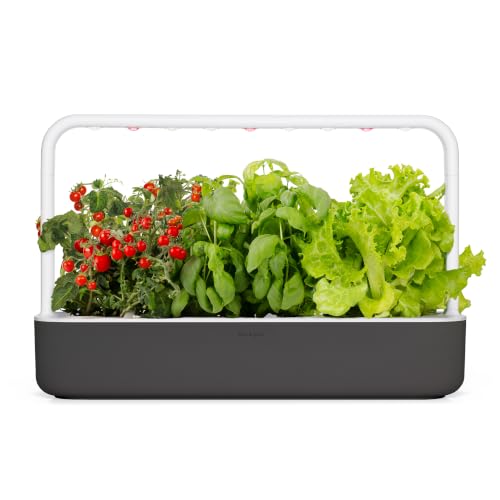
- Specs: 9 pods; soil-based Smart Soil plant pods; built-in LED grow light on an automatic timer; large self-watering reservoir; starter kit includes basil, lettuce, and tomato plant pods
The Smart Garden 9 takes the same hands-off formula and stretches it across nine pods, which changes what the garden can do. With room for a starter mix of basil, lettuce, and mini tomato pods, it can supply salad greens and cooking herbs at the same time while still asking for little more than a reservoir refill every few weeks.
Two lamp arms spread light evenly across the longer deck, and the bigger tank stretches refills to around a month and a half depending on plant size and room temperature. For households that killed every hydroponic unit through neglect, this is the forgiving option: no nutrient dosing, no pump cleaning, and no algae-prone open water.
As with the three-pod model, the compromises are refill cost and pace. Nine proprietary capsules at a time add up, tomatoes grow slowly under the modest lamp compared with hydroponics, and tall herbs still need regular trimming. Think of it as a dependable greens-and-herbs appliance rather than a miniature farm.
Pros:
– Nine pods cover herbs and salad greens together
– Long refill intervals suit busy or forgetful owners
– Silent, pump-free operation
Cons:
– Capsule refills are a recurring premium cost
– Fruiting plants grow slowly under the lamp
– Large footprint for a soil-based system
4. iDOO Hydroponics Growing System Kit, 12 Pods

- Specs: 12 pods; full-spectrum LED grow light with vegetable and flower modes; built-in fan; automatic timer; light height adjustable up to 11.3 inches; water circulation pump; 4L water tank; seeds not included
The iDOO 12-pod system is the value pick for gardeners who want maximum planting space and the freedom to sow their own seeds. Twelve stations sit over a four-liter tank with a circulation pump, and the kit ships with baskets, sponges, domes, and starter nutrients, so the only thing you add is seed. That suits cooks growing less common herbs that pod brands never stock.
A small built-in fan is a thoughtful touch. Moving air discourages mold on the deck and encourages sturdier stems, and the two light modes shift spectrum emphasis between leafy growth and flowering plants. The lamp rises to just over eleven inches, enough for compact basil, cilantro, parsley, and lettuce rotations.
Expect more involvement than the pod brands demand. You mix nutrients yourself, watch water levels without a smart alert, and stay on top of pruning, because twelve enthusiastic plants crowd each other quickly under an eleven-inch ceiling. The fan and pump add a faint hum that light sleepers may notice in a studio.
Pros:
– Twelve pods at a budget-friendly position in the category
– Blank sponges accept any seed you want to grow
– Built-in fan supports stronger, healthier plants
Cons:
– Seeds and ongoing nutrients are separate purchases
– Tall herbs outgrow the maximum light height
– Pump and fan produce light background noise
5. LetPot LPH-SE Hydroponics Growing System, 12 Pods

- Specs: 12 pods; 24W LED grow light; 5.5L water tank; app and WiFi control with automatic timer; pump system with water shortage reminder; height-adjustable light panel
The LetPot LPH-SE is the connected option, built for gardeners who like control. Its app handles the light schedule, sends reminders when the generous 5.5 liter tank runs low, and lets you adjust settings from anywhere. Twelve pods and a 24 watt full-spectrum panel give it the muscle for a full herb rotation plus lettuce, and the light panel adjusts upward as plants gain height.
In daily use the big tank is the headline feature. It stretches refills well past the weekly rhythm of smaller units, which matters once twelve plants start drinking heavily in their fourth and fifth weeks. The stainless-accented housing also looks more like a kitchen appliance than a science project, a real consideration for a device that lives on the counter all year.
The app cuts both ways. Setup takes longer than a one-button garden, WiFi pairing can be fiddly, and anyone who prefers physical controls will find the phone-first design annoying. The larger footprint also claims serious counter space, so measure before ordering.
Pros:
– Large 5.5L tank means less frequent refilling
– App scheduling and low-water reminders add real convenience
– Strong 24W light supports herbs and greens alike
Cons:
– App and WiFi setup adds complexity some users never want
– Big footprint demands generous counter space
– Replacement parts and support lean on a smaller brand
FAQs
How long do herbs take to grow in an indoor garden?
Most leafy herbs sprout within one to two weeks and reach a first light harvest in about four to five weeks, with hydroponic systems usually a few days ahead of soil pods. Basil, mint, and lettuce grow fastest, while parsley and cilantro germinate slowly. Regular harvesting encourages bushier plants and extends each pod’s life to roughly three to six months.
Can I use my own seeds in these gardens?
Yes, in the hydroponic systems. The iDOO, LetPot, and AeroGarden decks accept blank sponges or grow-anything baskets, so any compact herb seed works, though dwarf varieties fit the light height best. The Click and Grow gardens are designed around their own pre-seeded soil capsules, which keeps things simple but limits herb choices to the brand’s catalog.
How much work does an indoor herb garden need each week?
Plan on a few minutes. You will top up water, add liquid nutrients every couple of weeks in a hydroponic unit, wipe the deck, and prune so plants stay below the lamp. Soil-pod gardens need even less, mostly a reservoir refill every few weeks. A monthly rinse of the tank and pump keeps algae and mineral buildup away in any system.
Do indoor herb gardens use a lot of electricity?
No. The LED panels here draw roughly 8 to 24 watts and run about sixteen hours a day, a modest load similar to leaving a small lamp on. With the lights on a timer and pumps cycling intermittently, running costs stay low enough that most owners never notice them on a household bill.
Conclusion
The right indoor herb garden depends on how you cook and how much tinkering you enjoy. Choose the Click and Grow Smart Garden 3 for a silent, nearly effortless first garden, or step up to the Smart Garden 9 for herbs and salad greens together. Pick the AeroGarden Harvest for the most polished hydroponic experience in a compact footprint. If capacity and seed freedom matter most, the iDOO 12-pod system delivers the most planting stations for the money, while the LetPot LPH-SE adds a bigger tank and app control. Any of the five will keep fresh herbs under lights and within reach of the cutting board all year.
More from Amazon
Programs that pair well with the guide above. Offers and eligibility are set by Amazon and may change.
Collect the home and kitchen items you want in one registry that guests can shop from.
Create a wedding registrySet up recurring deliveries of everyday items on eligible products. Terms and savings are set by Amazon.
Explore Subscribe & SaveFree shipping on eligible items, Prime Video and more. Eligible new members can start with a free trial.
Start a Prime free trialAudiobooks and podcasts to listen to on the go. Eligible new members can start with a free trial.
Try Audible freeAs an Amazon Associate we earn from qualifying purchases.





Write Your Review
No reviews yet. Be the first to share your experience!