

Key takeaways
- Compare the best bread lame knives for sourdough, from magnetic extractable scorers to classic curved stick lames with replaceable razor blades.
As an Amazon Associate, we earn from qualifying purchases made through links on this page. This helps support our work at no extra cost to you.
A good score is what turns a tight, pale boule into a loaf with a proud ear, an open crumb, and a crust that crackles as it cools. Scoring gives expanding gas and steam a planned escape route, so the loaf blooms where you want it to instead of bursting along a weak seam. A kitchen knife can tear cold, high-hydration dough, and a bare razor blade is hard to hold at a consistent angle. A bread lame solves both problems by mounting a thin double-edged razor on a handle that keeps your fingers clear and the blade steady.
The five bread lame knives below cover the main styles home bakers use: a classic curved stick lame for the traditional single slash, an extractable magnetic model that hides its blade between bakes, a two-lame set pairing straight and curved tools, a walnut magnetic lame with a rotating blade, and a generously kitted stainless model with finger protection for newer bakers. Every pick uses replaceable blades, because a lame is only as good as its freshest edge.
How to Choose a Bread Lame
Start with blade shape. A curved blade, held at a shallow angle, slides under the surface of the dough and lifts a flap that bakes into an ear. It is the classic choice for a single bold slash down a batard or boule. A straight blade sits perpendicular to the loaf and suits crosshatch patterns, wheat stalk designs, and shallow decorative cuts where control matters more than lift.
Next, think about how the blade is held and stored. Stick lames fix the razor to the end of a handle with screws or a clamp, which feels secure but leaves the edge exposed in a drawer. Disc and round lames pinch the blade between two halves so most of it is covered. Extractable and magnetic designs retract or dock the blade inside the body, the safest option around children. Whatever style you choose, check how blades are changed. Thumbscrews and magnetic mounts swap in seconds, while tight friction fits can be fiddly with floury hands.
Handle material affects grip and care. Wood handles in oak, walnut, or beech feel warm and balanced, but they should be wiped clean and kept out of soaking water. Stainless steel handles tolerate a quick rinse. Finally, count the extras honestly. Spare blades matter most, since a dull razor drags instead of slicing, and a leather or plastic cover is genuinely useful. Pattern booklets and finger sleeves help beginners, but they should not outweigh blade quality and a comfortable grip.
Technique still matters more than gear. Score cold dough straight from the refrigerator, use one confident motion rather than sawing, and replace the blade as soon as it starts to pull. A new razor should glide through the surface with almost no pressure.
The 5 Best Bread Lame Knives
1. RICCLE Bread Lame Slashing Tool with 15 Razor Blades

- Specs: Oak wood handle, curved stainless steel blade mount, 15 replacement razor blades included, leather storage cover, blade length about 0.9 inches
The RICCLE stick lame is the traditional French-style tool most sourdough bakers picture first. A slim oak handle ends in a fixed curved mount, and that curve does the important work. Drawn across a cold boule at a shallow angle, it tucks the blade under the skin of the dough so the cut opens into a crisp ear during the bake. The handle is long enough to keep your knuckles away from a hot Dutch oven rim when you score directly in the pot, and the turned wood shape rotates comfortably between strokes.
Fifteen included blades is a generous supply, and because the mount accepts standard double-edged razors, replacements are easy to find almost anywhere. The leather cover snaps over the blade end for drawer storage, which matters with an exposed-edge design like this one.
Pros:
– Classic curved profile built for a clean ear
– Fifteen blades included, standard size for easy refills
– Leather cover included for safer storage
– Long oak handle keeps hands clear of hot pots
Cons:
– Exposed blade design demands the cover be used every time
– Wood handle should be wiped clean rather than soaked
2. KneadAce Upgraded Extractable and Magnetic Bread Lame
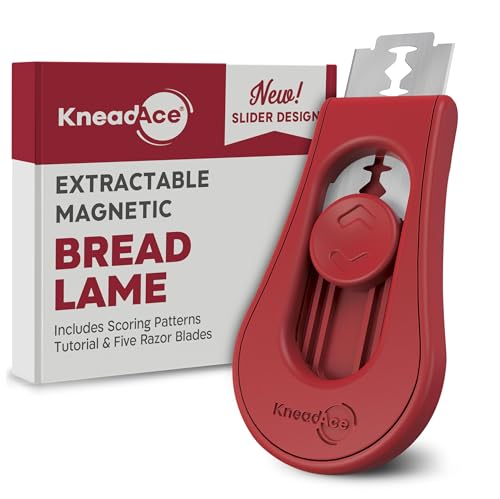
- Specs: Extractable retractable blade design, magnetic blade docking, 5 razor blades included, scoring patterns booklet included, compact round body
The KneadAce takes the opposite approach to storage and safety. Its blade slides out from a compact round body when you are ready to score and retracts back inside when you are done, so there is no exposed edge in the drawer and no separate cover to lose. A magnetic dock holds the blade assembly in place, making a fresh razor swap a quick, tool-free job.
In the hand, the short round body sits close to your fingers, giving the fine control that decorative scoring needs. Wheat stalks, leaves, and crosshatch patterns are easier when the blade is nearly an extension of your fingertips rather than the end of a long stick. The included patterns booklet helps bakers moving beyond a single slash. Five blades are included, fewer than some rivals, but they are standard razors, so restocking is simple.
Pros:
– Blade retracts into the body for genuinely safe storage
– Magnetic mount makes blade changes fast and tool-free
– Close grip suits detailed decorative scoring
– Patterns booklet helps beginners expand their designs
Cons:
– Only five blades in the box
– Compact body offers less reach for scoring inside deep pots
3. X-Sanfuoo Bread Lame Dough Scoring Tool, 2-Pack

- Specs: Two lames included, one straight blade and one curved blade, wooden handles, razor blades and storage cover included, blade length about 1.65 inches, total length about 7.28 inches
If you are torn between straight and curved, this set removes the decision. X-Sanfuoo pairs two full-size wooden-handled lames in one box, one mounted with a curved blade for ears and bold slashes, and one with a straight blade for grids, crosses, and fine surface patterns. Your batards get the angled cut they need while sandwich loaves and rolls get tidy, even expansion cuts.
The handles are wide and easy to grip, which newer bakers tend to prefer when learning how much pressure a score actually needs, which is very little. Both tools arrive with razor blades and a storage cover, so the set is ready for a first bake straight out of the box. Having a second lame ready also means no mid-session blade swap when one edge dulls.
Pros:
– Straight and curved lames in one set for full pattern range
– Wide handles are forgiving for beginners
– Blades and storage cover included
– Handy as a two-baker or backup setup
Cons:
– Two exposed blades to store carefully
– Larger kit takes more drawer space than a single tool
4. Lucky Handmade Magnetic Bread Lame, Black Walnut

- Specs: North American black walnut handle, magnetic blade attachment, 360-degree adjustable blade angle, 10 razor blades included, storage bag included
The Lucky Handmade lame is built around adjustability. Its blade attaches magnetically and can be rotated through a full circle, so you can set a curved presentation for an ear, turn it straight for a crosshatch, or angle it anywhere between without owning two separate tools. The change takes a second, which helps when cold dough is waiting.
The black walnut handle is shaped with a rounded, ergonomic profile that fills the palm more than a slim stick does, and the magnetic connection holds firmly during the cut while still releasing cleanly when you want a fresh blade. Ten razor blades and a storage bag are included. As with any walnut tool, a quick wipe and occasional food-safe oil keep the wood from drying out.
Pros:
– Blade angle adjusts a full 360 degrees for any pattern
– Magnetic mount swaps blades quickly with no screws
– Shaped walnut handle is comfortable for long sessions
– Ten blades and a storage bag included
Cons:
– Wood needs wiping and occasional oiling, not soaking
– Adjustable head rewards a firm check before each score
5. Furneet Premium Bread Lame Sourdough Scoring Tool Kit
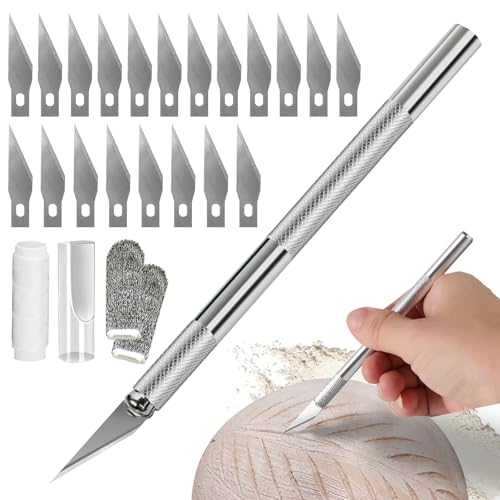
- Specs: Stainless steel lame, 21 blades included, safety cover, 2 cut-resistant finger sleeves, pattern string included
The Furneet kit is the most complete starter package in this group. The stainless steel lame is slim, rinse-friendly, and built around the standard replaceable razor format, and the box adds accessories a cautious beginner actually uses. Twenty-one blades mean you can change edges freely while learning instead of nursing a dull razor through a bake. Two cut-resistant finger sleeves protect the hand that steadies the dough.
A safety cover keeps the mounted blade contained between bakes, and the included pattern string helps you map out symmetrical designs on a proofed loaf before committing with the blade, a trick borrowed from cake decorating that works beautifully for wheat stalk layouts. The steel handle feels cooler than wood and lacks the palm-filling shape of the walnut pick above, but for sheer readiness out of the box, this kit is hard to beat.
Pros:
– Twenty-one blades included, the most in this roundup
– Finger sleeves add real protection while learning
– Stainless steel handle rinses clean easily
– Pattern string helps plan designs before cutting
Cons:
– Slim steel handle is less cushioned than wood options
– Accessory-heavy kit is more than minimalists need
Buying Guide Notes
Match the lame to the loaves you bake most. A baker producing one boule a week needs only a simple curved stick lame and a small stack of blades. A baker scoring decorative patterns will use the close control of a round extractable model or the angle freedom of a rotating magnetic head far more. Sets earn their keep when your baking alternates between batards and pan loaves.
Budget your attention for blades rather than handles. Every lame here uses standard double-edged razors, and the real running cost of scoring is keeping a sharp one mounted. Swap blades at the first sign of dragging, rotate a double-edged blade to use its second edge, and dispose of spent razors in a blade bank or taped container rather than loose in the trash.
Safety habits matter as much as safety features. Score on a stable surface, keep the guiding hand behind the direction of travel, and put the cover on or retract the blade the moment you finish. Cold dough from the refrigerator scores more cleanly than warm proofed dough, and it forgives a slower, more careful stroke.
FAQs
How deep should I score sourdough with a bread lame?
For the main expansion slash, aim for about a quarter to a half inch deep at a shallow angle, which opens into an ear as the loaf expands. Decorative cuts should be much shallower, just through the surface skin, so they stay visible instead of bursting open. Use one smooth stroke and resist going back over the same line.
How often should I replace the blade on my lame?
Replace it as soon as the blade starts to drag, skip, or tear the surface instead of gliding. For many home bakers that means a fresh blade every few bakes, since flour and dried dough dull a fine razor edge quickly. Double-edged blades can be flipped or rotated to expose a fresh section before you discard them.
Is a curved or straight bread lame better for beginners?
A curved lame is the easier starting point for classic loaves because it naturally produces the single slash and ear that most recipes call for. A straight lame gives finer control for patterns and crosshatching, and it suits pan loaves and rolls. If your budget allows, a set or an adjustable model covers both as your skills grow.
Can I score bread with a knife instead of a lame?
A very sharp serrated or paring knife can open a loaf in a pinch, but the thicker blade tends to drag through wet dough and pull the surface rather than slicing it. A lame mounts a far thinner razor edge and holds it at a repeatable angle, which is why its loaves open more evenly.
Conclusion
For most home bakers, the RICCLE stick lame delivers the classic curved cut, a comfortable oak handle, and enough blades to bake for months. If safe storage leads your list, the KneadAce hides its blade completely and changes it magnetically. Bakers who want every option in one purchase should look at the X-Sanfuoo two-lame set or the angle-adjustable Lucky Handmade walnut lame, while beginners who want protection and spares will feel at home with the Furneet kit. Pick the style that matches your loaves and keep a sharp blade mounted.
More from Amazon
Programs that pair well with the guide above. Offers and eligibility are set by Amazon and may change.
Collect the home and kitchen items you want in one registry that guests can shop from.
Create a wedding registrySet up recurring deliveries of everyday items on eligible products. Terms and savings are set by Amazon.
Explore Subscribe & SaveFree shipping on eligible items, Prime Video and more. Eligible new members can start with a free trial.
Start a Prime free trialAudiobooks and podcasts to listen to on the go. Eligible new members can start with a free trial.
Try Audible freeAs an Amazon Associate we earn from qualifying purchases.



Write Your Review
No reviews yet. Be the first to share your experience!