

Key takeaways
- Budget under about $25: choose a plain 18–24-ounce stainless-steel cobbler. Prioritize a tight-fitting lid and a firmly attached strainer over polished finishes.
- New to cocktails: choose a 24-ounce model with a textured or shaped grip. It offers enough room to learn without requiring a separate strainer for basic recipes.
- Very small kitchen: choose an 18-ounce model with a short cap. Measure the stored height, including the lid, because a tall shaker may not fit beneath a cabinet.
- Several drinks per week: spend more on thicker stainless steel and a lid with a stable fit. Repeated lid removal is where cheap models tend to become frustrating.
- Fruit-heavy cocktails: choose a shaker with generously sized strainer openings and add a fine-mesh strainer. Do not expect the built-in plate to handle pulp indefinitely.
- Multiple drinks for guests: select 24–28 ounces, but shake in batches rather than overfilling. Two controlled batches chill and dilute more evenly than one crowded shaker.
The best cobbler cocktail shakers for most home bartenders are the OXO Steel 3-Piece Cocktail Shaker for easy handling, the Leopold Bros. 3-Piece Cocktail Shaker for a more traditional bar-tool feel, and a 24-ounce stainless-steel cobbler shaker with a replaceable strainer if you want maximum capacity and long-term serviceability.
A cobbler shaker combines a mixing tin, a fitted lid, and a built-in strainer. That makes it less intimidating than a Boston shaker, but the convenience comes with trade-offs: the lid can seize when cold, the small strainer can slow a drink with pulp or ice chips, and nominal capacity is not the same as a comfortable working capacity. The right choice depends on how many drinks you make, how much space you have, and whether easy cleanup matters more than speed.
Our top picks


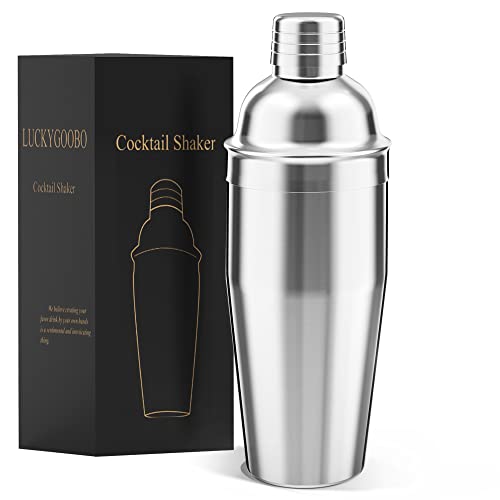
As an Amazon Associate we earn from qualifying purchases at no extra cost to you. Ratings are shown as listed on Amazon.
Best cobbler cocktail shakers by situation
| Best for | Recommended type or pick | Typical capacity | Why it suits the situation | Main compromise |
|---|---|---|---|---|
| Most home bartenders | OXO Steel 3-Piece Cocktail Shaker | 24 oz nominal; about 16–18 oz working | Comfortable grip, integrated strainer, clear volume markings on some versions | More difficult to disassemble for deep cleaning than a simple Boston set |
| Traditional cocktail enthusiasts | Leopold Bros. 3-Piece Cocktail Shaker | About 24 oz nominal; about 16 oz working | Stainless-steel construction and a classic three-piece format | Metal-on-metal lids can fit tightly after vigorous shaking |
| One drink at a time in a small kitchen | 16–18 oz compact cobbler shaker | 16–18 oz nominal; about 10–12 oz working | Stores easily and is easier to grip with smaller hands | Limited room for ice, dilution, and a full serving |
| Frequent entertaining | 24–28 oz heavy-gauge stainless-steel cobbler | 24–28 oz nominal; about 16–20 oz working | Handles larger batches and resists dents better | Heavier, taller, and more likely to develop a stubborn lid seal |
| Easy cleanup | Dishwasher-safe stainless-steel model with removable lid and cap | 18–24 oz nominal | Fewer hidden seams and simpler post-drink maintenance | Dishwasher heat can dull finishes and may loosen decorative components |
“Working capacity” assumes the shaker is filled only about two-thirds full, leaving space for ice to move. A 24-ounce shaker is therefore not designed to hold 24 ounces of liquid plus ice. For a standard shaken cocktail containing 3–4 ounces of ingredients, it is usually the most practical size.
What separates the best cobbler cocktail shakers
Capacity and balance
Capacity affects both output and control. An 18-ounce shaker is nimble for a single daiquiri, gimlet, or whiskey sour, but it becomes cramped when a recipe includes egg white, fruit juice, or large ice cubes. A 24-ounce model gives ice enough room to circulate and can usually handle two smaller cocktails, although you should not fill it to the rim.
Large shakers are not automatically better. A tall, heavy vessel becomes tiring during a 20-second shake, and a partly filled shaker can feel unbalanced. For occasional home use, 18–24 ounces is the useful range. Choose 28 ounces only if you regularly make multiple drinks or use bulky ice.
Built-in strainer performance
The cobbler’s lid usually contains a perforated metal plate. Larger holes drain quickly but let through more ice chips and pulp; smaller holes produce a cleaner pour but clog sooner. For clear spirit-forward drinks, either design can work. For pineapple juice, muddled berries, herbs, or egg-white cocktails, the built-in strainer is best viewed as a first filter rather than a guarantee of a crystal-clear drink.
Look for a strainer plate that sits firmly in the lid rather than rattling or flexing. A rim around the holes helps prevent liquid from escaping between the lid and the shaker body. If you often make shaken drinks with citrus pulp, keep a separate fine-mesh strainer nearby. Double-straining is faster and less frustrating than repeatedly tapping a clogged shaker lid.
Leak resistance and lid fit
A good cobbler should seal through the joint between the body and lid, not rely on a rubber gasket that can absorb odors or deteriorate. Stainless steel expands and contracts with temperature, so a lid that fits easily at room temperature can grip tightly after shaking with ice.
Before buying, check that the lid overlaps the body by a visible amount and that the cap fits snugly without wobbling. A cap with a small internal ridge is preferable to a flat cap that merely balances on top. Avoid shaking with your thumb over the cap as the only protection against leaks; hold the cap securely while keeping your other hand around the lid-body joint.
Cleanup and drying
Stainless steel is the easiest material to own because it does not retain cocktail aromas as readily as plastic and is less fragile than glass. Still, the lid has narrow channels where sugar and citrus oils collect. Rinse immediately after pouring, remove the cap, and flush water through the strainer from both directions.
If the manufacturer permits dishwasher cleaning, place the pieces so water can reach the underside of the strainer. Hand-wash models with brushed, coated, or decorative finishes. Dry every component separately before reassembling; storing a damp lid on the shaker body encourages stale odors and can leave mineral marks.
Head-to-head: OXO Steel versus a traditional stainless cobbler
The OXO Steel 3-Piece Cocktail Shaker is the more approachable option. Its shaped exterior is easier to hold, and its design is aimed at reducing the awkwardness that can make a traditional cobbler feel slippery. It is a good fit for a beginner who wants one tool for sours, martinis, and shaken nonalcoholic drinks.
A traditional stainless cobbler, such as the Leopold Bros. 3-Piece Cocktail Shaker, generally prioritizes a familiar cylindrical form and straightforward metal construction. That makes it easy to understand and durable, but the smooth body can become slippery with condensation. It also rewards careful opening technique: twist the lid rather than pulling straight up after the shaker has become cold.
In practice, the deciding factor is not whether one style can make a better cocktail. Both can mix and strain ordinary home recipes. The choice is whether you value molded grip and beginner-friendly handling or a simpler, more classic metal form.
Decision matrix for choosing your shaker
- Budget under about $25: choose a plain 18–24-ounce stainless-steel cobbler. Prioritize a tight-fitting lid and a firmly attached strainer over polished finishes.
- New to cocktails: choose a 24-ounce model with a textured or shaped grip. It offers enough room to learn without requiring a separate strainer for basic recipes.
- Very small kitchen: choose an 18-ounce model with a short cap. Measure the stored height, including the lid, because a tall shaker may not fit beneath a cabinet.
- Several drinks per week: spend more on thicker stainless steel and a lid with a stable fit. Repeated lid removal is where cheap models tend to become frustrating.
- Fruit-heavy cocktails: choose a shaker with generously sized strainer openings and add a fine-mesh strainer. Do not expect the built-in plate to handle pulp indefinitely.
- Multiple drinks for guests: select 24–28 ounces, but shake in batches rather than overfilling. Two controlled batches chill and dilute more evenly than one crowded shaker.
Ownership realities and common mistakes
The component most likely to cause trouble is the lid, not the body. Sugar residue, dried citrus, and mineral deposits can make the fit sticky. If the lid jams, run warm water over the outside of the lid while keeping the main body cooler, then twist gently. Do not strike the shaker against a counter, which can deform the rim.
Do not use boiling water on a cold shaker, place a coated model in an unapproved dishwasher cycle, or leave acidic juice sitting in the vessel overnight. Avoid shaking carbonated ingredients: pressure can build rapidly and force liquid through the lid. Add sparkling water after shaking and straining.
A simple cost-per-use calculation helps put quality in perspective. If a $20 shaker lasts 200 drinks, its tool cost is about 10 cents per drink. A $45 shaker lasting 600 drinks costs about 7.5 cents per drink, before replacement or shipping. Durability is not guaranteed by price, but a well-fitting lid and solid stainless-steel body are usually more valuable than mirror polish or decorative markings.
Bottom line
For the broadest range of home cocktails, choose a 24-ounce stainless-steel cobbler with a secure lid, a firmly seated built-in strainer, and a body that remains comfortable when wet. The OXO Steel is the easiest general-purpose choice, while the Leopold Bros. model suits drinkers who prefer a classic metal design. If cleanup is your priority, select dishwasher-compatible stainless steel with a removable cap and rinse the strainer immediately after every use.

Write Your Review
No reviews yet. Be the first to share your experience!