

Key takeaways
- Four settings: Best for one or two people with limited cabinet space. Buy two additional dinner plates separately if the pattern supports replacements.
- Eight settings: The best compromise for most households. It covers everyday meals for four people plus occasional guests.
- Twelve settings: Appropriate for frequent entertaining, but measure storage first. Twelve dinner plates alone can occupy roughly 12–15 inches of vertical space depending on plate thickness and stacking method.
Best Bone China Dinnerware Sets for Everyday
The best bone china dinnerware set for everyday use is a four- or eight-place setting with a vitrified body, a moderately thick rim, dishwasher-safe decoration, and at least 10.5-inch dinner plates; choose Lenox for the most practical balance, Noritake for classic formal dining, or Wedgwood for especially refined translucency.
Bone china is not automatically the toughest dinnerware. Its bone-ash content gives it a lightweight, luminous body with good resistance to thermal shock, but very thin edges, raised metallic decoration, and careless stacking can still lead to chips. For daily meals, the useful question is not simply “Which set looks most luxurious?” but “How much translucency am I willing to trade for an easier, lower-stress ownership experience?”
Our top picks


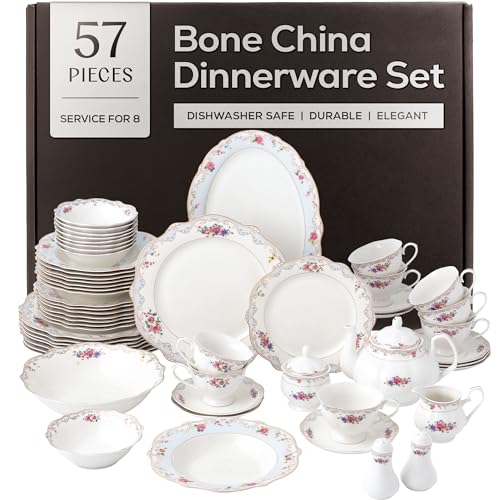

As an Amazon Associate we earn from qualifying purchases at no extra cost to you. Ratings are shown as listed on Amazon.
Our Best Picks by Everyday Dining Situation
Best overall: Lenox bone china place settings
Lenox is a strong all-purpose choice for households that want bone china without reserving it for holidays. Its bone china collections commonly combine a bright white body with traditional or restrained patterns, and many are dishwasher- and microwave-safe when they do not contain metallic trim. A five-piece place setting generally includes a dinner plate, salad or dessert plate, bread-and-butter plate, cup, and saucer.
Choose a plain white or lightly patterned Lenox pattern for maximum flexibility. It works with existing serving pieces, replacement pieces are easier to find than with short-lived patterns, and a 10.5- to 11-inch dinner plate suits most everyday meals. Avoid gold- or platinum-trimmed versions if leftovers regularly go from refrigerator to microwave.
Best for formal-looking tables: Noritake bone china
Noritake is a sensible pick when the set needs to look polished at dinner parties but still serve ordinary meals. Collections such as Crestwood Platinum demonstrate the brand’s formal style, although platinum trim means the pieces require more care and cannot go in a microwave. Noritake’s classic patterns often include generous place-setting counts and matching serving pieces.
For daily use, select an undecorated or minimally decorated Noritake pattern rather than a heavily trimmed one. The investment is easier to justify when you intend to use the dinnerware frequently: a set used twice a week earns its place in the cupboard more effectively than a beautiful set used twice a year.
Best for translucency and a refined feel: Wedgwood bone china
Wedgwood is a good choice when the visual qualities of bone china matter most. Its finer-bodied collections can show the characteristic warm glow when held toward a window or light source, and the lighter weight gives a more formal feel without making the table look cumbersome.
Check the material carefully before buying because Wedgwood sells both bone china and other ceramic bodies. Collections such as Vera Wang Wedgwood Lace are bone china, while some popular Wedgwood lines use porcelain. The difference affects weight, translucency, price, and care instructions.
Best for traditional patterning: Royal Doulton bone china
Royal Doulton bone china suits diners who prefer established floral or heritage patterns. Old Country Roses, for example, is recognizable, giftable, and designed around a formal table aesthetic. It is less visually neutral than plain white dinnerware, but that can be an advantage if you want the set itself to establish the mood of the meal.
Traditional patterns may include gold detailing, so confirm microwave and dishwasher guidance for the exact collection. If you want the Royal Doulton look for frequent use, choose pieces with minimal raised decoration and avoid placing them directly against rough stoneware in a crowded cabinet.
Bone China Sets Compared by the Details That Matter
The figures below describe common specifications for current five-piece bone china place settings, not a guarantee for every pattern. Individual collections can differ, so verify the dimensions and care symbols before ordering.
| Criterion | Practical everyday target | Why it matters |
|---|---|---|
| Material | Bone china with approximately 25% or more bone ash | Usually produces a lighter, whiter, more translucent body than ordinary porcelain |
| Dinner plate diameter | 10.5–11 inches | Fits common place mats and provides room for a main course without excessive overhang |
| Salad or dessert plate | 7–8.5 inches | Useful for breakfast, lunch, dessert, or smaller portions |
| Cup capacity | 6–10 fluid ounces | Smaller cups feel formal; larger cups are more practical for coffee and tea |
| Weight per dinner plate | Approximately 16–24 ounces | Lighter plates are pleasant to handle but may have more delicate-feeling rims |
| Place-setting count | 4, 8, or 12 settings | Four suits a small household; eight covers guests without excessive storage; twelve suits frequent entertaining |
| Typical price range | About $25–$80 per five-piece setting | Plain patterns tend to cost less; hand-finished details and designer collaborations cost more |
Translucency Versus Chip Resistance
To check translucency, hold a dinner plate several inches in front of a bright window. A visible soft glow indicates a fine, relatively thin body. This is attractive, but it should not be the only buying criterion. A very thin rim can be more vulnerable to knocks against a faucet, sink, or another plate.
Bone china is generally strong for its weight because it is fired to a dense, vitrified state. It is often more resistant to sudden temperature changes than ordinary earthenware. However, “strong” does not mean chip-proof. The rim is normally the first area to suffer damage, followed by raised decoration and the foot ring on the underside.
If your household stacks dishes quickly, loads a dishwasher tightly, or serves meals outdoors, a thicker-rimmed bone china pattern is the safer choice. If maximum impact resistance matters more than lightness, compare bone china with vitrified porcelain or fully vitrified stoneware. Those materials can feel heavier and less translucent but may better tolerate rough handling.
Choosing the Right Set Size
- Four settings: Best for one or two people with limited cabinet space. Buy two additional dinner plates separately if the pattern supports replacements.
- Eight settings: The best compromise for most households. It covers everyday meals for four people plus occasional guests.
- Twelve settings: Appropriate for frequent entertaining, but measure storage first. Twelve dinner plates alone can occupy roughly 12–15 inches of vertical space depending on plate thickness and stacking method.
A five-piece setting does not always mean five useful daily pieces. Some sets count a cup and saucer, while others substitute a larger mug or omit the bread-and-butter plate. If cupboard space is limited, prioritize dinner plates, multipurpose salad plates, and bowls over matching cups and saucers.
Daily-Use Care That Prevents Early Damage
- Read the exact care instructions. Bone china bodies may be dishwasher-safe even when metallic borders are not. The decoration, not the ceramic, is often the limiting factor.
- Leave space between pieces. Do not wedge plates tightly against the dishwasher rack or neighboring cookware. Contact during vibration causes many small rim chips.
- Use a mild detergent and a normal cycle. Harsh abrasives and extremely high heat can gradually dull printed decoration and increase the chance of thermal stress.
- Let hot pieces cool before stacking. Moving a hot plate directly onto a cold countertop or stacking it while steaming can create abrupt temperature changes.
- Store vertically only with suitable support. If plates are stored upright in a rack, use smooth, padded dividers. Avoid metal racks with exposed welds or rough plastic seams.
Never use a chipped plate for formal service simply because the damage is small. A chip creates a sharp edge and can grow when the plate is washed or knocked against another piece. Replace the piece, reserve it for non-food display, or discard it according to local ceramic-waste guidance.
A Simple Cost-per-Use Check
Suppose an eight-setting bone china collection costs $320 and is used twice each week for five years. That produces about 520 uses of the set, or approximately $0.62 per use of the complete collection before accounting for breakage. If it is used only six times per year, the same purchase produces 30 uses over five years, or about $10.67 per use.
This calculation favors buying the pattern you will actually use. For everyday dining, dishwasher-safe decoration, available replacement pieces, and comfortable plate dimensions usually matter more than the highest possible translucency.
Bottom Line
Choose Lenox for the best balance of everyday practicality and style, Noritake for a more formal table, Wedgwood for fine translucency and lightness, and Royal Doulton for traditional patterns. In every case, choose a four- or eight-setting configuration, a 10.5- to 11-inch dinner plate, and decoration that matches your cleaning habits. The most durable bone china set is the one with a sensible rim, enough replacement availability, and a care routine your household will follow consistently.




Write Your Review
No reviews yet. Be the first to share your experience!