

Key takeaways
- Best all-purpose choice: A 500–600 ml, thick-walled mixing glass with a weighted base, small pouring spout, and graduations at 15, 30, and 45 ml.
- Best for frequent stirred drinks: A 700–750 ml professional-style glass with a broad weighted foot and a pronounced spout. It gives more room for ice and a smoother pour when making several drinks.
- Best for a small bar: A straight-sided 500 ml beaker-style glass. It stores easily and usually costs less, although its pouring control may be less refined.
- Best for beginners: A glass with clear internal or external volume markings. Markings reduce reliance on a separate measuring cup while learning dilution and batching.
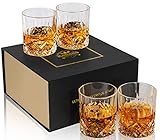
- Best for presentation: A crystal-style or cut-pattern glass, provided its decorative exterior does not obscure the liquid level or make it awkward to clean.
The best cocktail mixing glasses balance a stable base, controlled pouring, readable volume markings, and a comfortable grip; for most home bars, a 500–750 ml glass with a heavy base and a defined spout is the most useful choice.
Our top picks


As an Amazon Associate we earn from qualifying purchases at no extra cost to you. Ratings are shown as listed on Amazon.
Quick picks by mixing style
- Best all-purpose choice: A 500–600 ml, thick-walled mixing glass with a weighted base, small pouring spout, and graduations at 15, 30, and 45 ml.
- Best for frequent stirred drinks: A 700–750 ml professional-style glass with a broad weighted foot and a pronounced spout. It gives more room for ice and a smoother pour when making several drinks.
- Best for a small bar: A straight-sided 500 ml beaker-style glass. It stores easily and usually costs less, although its pouring control may be less refined.
- Best for beginners: A glass with clear internal or external volume markings. Markings reduce reliance on a separate measuring cup while learning dilution and batching.
- Best for presentation: A crystal-style or cut-pattern glass, provided its decorative exterior does not obscure the liquid level or make it awkward to clean.
What matters when comparing cocktail mixing glasses
Capacity and usable volume
A mixing glass is rarely filled to its advertised capacity. Ice needs room to move, and liquid must stay below the rim while you stir. A practical working load is about 40–60% of the stated capacity.
For one or two cocktails, 500–600 ml is usually enough. A 750 ml glass is more versatile for three or four drinks, but it takes more ice, weighs more when full, and can feel oversized for a single Manhattan. Very large glasses—around 900 ml or more—are useful for batching, but they are less efficient for ordinary home service.
Volume markings
Markings are helpful, but they are not a substitute for a jigger when precision matters. Look for graduations that can be read from outside the glass without tilting it. The most useful points are 15 ml, 30 ml, 45 ml, and sometimes 60 ml.
Printed markings may fade in dishwashers or after repeated scrubbing. Molded or etched graduations generally last longer, though they can be harder to see in low light. Also check whether the marks indicate millilitres, fluid ounces, or both; a dual-scale design can prevent avoidable conversion errors.
Spout control
The spout is more important than its appearance suggests. A narrow, symmetrical lip gives a clean stream and helps keep the final drink from running down the outside of the glass. A broad or uneven rim may pour quickly, but it is less forgiving when filling a Nick and Nora or coupe.
For a beginner, a moderate spout is preferable to an extremely sharp one. Very pointed spouts can deliver excellent control but may chip if knocked against a sink or bar tool. A glass with a defined pourer should still have enough rim surface to rest a strainer securely.
Weighted bases
A heavy base reduces movement while stirring and makes the glass less likely to slide when the counter is wet. It is particularly valuable with a metal bar spoon and dense, hard ice. The trade-off is portability: a weighted glass is less pleasant to carry and can put more stress on a thin stone or glass worktop if set down abruptly.
For most home use, a total weight of roughly 500–900 grams provides useful stability without becoming cumbersome. Some Japanese-style mixing glasses have a relatively light body but a thick foot; others use heavy molded glass throughout. The base should sit flat, without rocking, and should be wide enough that the glass remains stable when the spoon presses against the side.
Wall thickness and temperature handling
Thicker walls improve durability and make the glass feel secure when packed with ice. They also insulate slightly, slowing the transfer of warmth from your hand. Thin walls can look elegant and may make the liquid level easier to judge, but they are more vulnerable to rim chips and thermal shock.
Do not pour boiling water into a cold mixing glass or place a heavily chilled glass under hot water. Sudden temperature changes are a common cause of cracking. Borosilicate glass tolerates temperature changes better than ordinary soda-lime glass, but it is not unbreakable and is not automatically the best choice for a bar tool.
Head-to-head comparison
| Mixing-glass type | Typical capacity | Typical empty weight | Markings | Spout control | Best use |
|---|---|---|---|---|---|
| Compact beaker style | 450–600 ml | 300–550 g | Often absent; sometimes 30/45 ml | Moderate | One or two drinks; small kitchens |
| Weighted professional style | 600–750 ml | 600–950 g | Usually absent or etched | Good to excellent | Frequent stirring and neat service |
| Marked measuring style | 500–750 ml | 350–700 g | Commonly 15/30/45/60 ml | Moderate to good | Learning recipes and batching |
| Decorative cut-glass style | 650–900 ml | 700–1,200 g | Rare or difficult to read | Varies widely | Presentation and larger batches |
These are typical market ranges rather than specifications for one particular model. A low-cost mixing glass may perform well if its base is flat and its rim is cleanly formed; a more expensive design is not automatically easier to pour.
Choosing by situation
| Your situation | Recommended specification | Why |
|---|---|---|
| Occasional cocktails and limited storage | 500–600 ml; 300–600 g; straight sides | Compact, affordable, and sufficient for one or two drinks |
| New to stirred cocktails | 500–750 ml; visible 15–60 ml markings; moderate spout | Supports recipe accuracy without making pouring difficult |
| Several stirred drinks each week | 600–750 ml; 600 g or more; broad stable base | More comfortable during repeated stirring and straining |
| Frequent entertaining | 750–900 ml; pronounced spout; thick walls | Allows multiple portions while resisting knocks and overflow |
| Very small work surface | 450–500 ml; narrow footprint; under 550 g | Leaves room for ice, jigger, strainer, and serving glasses |
How much capacity do you actually need?
Use the recipe volume plus the space occupied by ice. As a practical example, suppose you are making two Manhattans with 60 ml whiskey, 30 ml sweet vermouth, and 2 dashes each. The liquid volume is approximately 180 ml before dilution. If stirring adds roughly 25–35% water, the finished liquid may approach 225–245 ml. Ice can occupy several hundred millilitres of internal space, so a 500 ml vessel is workable but leaves limited room for vigorous movement. A 600–750 ml vessel will feel less crowded.
For four portions of the same drink, the pre-dilution liquid is about 360 ml and the finished volume may exceed 450 ml. In that case, a 750 ml glass is the safer minimum, especially if the ice is large or the glass has thick walls.
Pouring comfort is a real differentiator
Hold the mixing glass near its upper third rather than around the base. This keeps your hand away from the coldest surface and gives better control during the pour. A comfortable glass has a rim that does not dig into your fingers, a center of gravity that does not pull forward, and a spout that aligns naturally with the receiving glass.
Be cautious with very wide glasses. They are easy to stir but may require a larger strainer and a longer reach to pour. Narrow glasses save space and often pour neatly, but they can make it harder to move a spoon around large ice cubes. A middle width—approximately 85–105 mm at the widest point—suits most standard bar spoons and strainers.
Durability, cleaning, and ownership
- What usually wears first: printed markings, rim edges, and decorative surface treatments. The glass body often lasts longer than its markings.
- Cleaning: rinse promptly after use, especially after sugary vermouth or liqueur. A soft bottle brush can reach the bottom without striking the sidewalls.
- Dishwasher use: check the maker’s instructions. Repeated dishwasher cycles can fade markings and increase the chance of contact damage from neighboring utensils.
- Common mistake: tapping the glass against a counter to settle ice. This can create tiny chips at the base or rim.
- Storage: leave the glass upright with space around it. Do not nest heavy bar tools inside it.
Market pricing generally ranges from about $15–$30 for a basic marked or beaker-style glass, $30–$60 for a heavier professional design, and $60 or more for decorative or specialty glass. For most people, paying extra for a stable base and a well-formed spout is more useful than paying for elaborate decoration.
Final verdict
Choose a 600–750 ml weighted glass with thick but not bulky walls if you make stirred cocktails regularly. Choose a 500–600 ml marked glass if you are learning recipes, have limited space, or mainly make one or two drinks at a time. Whichever style you select, prioritize a flat stable base, legible markings, a controlled spout, and a rim that feels comfortable in your hand: those details affect every Martini, Manhattan, Negroni, and Boulevardier more than the pattern on the outside.




Write Your Review
No reviews yet. Be the first to share your experience!