

Key takeaways
- Boston sets: A good seal comes from a slight angle and firm contact between the tins, not from a rubber gasket. They are reliable when assembled correctly, but a poor fit or bent rim causes leaks.
- Cobblers: Their threaded or friction-fit lids are convenient, but small manufacturing differences can make one lid stick or seep. A cap that is too loose is a bigger concern than one that fits snugly.
- Weighted tins: The extra weight does not create the seal by itself, but it can keep the tins aligned while shaking.
- Gaskets: Silicone seals may improve leak resistance, but they are consumable parts. They can retain odors, stretch, or crack and may be difficult to replace on decorative models.
The best copper cocktail shakers for most home bartenders are copper-finished stainless-steel Boston shakers: they offer the warm copper look, better leak resistance, and easier maintenance than solid copper or decorative three-piece shakers.
Choose a 28-ounce and 18-ounce weighted-tin set if you make cocktails regularly, a 20-ounce cobbler shaker if you want the simplest all-in-one design, or a 16-ounce copper-plated shaker if storage space matters more than batch size. The important distinction is whether the copper is a durable exterior finish or the actual metal body.
Our top picks


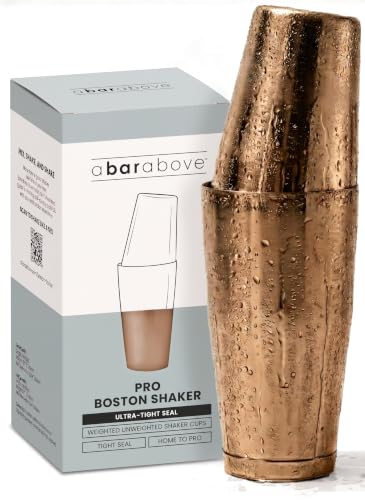
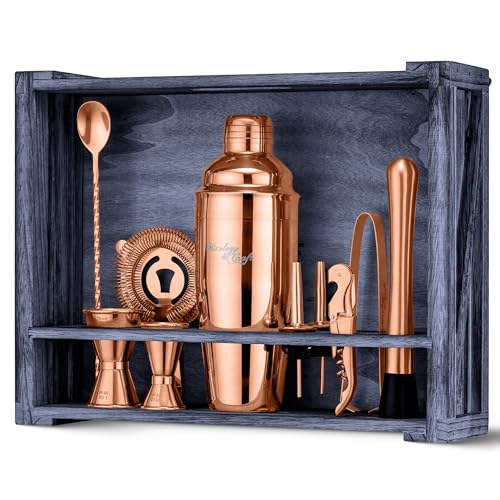
As an Amazon Associate we earn from qualifying purchases at no extra cost to you. Ratings are shown as listed on Amazon.
Best copper cocktail shakers by situation
| Best for | Recommended style | Useful capacity | Why it fits | Main compromise |
|---|---|---|---|---|
| Most home bartenders | Copper-finished stainless Boston set | 18 oz and 28 oz | Fast, stable, and versatile for one or two drinks | Requires a separate strainer |
| Beginners and occasional use | Copper-finished cobbler shaker | 16–20 oz | Built-in strainer and easy learning curve | Top can stick after chilling |
| Frequent cocktail making | Weighted copper-finished tins | 18 oz and 28 oz | Better balance, speed, and separation after shaking | Usually costs more and needs a Hawthorne strainer |
| Small kitchens or single servings | Compact cobbler shaker | 12–16 oz | Fits shallow drawers and smaller hands | Limited room for ice and dilution |
| Decorative bar setup | Solid-copper or copper-look decorative shaker | 16–24 oz | Strong visual impact | More demanding care and sometimes less reliable sealing |
Our top types of copper cocktail shakers
Best overall: a copper-finished weighted Boston shaker
A weighted Boston shaker made from stainless steel, with a copper-colored or copper-plated exterior, is the most practical choice for a home bar. The common 28-ounce large tin paired with an 18-ounce small tin can handle a single drink comfortably and gives enough room for ice to circulate. The smaller tin nests inside the larger one for storage.
Cocktail Kingdom’s Koriko weighted tins are a well-known example of this professional-style format, while Barfly makes comparable bar tools in copper-toned finishes. Exact finishes and sizes vary by model, so check whether the product is copper plated, vacuum-colored, or simply copper-colored stainless steel.
Weighted ends improve balance during shaking and make the tins easier to control when using firm, rhythmic movements. A separate Hawthorne strainer gives better control over ice and herbs than the perforated lid on most cobbler shakers. The trade-off is a short learning period: you must seat the tins firmly and twist them apart after shaking.
Best for beginners: a copper-finished cobbler shaker
A three-piece cobbler shaker has a body, strainer lid, and cap. It is intuitive, compact, and less intimidating if you have never used a Boston shaker. For occasional margaritas, sours, or iced tea-based drinks, a 16- to 20-ounce cobbler is usually large enough.
Its built-in strainer is convenient, but the lid can become difficult to remove when cold liquid freezes the seal. A narrow strainer opening can also slow pouring, especially when a drink contains pulp, mint, or large ice fragments. Look for a cap that fits securely without excessive force and a rim that feels smooth rather than sharply rolled.
Viski and Barfly both offer copper-toned cobbler-style barware, and many housewares brands sell similar designs. Treat decorative details as secondary; the lid fit and interior material matter more than an engraved pattern.
Best for appearance: solid copper or copper-dominant construction
Solid copper shakers have a richer, more variable finish than plated stainless steel and develop a patina as they age. They suit a bar where appearance is part of the purchase, but they are not automatically better at shaking. Copper is softer than stainless steel, so dents and scratches are more visible, and acidic ingredients require more careful cleaning.
For most cocktails, a stainless interior is easier to live with. If you choose solid copper, confirm that the interior is lined with food-safe stainless steel or another suitable barrier. Unlined copper should not be treated as a universal container for acidic mixtures, particularly if a drink will sit in the shaker for more than a brief shaking and pouring cycle.
Copper finishes compared
| Finish or construction | Typical feel | Maintenance | Expected ownership issue |
|---|---|---|---|
| Copper-plated stainless steel | Metallic copper appearance with stainless strength | Hand-wash; avoid abrasive cleaners | Plating can wear at rims and contact points |
| Vacuum-colored stainless steel | Even, modern copper tone | Hand-wash; protect from scratches | Deep scratches can reveal the steel beneath |
| Brushed copper-colored stainless steel | Less reflective and more forgiving visually | Gentle washing and thorough drying | Finish can become patchy with scouring |
| Solid copper | Warmest appearance and natural patina | Dry promptly; polish only if desired | Dents, tarnish, and acidic-food sensitivity |
Avoid assuming that “copper” means the whole shaker is copper. Many products use a thin exterior coating over 18/8 or 18/10 stainless steel. That is usually an advantage for durability, provided you accept that the finish is cosmetic and can eventually show wear.
Capacity: how large should your shaker be?
Capacity needs to include both the liquid and the ice. A single shaken cocktail commonly contains 3–5 ounces of ingredients and uses approximately 6–10 ounces of ice by volume. That makes a 16-ounce shaker workable, but a 20-ounce model gives the ice more room to move.
For two drinks, use the 28-ounce side of a Boston set. A useful practical limit is two cocktails containing up to about 10 ounces of liquid altogether. Beyond that, the shaker becomes crowded, chilling becomes less even, and the liquid may spill through the lid or seam.
For example, two 4-ounce cocktails plus roughly 8 ounces of ice require about 16 ounces of internal space before allowing for vigorous movement. A 16-ounce shaker is therefore too close to its limit; a 20- or 28-ounce body is the safer choice. Do not fill a shaker to its marked capacity with liquid and then add ice.
Leak resistance: what actually matters
- Boston sets: A good seal comes from a slight angle and firm contact between the tins, not from a rubber gasket. They are reliable when assembled correctly, but a poor fit or bent rim causes leaks.
- Cobblers: Their threaded or friction-fit lids are convenient, but small manufacturing differences can make one lid stick or seep. A cap that is too loose is a bigger concern than one that fits snugly.
- Weighted tins: The extra weight does not create the seal by itself, but it can keep the tins aligned while shaking.
- Gaskets: Silicone seals may improve leak resistance, but they are consumable parts. They can retain odors, stretch, or crack and may be difficult to replace on decorative models.
For a Boston shaker, add the smaller tin to the larger one at a slight angle, tap the larger tin near the seam to seal it, and keep one hand over the top while shaking. To open it, strike the larger tin near the seam rather than pulling both tins straight apart.
Maintenance and durability realities
Hand-wash copper cocktail shakers with warm water and mild dish soap, then dry them immediately with a soft towel. Even when the interior is stainless steel, water spots can make a copper exterior look dull. Do not put a plated or solid-copper shaker in the dishwasher unless its manufacturer specifically permits it.
Skip steel wool, scouring powder, melamine sponges, and acidic polishing pastes on plated finishes. They can remove or haze the copper layer. A soft cloth is enough for routine cleaning. If you want a natural patina, leave solid copper alone; if you want a bright finish, use a copper polish approved for the product and rinse thoroughly afterward.
The first parts to show wear are usually the rim, the seam where Boston tins meet, and the underside that contacts a wet bar. With cobblers, the cap fit and threads are the likely failure points. A shaker that smells after washing may have trapped residue in a gasket, cap, or narrow strainer. Separate all parts, rinse them promptly after use, and let them dry fully before storage.
How much should you spend?
In 2026, basic copper-look cobbler shakers generally fall around $15–$35, better copper-finished stainless sets around $30–$80, and premium professional or solid-copper designs roughly $70–$150 or more. The higher price is most defensible when it buys thicker metal, accurately fitted rims, replaceable parts, or a finish applied more evenly—not merely extra decoration.
If you make two cocktails every weekend, a $50 shaker used 100 times over a year costs about $0.50 per use. A $20 decorative shaker used ten times costs $2 per use, even before considering whether its finish or lid lasts. Frequency of use therefore matters more than the initial price difference.
Final recommendation
Buy a copper-finished stainless Boston set with 18-ounce and 28-ounce weighted tins if you want the best combination of capacity, speed, leak resistance, and long-term practicality. Choose a 16- to 20-ounce cobbler when convenience and compact storage are priorities. Choose solid copper only when you specifically want its patina and are prepared to hand-wash, dry, and protect the finish. Whichever style you select, prioritize a well-fitted rim, enough room for ice, and a stainless interior over ornamental details.

Write Your Review
No reviews yet. Be the first to share your experience!