

Key takeaways
- Discover the best nutmeg graters for fresh spices and home baking, from fine Microplane rasps to classic mills that make grating effortless daily.
Few ingredients reward freshness as dramatically as nutmeg. A whole nutmeg seed keeps its warm, sweet, slightly peppery essential oils locked inside for years, while pre-ground nutmeg from a jar starts losing its punch within weeks of opening. The moment you shave fresh nutmeg over a béchamel, a bowl of eggnog, a spinach gratin, or a batch of snickerdoodles, the difference is unmistakable: the aroma is brighter, the flavor is rounder, and a little goes a very long way.
The catch is that nutmeg is a hard, dense seed, and grating it with the wrong tool can be slow, messy, or rough on your fingertips. The best nutmeg graters solve that problem with sharp, fine teeth that shave the seed into a fluffy powder, a shape that keeps your hand at a safe distance, or a mill mechanism that does the pressing for you. Whether you bake every weekend or simply want your holiday drinks to taste like they came from a good café, the right grater turns a small chore into a satisfying ritual.
As an Amazon Associate, Two Coast Table earns from qualifying purchases made through links on this page, at no extra cost to you.
In this guide we compare five well-regarded nutmeg graters, from dedicated spice rasps to a classic French mill, and explain what separates a great one from a drawer-clutter gadget.
How to Choose the Best Nutmeg Grater
Blade style and sharpness. Nutmeg graters come in three broad styles. Flat rasps and zesters use rows of tiny raised teeth to shave the seed; photo-etched stainless steel blades are the sharpest and produce the finest, fluffiest powder. Curved handheld graters wrap a small grating surface around a storage compartment, a traditional design that keeps a seed or two inside the tool itself. Mills use a spring-loaded claw and a grinding mechanism, so you twist or crank instead of rubbing the seed across a blade. All three work, but etched rasps are fastest for small amounts, while mills are the most finger-friendly for frequent use.
Grind texture. Fine teeth give you a powder that melts invisibly into custards, cream sauces, and coffee. Slightly coarser grates leave visible flecks, which look lovely dusted over cappuccinos, French toast, and finished desserts. If you mostly cook savory dishes, prioritize the finest grind you can get; if you love garnishing, a medium-fine rasp offers the best of both.
Safety and grip. A whole nutmeg is only about an inch long, and it gets slippery and hard to hold as it shrinks. Look for a comfortable handle, a non-slip foot or base, and ideally a protective cover for storage. If you grate often or have limited grip strength, a mill or a grater with a built-in holder removes the fingertip risk entirely.
Storage for whole seeds. Whole nutmeg keeps best in a cool, dark, airtight spot. Some graters include a small compartment that stores one or two seeds right in the handle or body, which is genuinely convenient if you grate a pinch at a time.
Cleaning and care. Stainless steel resists the oils in nutmeg and will not rust. Most rasps are dishwasher safe, though a quick rinse and a brush with an old toothbrush keeps teeth at their sharpest. Mills should be emptied and wiped rather than soaked, since their mechanisms are not meant to sit in water.
Versatility. A good spice rasp rarely works only on nutmeg. The same tool usually handles cinnamon sticks, tonka beans, hard chocolate, garlic, ginger, and hard cheeses like Parmesan, which makes it earn its drawer space.
The 5 Best Nutmeg Graters
1. Microplane Premium Classic Spice Grater

Specs
- Photo-etched stainless steel blade made in the USA; compact narrow profile about 9 inches long; designed specifically for hard spices including nutmeg, cinnamon, and tonka beans; snap-on protective cover included; dishwasher safe.
This is the grater Microplane built for exactly one job: turning hard spices into powder. Its teeth are smaller and more closely set than those on a standard zester, so instead of tearing at the seed it shaves off fine, even curls that fall like snow. The short blade gives you excellent control when you only need a quarter teaspoon for a sauce, and the included cover makes it safe to toss in a utensil drawer. If you buy one dedicated nutmeg grater, this is the one most bakers reach for.
Pros:
– Purpose-built fine teeth produce an exceptionally fluffy grind
– Compact size is easy to control for small quantities
– Protective cover included for safe drawer storage
Cons:
– Narrow blade is slower when grating for a big batch
– No built-in storage for spare whole seeds
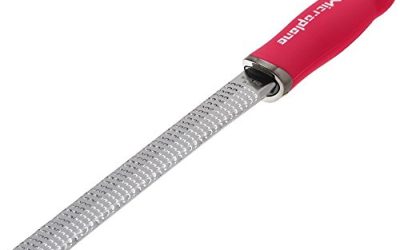
2. Microplane Classic Zester Grater

Specs
- Photo-etched stainless steel blade with hundreds of micro teeth; soft-touch ergonomic handle; roughly 12 inches long for extra leverage; non-slip end piece for bracing on a counter or bowl rim; dishwasher safe; blade made in the USA.
The Classic Zester is the tool that made Microplane famous, and although it is marketed for citrus, its fine blade is superb on nutmeg. The longer handle lets you brace the tip against a cutting board and draw the seed down the blade in smooth strokes, which makes quick work of a full teaspoon for baking. Because it also zests lemons, grates Parmesan, and minces garlic into paste, it is the best choice for cooks who want one multi-tasking rasp rather than a single-purpose tool.
Pros:
– Extremely versatile across spices, citrus, cheese, and aromatics
– Long handle offers leverage and keeps fingers well clear
– Soft grip stays comfortable during longer grating sessions
Cons:
– Fine grind can be almost too powdery for decorative dusting
– Teeth clog slightly with oily seeds and need a brush-out
3. Peugeot Tidore Nutmeg Mill

Specs
- Clear acrylic body made in France; hardened steel grinding mechanism with a spring-loaded claw that grips the seed; double-edged blade shaves as you twist; stores several whole nutmegs inside the body; mechanism covered by Peugeot’s lifetime guarantee.
Peugeot has made spice mills in France for well over a century, and the Tidore applies that heritage to a single seed. You load whole nutmegs into the transparent body, and a sprung claw presses one firmly against the blade; a few twists of the top deliver a fine, even shower of fresh nutmeg with your fingers nowhere near anything sharp. It looks handsome on the table, keeps the seeds stored in the tool itself, and is the most comfortable option for anyone who grates nutmeg daily or dislikes rasps on principle.
Pros:
– Twist action keeps fingers completely away from the blade
– Built-in storage holds spare whole nutmegs
– Steel mechanism backed by a lifetime guarantee
Cons:
– Grind is fine but slightly less fluffy than a sharp rasp
– Acrylic body should be wiped clean rather than soaked
4. JOKUMO Nutmeg Grater with Storage Compartment

Specs
- 18/10 stainless steel grating surface; compact curved body with an integrated compartment that stores whole nutmegs; includes a silicone brush for sweeping out residue; small footprint designed for drawer storage; easy-rinse construction.
The JOKUMO follows the classic European nutmeg grater design and updates it in quality steel. The curved grating plate sits over a little chamber, so the seed you are using and a spare or two live inside the grater itself, always ready when a recipe calls for a pinch. Fresh gratings collect neatly rather than scattering across the counter, and the included silicone brush makes it easy to sweep every last bit into your dish and keep the teeth clean afterward. It is a smart pick for small kitchens and occasional bakers.
Pros:
– Storage compartment keeps whole seeds inside the tool
– Curved design contains gratings and reduces mess
– Included brush simplifies cleaning the fine teeth
Cons:
– Small grating surface is slower for large quantities
– Curved shape takes a little practice to use smoothly
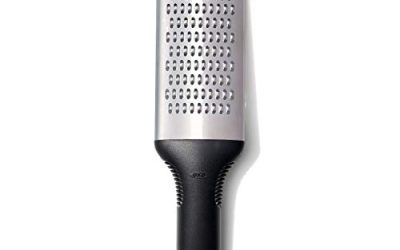
5. Deiss PRO Citrus Zester and Cheese Grater

Specs
- Wide razor-sharp stainless steel blade; comfortable non-slip handle and foot; protective cover included; dishwasher safe; sized for nutmeg, hard cheese, citrus, ginger, garlic, and chocolate.
The Deiss PRO takes the rasp concept and widens it. The broader blade means each stroke covers more of the seed, so you build a small mound of nutmeg quickly, and the sturdy handle and rubber foot keep the tool planted while you work. It is a heavy-duty, no-fuss option for cooks who grate generously — think big pots of creamed spinach, holiday eggnog for a crowd, or a whole spice cake — and who want a tool that shrugs off daily use and goes straight in the dishwasher.
Pros:
– Wide blade grates larger amounts quickly
– Solid, durable build with a secure non-slip grip
– Protective cover included for storage
Cons:
– Wider teeth give a slightly coarser result than a spice rasp
– Too large to double as a table-side finishing tool
Frequently Asked Questions
Why does freshly grated nutmeg taste better than pre-ground?
Whole nutmeg seeds protect their aromatic oils inside a hard shell, so they stay potent for years. Once ground, the exposed surface area lets those oils evaporate and oxidize quickly, and jarred nutmeg can taste flat within a few months. Grating seconds before use captures the full warm, sweet flavor.
What is the difference between a nutmeg grater and a nutmeg mill?
A grater shaves the seed across a toothed blade as you rub it back and forth, while a mill holds the seed in a spring-loaded claw and shaves it when you twist or crank the body. Graters are simpler, cheaper to maintain, and produce the fluffiest powder; mills are safer for your fingers and store the seeds inside the tool.
How do I grate the last small piece of nutmeg safely?
Stop grating once the seed becomes too small to hold comfortably — that final nub is a recipe for scraped fingertips. Switch to a mill if you grate often, press the nub against the blade with the flat of a fork or a small food holder, or simply save nubs and grate them over a rasp held flat on the counter with the seed pressed under a folded cloth.
How should I clean and store my nutmeg grater?
Rinse rasps under warm water right after use and brush the teeth from the back side with a soft brush to push out trapped particles; most stainless models are dishwasher safe. Keep the protective cover on in the drawer to guard both the blade and your fingers, and store whole nutmegs in an airtight container away from heat and light.
Conclusion
For most home bakers, the Microplane Premium Classic Spice Grater is the standout choice: it is purpose-built for hard spices, produces the finest and fluffiest nutmeg, and takes up almost no space. If you prefer a single tool that also handles citrus and cheese, the Microplane Classic Zester Grater or the wide-bladed Deiss PRO will serve you well. And if finger safety and table-ready looks matter most, the Peugeot Tidore mill turns grating into an effortless twist. Whichever style you choose, grating nutmeg fresh is one of the smallest upgrades with the biggest payoff in home baking — your custards, sauces, and holiday drinks will never taste the same again.
More from Amazon
Programs that pair well with the guide above. Offers and eligibility are set by Amazon and may change.
Collect the home and kitchen items you want in one registry that guests can shop from.
Create a wedding registrySet up recurring deliveries of everyday items on eligible products. Terms and savings are set by Amazon.
Explore Subscribe & SaveFree shipping on eligible items, Prime Video and more. Eligible new members can start with a free trial.
Start a Prime free trialAudiobooks and podcasts to listen to on the go. Eligible new members can start with a free trial.
Try Audible freeAs an Amazon Associate we earn from qualifying purchases.


Write Your Review
No reviews yet. Be the first to share your experience!