

Our Top Picks


As an Amazon Associate, I earn from qualifying purchases made through links in this article, at no extra cost to you.
Few kitchen frustrations are as stubborn as polishing a freshly washed wine glass and finding it covered in tiny white fibers. The glass was clean. The water was clean. The towel was the problem. Loose lint clings to wet glass, and once fibers dry onto stemware, they catch the light and make good glassware look dusty.
The fix is not a special spray or a paper towel habit. It is choosing tea towels woven for this job in the first place. Flat weaves, flour sack cotton, and pure linen release far less fiber than plush terry loops, and they glide over glass instead of dragging across it.
This guide focuses on five tea towel sets that suit lint free glass drying, from a big value pack of flat weave cotton to a handmade European linen set. Each was chosen for its weave, its fiber content, and how it behaves on stemware and polished surfaces. Whether you dry everyday tumblers nightly or hand wash crystal after dinner parties, one of these sets will match the way you work.
How to Choose Tea Towels for Lint Free Glass Drying
Weave matters more than almost anything else. Terry cloth feels plush and absorbent, but its looped pile is exactly what sheds. Every loop is a tiny hook of yarn that can break, lift, and transfer onto wet glass. Flat weave towels present a smooth, tight surface instead, so there is very little loose fiber to leave behind. Flour sack towels take this furthest, with a thin, tight plain weave that has been the glass polisher’s standard for generations.
Fiber content comes next. Long staple cotton and linen both release less lint than short staple cotton, because longer fibers stay anchored in the yarn. Linen is the standout, since flax fibers are naturally long and smooth, which is why linen glass cloths have been used in European kitchens and wine cellars for so long.
Size shapes how a towel handles. A towel around 14 by 25 inches works well for one-handed drying, while large 27 or 28 inch square flour sack towels let you cradle a glass in one hand and polish with the other, with dry fabric in reserve.
Absorbency still counts. A towel that only pushes water around will streak. Look for cotton with a bit of body, or linen, which absorbs well and releases water quickly as it dries. Thin towels saturate fast, so pack size matters too. A set of twelve or fifteen lets you rotate to a dry towel mid-session, the single easiest way to get a streak free finish.
Finally, think about care. Glass towels perform best washed without fabric softener, which coats fibers and causes smearing. Machine washable sets with hemmed edges resist fraying through hundreds of cycles.
1. Zeppoli Classic Kitchen Towels, 15 Pack
Specs
- 100 percent natural cotton, flat weave, 14 x 25 inches, 15 towels per pack, blue stripe design, model ZPL-KT15-BLUE, machine washable
The Zeppoli Classic set is the workhorse pick for households that dry a lot of glassware and want a fresh towel within reach at all times. These are flat weave cotton towels rather than terry, and that single detail is why they behave so well on glass. The smooth surface wipes rims and bowls clean without the fiber transfer of looped pile, and the cotton dries several glasses before the towel feels damp.
At 14 by 25 inches, each towel is sized for one-handed work. You can hold a tumbler steady and work the towel inside the bowl with your fingertips, where water spots usually hide. The blue striped design hides light staining, and with fifteen towels in the pack, a household can dedicate a few purely to glass duty. The cotton holds up through repeated washing and stays flat rather than curling at the edges. These are not the thickest towels here, but for drying and polishing glass they are close to ideal.
Pros:
– Flat weave cotton leaves very little lint on wet glass
– Fifteen towels per pack supports a clean rotation
– Handy size for drying inside tumblers and stemware
– Classic stripe design hides everyday staining
Cons:
– Too thin for major spill cleanup
– Works best after a first wash to soften the cotton
2. Utopia Towels Kitchen Towels, 12 Pack
Specs
- 100 percent ring spun cotton, dobby weave, 15 x 25 inches, 12 towels per pack, black color option, model UTKITCHENTOWEL6BLACK, machine washable
Utopia Towels builds this set from ring spun cotton, and that yarn choice is the story. Ring spinning twists longer fibers into a smoother, stronger yarn, which means fewer loose ends at the surface and less lint left on a polished glass. The dobby weave adds subtle texture that grips a wet rim without dragging, and the result on stemware is clean and streak free.
The 15 by 25 inch format sits in the sweet spot for drying at the sink. It drapes over a shoulder or an oven handle, dries a dinner plate in two passes, and stays light enough to maneuver around delicate stems. The black colorway shrugs off the tea, wine, and sauce marks that make white towels look tired within months. The towels sit between a flour sack towel and a terry towel in weight, absorbing more than the thinnest options while still drying quickly on a hook. For one set to handle both everyday dish drying and a final glass polish, this is a balanced, dependable choice.
Pros:
– Ring spun cotton yarn sheds less fiber than standard cotton
– Dobby weave grips wet glass without streaking
– Dark color options hide stains and wear
– Midweight feel absorbs well and dries quickly
Cons:
– Slightly heavier than pure flour sack towels
– Best lint performance comes when washed without softener
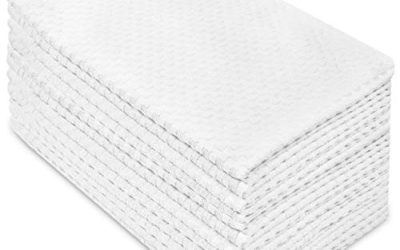
3. Simpli-Magic Flour Sack Kitchen Towels, 12 Pack
Specs
- 100 percent cotton flour sack weave, 24 x 24 inches, 12 towels per pack, white, model 79374, machine washable
Flour sack towels are the traditional answer to lint on glass, and the Simpli-Magic set shows why the style has never gone away. The weave is thin, tight, and completely flat, so there is almost no pile to shed. Water spreads across the fabric instead of beading, and one towel can polish a surprising number of glasses before it needs swapping for a dry one.
The 24 inch square is the classic flour sack format. It folds into a pad that fits a palm, opens out to cradle a large wine glass, and drapes over a bowl or a rising loaf, so these towels work well beyond glass duty. Bakers lean on flour sack towels for proofing and straining, and that same smooth surface leaves mirrors clean. The plain white fabric washes and dries quickly and takes up little drawer space. These will not cushion a hot pan or mop a large spill, but as dedicated glass drying towels, they are about as lint free as cotton gets.
Pros:
– Tight flour sack weave is naturally almost lint free
– Large square format suits polishing and draping
– Thin fabric washes and dries very fast
– Multipurpose for baking, straining, and glass care
Cons:
– Too light for heavy spills or hot cookware
– Plain white shows stains over time
4. MagicLinen Linen Tea Towel, Set of 3
Specs
- 100 percent linen, 20 x 27 inches, set of 3, light gray, OEKO-TEX certified fabric, hanging loop, handmade in Europe, machine washable
If glass drying is the whole point, pure linen is the connoisseur’s material, and this MagicLinen set is the premium pick here. Flax fibers are long and smooth by nature, so a linen towel releases almost no lint at all, even when new. Linen also absorbs water readily, then gives it up quickly, so the towel dries between uses instead of staying damp on the hook.
Each towel measures 20 by 27 inches, a generous rectangle that lets you hold a glass in a fold of dry linen while you polish with the rest. The fabric feels soft rather than stiff, and it gets softer with every wash while keeping its smooth, low lint surface. A hanging loop keeps the towel aired out between uses.
The set includes three towels, fewer than the cotton packs here, and linen costs more per towel. The trade is longevity and performance. A good linen glass towel can serve for years, and for households that hand wash crystal or polished barware regularly, the flawless finish is worth it.
Pros:
– Pure linen releases almost no lint on glass
– Absorbs well and dries quickly between uses
– Generous size for two-handed stemware polishing
– Certified fabric and handmade construction
Cons:
– Only three towels per set
– Higher cost per towel than cotton options
5. Auntie Em’s Kitchen Flour Sack Dish Towels, Set of 12

Specs
- 100 percent natural cotton flour sack weave, 27 x 27 inches, set of 12, red color option, lint free finish, hemmed edges, machine washable
Auntie Em’s builds its flour sack towels a little thicker than most, and that extra body makes a real difference at the sink. The weave stays flat and tight, so the towels remain genuinely low lint, but the fabric has enough substance to pull water off a stack of glasses without saturating halfway through the job. The brand designs these towels with glass drying in mind, and it shows in the finish on stemware and dinnerware alike.
The oversized 27 by 27 inch cut gives you options. Folded in quarters, a towel becomes a plush polishing pad. Opened flat, it covers a whole rack of tumblers or cradles a large serving bowl. Hemmed edges keep the squares tidy through repeated laundering, and the towels soften after the first few washes. With twelve towels in the set, a dedicated glass rotation is easy to keep, and the red colorway hides stains better than white.
Pros:
– Thicker flour sack cotton absorbs more per towel
– Flat weave leaves glass clean and low in lint
– Extra large squares suit racks of glassware
– Hemmed edges hold up through frequent washing
Cons:
– Larger size can feel bulky for small hands
– Needs a few washes to reach full softness
FAQs
Why do some towels leave lint on glasses while others do not?
Lint comes from short, loose fibers at the towel’s surface, and looped terry pile has far more exposed fiber ends than a flat weave. Pressed against wet glass, those fibers break free and cling. Flat weave cotton, flour sack towels, and linen keep their fibers locked into a tight, smooth yarn, so very little transfers during drying.
How should tea towels be washed to keep them lint free?
Wash glass towels separately from terry bath towels and fleece, which shed heavily in the wash and redeposit fibers. Use warm water with regular detergent, and skip fabric softener and dryer sheets, since their coatings smear on glass and reduce absorbency. Expect performance to improve after the first few washes as manufacturing residue rinses away.
Are linen tea towels better than cotton for drying stemware?
Linen has natural advantages here. Flax fibers are longer and smoother than cotton fibers, so a linen towel releases less lint and polishes glass to a clear finish with fewer passes. Linen also dries faster between uses. Good flat weave cotton and flour sack towels run a close second and cost less per towel, which suits large rotations, while linen suits a smaller set kept for fine glassware.
How many tea towels does a kitchen need for glass drying?
A practical rotation is at least six towels dedicated to glass and dishes, so a dry towel is always available while others are in the wash. Households that entertain often do better with twelve or more. The key habit is switching to a dry towel as soon as the current one feels damp, because a saturated towel streaks no matter how good its weave is.
Conclusion
Lint on a clean glass is a towel problem, not a washing problem, and it disappears the moment the right weave reaches the rack. For most kitchens, the Zeppoli Classic 15 pack offers the easiest path, with flat weave cotton and enough towels to keep a dry one in hand. The Utopia Towels set adds ring spun smoothness in a stain hiding dark colorway, while the Simpli-Magic flour sacks deliver the traditional thin, tight weave.
If you want the finest finish on crystal and stemware, the MagicLinen set is the standout, pairing linen’s low lint surface with quick drying and careful construction. And for cooks who love the flour sack format but want more absorbency, Auntie Em’s thicker 27 inch squares round out the list. Wash them without softener, and your glasses will come off the towel as clear as they came out of the water.
More from Amazon
Programs that pair well with the guide above. Offers and eligibility are set by Amazon and may change.
Collect the home and kitchen items you want in one registry that guests can shop from.
Create a wedding registrySet up recurring deliveries of everyday items on eligible products. Terms and savings are set by Amazon.
Explore Subscribe & SaveFree shipping on eligible items, Prime Video and more. Eligible new members can start with a free trial.
Start a Prime free trialAudiobooks and podcasts to listen to on the go. Eligible new members can start with a free trial.
Try Audible freeAs an Amazon Associate we earn from qualifying purchases.




Write Your Review
No reviews yet. Be the first to share your experience!