

The best table runner is one cut to the right length for your table, made from a fabric that matches how you use it: cotton or linen blend for everyday meals, polyester for easy wipe-clean cleanup, and burlap or woven textures for rustic styling. For most tables, a runner that hangs 6 to 12 inches over each end and measures 13 to 16 inches wide looks balanced. This guide compares seven runner types by material, size and care, with advice on choosing the right size for 4-, 6- and 8-seat tables.
Our top picks


As an Amazon Associate we earn from qualifying purchases at no extra cost to you.
Quick Comparison of Table Runner Types
| Runner type | Best for | Common sizes | Care | Watch for | Budget tier |
|---|---|---|---|---|---|
| Cotton linen blend | Best overall everyday | 13×72, 14×90 in | Machine wash | Wrinkles | Budget to mid |
| Pure linen | Elegant dinners | 14×72, 16×108 in | Wash gentle, iron | Creasing, cost | Upper-mid |
| Polyester | Families, parties | 13×70, 13×108 in | Machine wash, dry fast | Can look shiny | Budget |
| Burlap or jute | Rustic, farmhouse | 12×72, 14×108 in | Spot clean | Shedding, fray | Budget |
| Woven vinyl or PVC | Wipe-clean spill zones | 14×72 in | Wipe | Stiff, less formal | Mid |
| Embroidered or lace | Holidays, weddings | 13×90, 16×120 in | Gentle or hand wash | Delicate | Mid |
| Satin or velvet | Formal events | 12×108 in | Dry clean or gentle | Shows creases | Mid |
Sizes are typical ranges from common listings, so check the exact dimensions before ordering.
1. Cotton Linen Blend: Best Overall
A cotton and linen blend gives you the textured look of linen with easier care. It softens with washing, hangs naturally and tolerates the occasional spill. Choose a medium weight if you want it to lie flat without lifting at the edges. Neutral colors such as oatmeal, white and gray pair with most dinnerware.
The downside is wrinkling. Take it from the dryer slightly damp and smooth it on the table.
2. Pure Linen: Best for Elegant Dinners
Pure linen has a crisp drape, a slight sheen and a natural slub that looks refined under candlelight. Because the fibers are strong, a good runner lasts many years. Washed linen softens, and stone-washed finishes arrive with a relaxed, lived-in look.
It costs more and creases easily. If you dislike ironing, choose a pre-washed finish and accept the relaxed wrinkles.
3. Polyester: Best for Families and Parties
Polyester runners are cheap, resist stains and dry quickly. A 13×108 inch runner can serve a long banquet table, and a wide color range makes it easy to match event themes. Machine wash on warm, then hang to dry.
The trade-off is appearance. Some polyester fabrics look flat or shiny, and they can melt if touched by a hot pan. Keep hot dishes on trivets.
4. Burlap or Jute: Best for Rustic Tables
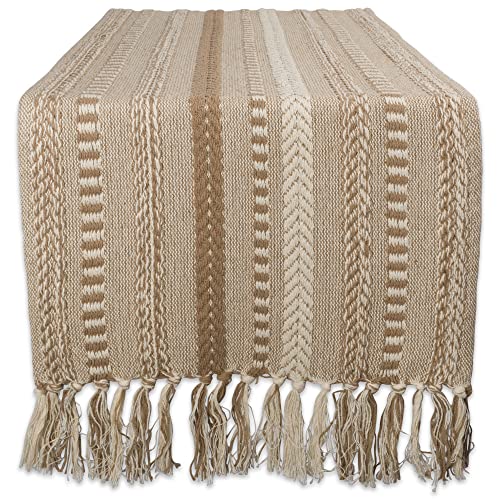
Burlap and jute give a textured farmhouse look that pairs well with white dinnerware and wood tables. Edges are often finished with lace or stitching to reduce fraying. Use it for fall tables and casual brunch.
It sheds fibers and holds food stains, so use a clear cover or protect it with placemats under plates. Spot clean only.
5. Woven Vinyl or PVC: Best for Spill Zones
A woven vinyl runner wipes clean with a damp cloth, which makes it handy for homes with children. It works as a daily runner and holds shape because of its stiffness.
It looks more casual than fabric and can curl at the corners if stored folded. Store it rolled.
6. Embroidered or Lace: Best for Holidays
Embroidered and lace runners add color or detail without requiring extra decor. They work for Christmas, Easter and weddings. Choose patterns that are not too busy if you also use patterned dinnerware.
These are delicate. Wash gently in a mesh bag or by hand, and avoid candle wax.
7. Satin or Velvet: Best for Formal Events
Satin and velvet runners add sheen and depth to wedding and dinner party tables. Dark jewel tones look striking with gold flatware and white plates.
They show every crease, so press or steam them before use. Keep liquids away from velvet.
How to Choose a Table Runner
Measure your table
Measure the table length. For a classic look, the runner should extend 6 to 12 inches beyond each end. A runner that drops 12 to 18 inches suits formal settings. For a 60 inch table, a 72 to 84 inch runner works. For a 72 inch table, a 90 to 108 inch runner is common.
Pick the width
Choose a width roughly one third of the table’s width. For a 36 inch table, a 12 to 14 inch runner leaves room for plates on both sides. If you want the runner under dishes, 16 inches is fine.
Match material to usage
Machine-washable cotton blends are best for daily use. Delicate fabrics are better reserved for special occasions.
Think about colors and patterns
Neutrals remain useful across seasons. If you own patterned plates, pick a plain runner. If your dinnerware is white, a patterned runner can add interest.
Check edges and hems
Finished hems resist fraying. Rolled or double-stitched edges last longer.
Sizing Guide by Table
| Table | Length | Suggested runner length | Suggested width |
|---|---|---|---|
| 4 seats, round or square | 36 to 48 in | 54 to 72 in | 12 to 14 in |
| 6 seats | 60 to 72 in | 72 to 90 in | 13 to 15 in |
| 8 seats | 72 to 90 in | 90 to 108 in | 14 to 16 in |
| 10 or more seats | 90 to 120 in | 108 to 120 in | 14 to 16 in |
Styling and Care Tips
Runners do three jobs: they protect the center of the table, add color, and create a base for centerpieces. Keep the center clear enough for serving dishes. A runner works best when candles, bowls or a vase sit on it in an odd-numbered group of three, with enough room left for plates and glasses on either side.
For seasonal rotation, own one neutral runner and one accent color for each season. Neutral cotton or linen goes year round, and a patterned or colored runner can be swapped in for holidays. This is more economical than buying a new runner for every event.
On care, wash a new runner before first use to remove sizing and test color fastness. Wash darker runners separately the first time. Dry cotton on low and remove it while slightly damp to cut wrinkling. For linen, iron on a medium-high setting while still damp. Fold embroidered pieces rather than crushing them, and store them in a breathable bag. For stains, blot rather than rub, and treat red wine or oil right away with a stain remover that suits the fabric.
| Occasion | Suggested runner | Why |
|---|---|---|
| Weeknight dinners | Cotton linen blend | Washes easily |
| Holiday meals | Embroidered or plaid | Adds seasonal color |
| Kids and craft tables | Woven vinyl | Wipes clean |
| Weddings and formal events | Satin, velvet or linen | Upscale texture |
Frequently Asked Questions
How long should a table runner be?
A runner should hang 6 to 12 inches over each end of the table. Add twice the overhang to your table length to get the runner length.
How wide should a table runner be?
About one third of the table width, which usually means 12 to 16 inches. Wider runners work only if you use them under dishes.
Should a table runner match the tablecloth?
It does not need to match, but it should coordinate. Contrasting runners over a solid tablecloth add layers.
Can you use a table runner without a tablecloth?
Yes. Many people use a runner on a bare table with placemats, which protects the center and shows off the wood.
How do I keep a runner from sliding?
Use a non-slip liner or small strips of removable double-sided tape. Heavier fabrics stay in place better.
What fabric is easiest to clean?
Polyester and woven vinyl are the easiest. Cotton blends are close behind and survive frequent washing.
Write Your Review
No reviews yet. Be the first to share your experience!