

Key takeaways
- Quarter-fold paper: Usually suits compact square holders, but thick paper can reduce capacity.
- Embossed or quilted paper: Adds bulk and may catch on narrow rails or tight center posts.
- Reusable cloth: Check the folded dimensions and stack height; cloth napkins are thicker and may not dispense individually from a spring-style holder.
- Mixed sizes: Avoid stacking different formats together. Uneven edges can snag, fan out, or make the stack difficult to pull from.
Best Cocktail Napkin Holders for a Bar: Choose by Space, Dispensing, and Style
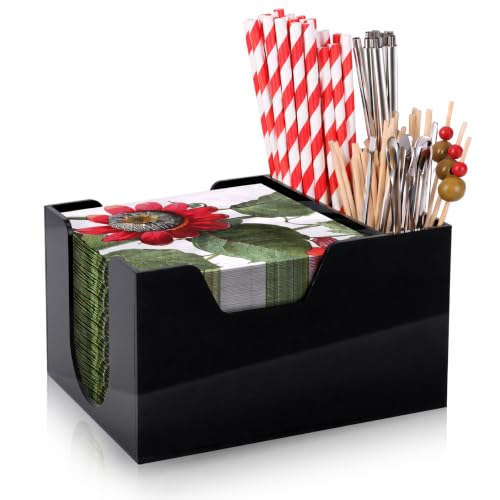
The best cocktail napkin holder for a bar is a compact, weighted holder sized for your napkins and designed to let guests take one without lifting the whole stack. For a crowded bar top, choose a low-profile metal holder; for frequent entertaining, prioritize a stable base and easy refilling; for a softer, more decorative look, consider wood or acrylic—provided it stays put when someone pulls a napkin.
Quick comparison by bar setup
Dimensions and capacities below are practical target ranges, not specifications for every model. Cocktail napkins vary by brand and fold, so check the holder’s interior dimensions before buying.
Our top picks



As an Amazon Associate we earn from qualifying purchases at no extra cost to you. Ratings are shown as listed on Amazon.
| Holder type | Typical footprint | Useful capacity | Best for | Main trade-off |
|---|---|---|---|---|
| Open wire or metal basket | About 5 × 5 in | 25–50 napkins | Small bars and quick, visible access | Light models can slide or tip |
| Weighted metal dispenser | About 5–6 × 5–6 in | 30–60 napkins | One-handed serving during parties | More bulk; finish needs care |
| Wooden holder with center post | About 5–6 × 5–6 in | 30–60 napkins | Warm, furniture-like home-bar styling | May not suit damp or spill-prone spots |
| Acrylic or clear plastic holder | About 4.5–5.5 × 4.5–5.5 in | 20–50 napkins | Making napkin color part of the display | Scratches can show over time |
| Covered or lidded dispenser | About 5–7 × 5–7 in | 30–80 napkins | Keeping napkins tidier in a busy room | Slower to refill and sometimes dispense |
Capacities are approximate: a thick, embossed paper napkin takes more room than a thin one, even when both are sold as cocktail size.
Choose for the way your bar works
For a narrow bar top: choose a compact open holder
If bottles, glasses, and a shaker already compete for space, look for a holder around 5 inches square or smaller, with a low rim and no oversized decorative handle. An open metal basket makes the stack easy to grab and refill. Measure the clear area on your bar—not just the countertop—so the holder won’t block a drawer, cabinet door, or serving path.
A slim footprint can come with a stability penalty. Prefer a model with a broad, flat base, non-slip pads, or enough weight to resist a sideways tug. A tall stack in a lightweight holder is more likely to shift than a shorter, neatly squared stack.
For one-handed dispensing: prioritize weight and napkin restraint
Guests often reach for a napkin while holding a drink. A holder works better one-handed when the base stays planted and the napkins are constrained enough that the whole stack does not follow the one being pulled. A weighted plate, a spring-loaded arm, or close-fitting sides can help; the right design depends on how the napkins are folded.
When comparing products, check whether the weight sits in the base or is simply part of a heavy-looking frame. A substantial base is useful, but it is not a guarantee: slick stone or glass can still let a holder slide. Felt or rubber feet can improve grip and protect the surface, though they may need replacing if they loosen or collect residue.
For frequent hosting: buy for easy refills, not maximum capacity
A holder that accepts 80 napkins is not automatically better than one that holds 40. A tightly packed stack can make dispensing awkward, while a large holder occupies space even when nearly empty. For a typical home bar, a capacity of roughly 30–60 cocktail napkins is a practical starting point. If you regularly host larger groups, keep reserve packs nearby and refill during setup rather than overstuffing the holder.
Check napkin fit before choosing a style
“Cocktail napkin” describes a use, not one universal finished size. Folded napkins commonly measure about 4.5–5 inches across, but brands and fold styles differ. Measure one folded napkin and compare it with the holder’s usable interior—not its outside dimensions. Leave a little clearance so napkins can be loaded without bending corners.
- Quarter-fold paper: Usually suits compact square holders, but thick paper can reduce capacity.
- Embossed or quilted paper: Adds bulk and may catch on narrow rails or tight center posts.
- Reusable cloth: Check the folded dimensions and stack height; cloth napkins are thicker and may not dispense individually from a spring-style holder.
- Mixed sizes: Avoid stacking different formats together. Uneven edges can snag, fan out, or make the stack difficult to pull from.
A simple fit check before purchase: compare your napkin’s folded width with the holder’s interior width, then confirm the opening is tall enough for the stack you plan to load. If the listing gives only external measurements, ask the maker for the usable dimensions or choose a more clearly specified model.
Materials and finishes: what holds up on a home bar?
Stainless steel and coated metal are practical choices for regular use. Stainless steel resists everyday moisture, while powder-coated finishes can add color but may chip if struck or scrubbed with an abrasive pad. Brass-toned and other plated finishes can look polished, but harsh cleaners and repeated friction may dull or mark the surface. Wipe spills promptly and follow the maker’s care instructions.
Wood suits traditional bars and shelves, but a wood holder should not sit where wet glasses routinely drip. Use a dry or slightly damp cloth rather than soaking it, and dry it after cleaning. Acrylic keeps the napkin design visible and is lightweight, but it can scratch; avoid abrasive cleaners and rough scouring pads.
For any material, inspect the parts that take repeated stress: thin wire joints, welded corners, spring arms, painted edges, and feet. These are more likely to loosen, wear, or show damage than the broad, flat surfaces. A simple shape with a stable base is often easier to maintain than one with delicate trim or hard-to-clean crevices.
Match the holder to your priorities
| Your situation | Look for | Avoid |
|---|---|---|
| Small bar or apartment counter | Footprint near 5 × 5 in; low profile; 20–40 napkins | Oversized bases and tall decorative frames |
| Guests serve themselves often | Weighted base, grippy feet, restrained stack, easy refill | Lightweight holders that move when pulled |
| Occasional drinks, mostly decorative setup | Wood, acrylic, or a finish coordinated with bar hardware | Paying for a high-capacity dispenser you rarely use |
| Frequent parties or family gatherings | Durable metal, straightforward cleaning, 40–60 napkin capacity | Tight openings and delicate finishes near spills |
Price expectations and ownership tips
Simple wire or plastic holders are generally available in the low-price range; sturdier metal, wood, and decorative designs commonly cost more, with premium finishes at the upper end. As a broad market guide, expect roughly $8–$20 for basic options, $20–$45 for many substantial or design-led holders, and more for premium materials or branded décor. Treat these as general ranges, since prices vary by size, finish, and retailer.
To keep a holder working well, load napkins in an even stack and stay below the rim or spring arm’s comfortable travel. Wipe crumbs out before they collect beneath the stack, and check rubber feet periodically. The common mistake is choosing by appearance alone: an attractive holder that is too small, slippery, or incompatible with your napkins will be less useful than a plain model that fits the bar and dispenses cleanly.



Write Your Review
No reviews yet. Be the first to share your experience!