

Our Short List of 3

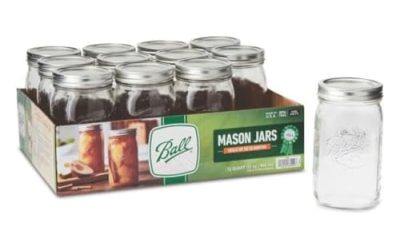
- Specs: 32 oz (1 quart) capacity; wide mouth opening; clear glass; pack of 12 jars with two-piece lids and bands included; BPA-free lid coating; freezer safe and dishwasher safe
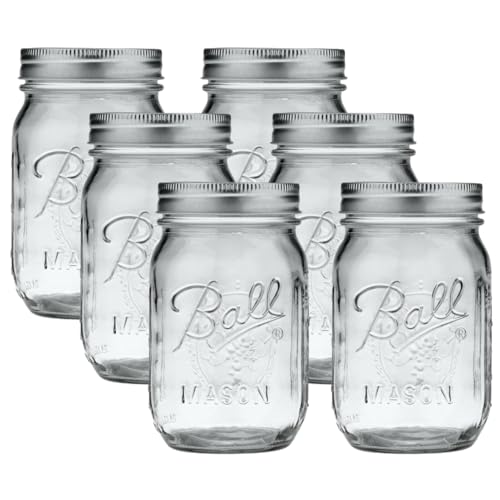
- Specs: 16 oz (1 pint) capacity; regular mouth opening; clear glass; pack of 6 jars with two-piece lids and bands included; dishwasher safe and reusable

- Specs: 64 oz (half gallon) capacity; wide mouth opening; clear glass; pack of 4 jars with two-piece lids and bands included; BPA-free materials
All 4 Picks at a Glance
| Product | Specs | Action |
|---|---|---|
| 1. Ball Wide Mouth Quart Jars with Lids and Bands, 32 oz (ASIN: B0DVLPR6CT) |
| Check price on Amazon |
| 2. Ball Regular Mouth Pint Jars with Lids and Bands, 16 oz (ASIN: B0D422KCT3) |
| Check price on Amazon |
| 3. Ball Wide Mouth Half Gallon Jars with Lids and Bands, 64 oz (ASIN: B0D42DZHNP) |
| Check price on Amazon |
 4. Ball Quilted Crystal Jelly Jars with Lids and Bands, 4 oz (ASIN: B00B80TK2K) |
| Check price on Amazon |
Key takeaways
- Compare the best canning jars for canning and sealed storage, from wide mouth quarts and pints to quilted jelly jars and reusable Weck tulip jars.
As an Amazon Associate, we earn from qualifying purchases made through links on this page, at no extra cost to you.
A good jar is the quiet workhorse of every preserving season. It has to survive boiling water or a pressure canner, seal reliably, sit in a dark pantry for months, and then open cleanly when you reach for that salsa or jam you put up last summer. The wrong jar makes all of that harder: narrow mouths fight with funnels, thin glass cracks under thermal shock, and lids that fail to seal turn a weekend of work into a refrigerator full of food you have to eat within the week.
Canning jars are a mature, well-understood category, and the differences that matter come down to size, mouth width, lid system, and how you plan to process and store what you make. This guide covers the five jar sets we recommend most often: the classic everyday quart, the all-purpose pint, a half gallon option for bulk storage, a small quilted jelly jar for gifts, and a reusable European-style tulip jar with a glass lid. Whether you are putting up your first batch of jam or restocking a family pantry, one of these sets will fit the way you preserve.
How to Choose Canning Jars
Start with size, because size drives everything else. Recipes in trusted canning references are tested for specific jar sizes, and processing times change with the jar. Pints and quarts cover most vegetables, fruits, soups, and sauces. Half pints suit jams, jellies, and condiments. Tiny four-ounce jars are made for giftable preserves and small-batch experiments. Half gallon jars are the exception: they are only approved for a very short list of high-acid juices in a water bath, so most people use them for dry goods, fermenting, and refrigerator storage instead.
Choose a mouth width that matches the food. Wide mouth jars have a straight, wide opening that lets you pack whole or halved produce and wash the jar easily by hand. They are the friendlier choice for pickles, peach halves, and anything bulky, and they suit the freezer because there is no curved shoulder to trap expanding food. Regular mouth jars have a narrower opening with a shoulder, which helps keep floating fruit submerged under liquid and works well for pourable foods like juices, sauces, and jellies. Many canners keep both on hand.
Understand the lid system before you buy in bulk. The standard two-piece lid pairs a flat metal lid with a sealing compound around its edge and a separate screw band. The flat is single-use for processing: once it has sealed and been opened, it should not be reused for canning, because the compound may not seal a second time. Bands are reusable as long as they are free of rust and dents. Glass-lid systems, like the European style in this guide, use a rubber ring and clamps instead; the rings are replaced periodically, but there is no disposable flat, which appeals to people who want less waste.
Look at the glass itself. Canning jars are made from tempered glass designed to handle the temperature swings of processing, but they are not invincible. Check for chips on the rim before every use, because even a small nick can prevent a seal or cause a crack in the canner. If you plan to freeze in jars, fill only to the freeze fill line.
Finally, match the jar to the storage job. Sealed pantry storage is the main event, but jars also earn their keep holding dry goods, fermenting vegetables, and organizing leftovers, so versatility matters as much as how a jar processes.
The 5 Best Canning Jars
1. Ball Wide Mouth Quart Jars with Lids and Bands, 32 oz (ASIN: B0DVLPR6CT)
- Specs: 32 oz (1 quart) capacity; wide mouth opening; clear glass; pack of 12 jars with two-piece lids and bands included; BPA-free lid coating; freezer safe and dishwasher safe
If you only keep one jar size in the house, the wide mouth quart is the one most canners reach for first. The generous opening swallows halved tomatoes, peach slices, pickle spears, and green beans without a fight, and a wide mouth funnel sits in it securely while you ladle. Because the sides run straight from base to rim, frozen soups expand upward instead of pushing against a shoulder, which makes these jars the safest glass option for the freezer as well. Ball’s two-piece SureTight lids are designed to seal and hold for up to 18 months of shelf storage when processed correctly, and quarts suit family-size portions of sauce, fruit, and pickles.
Pros:
– Wide mouth makes filling, emptying, and washing easy
– Straight sides are freezer friendly and stack well
– Processing times listed in every major canning reference
– Replacement lids and bands are sold everywhere
Cons:
– Too large for jams and jellies
– A filled case is heavy to move
2. Ball Regular Mouth Pint Jars with Lids and Bands, 16 oz (ASIN: B0D422KCT3)
- Specs: 16 oz (1 pint) capacity; regular mouth opening; clear glass; pack of 6 jars with two-piece lids and bands included; dishwasher safe and reusable
The pint is the most versatile size in home canning, and this regular mouth set is the classic version of it. The shouldered shape helps keep light produce from floating up into the headspace, which makes it a natural fit for crushed tomatoes, applesauce, salsa, fruit in syrup, and pickled vegetables cut to fit. Sixteen ounces is also the portion size many recipes assume, so processing times are easy to find and follow, and the jars fit standard canner racks without crowding.
For smaller households, a pint is often the ideal amount of vegetables or soup for one meal, so less half-used food lingers in the refrigerator. This six-jar pack is a sensible starter quantity, and the glass is dishwasher safe.
Pros:
– The most recipe-friendly size in home canning
– Shouldered shape helps reduce fruit float
– Comfortable size for single-meal portions
– Works in water bath and pressure canners
Cons:
– Narrower mouth is slower to fill with bulky produce
– Six jars may be too few for a big harvest batch
3. Ball Wide Mouth Half Gallon Jars with Lids and Bands, 64 oz (ASIN: B0D42DZHNP)
- Specs: 64 oz (half gallon) capacity; wide mouth opening; clear glass; pack of 4 jars with two-piece lids and bands included; BPA-free materials
These are the biggest jars in the Ball lineup, and they shine brightest outside the canner. A half gallon jar is the perfect vessel for cold brew coffee, sun tea, lemonade, and juice in the refrigerator, and the wide mouth accepts a ladle, a fermenting weight, or a whole hand for scrubbing. On the counter, one jar holds a sourdough starter or a fermenting batch of kraut, and in the pantry these replace a clutter of smaller containers for flour, sugar, oats, and rice.
One honest limitation: half gallon jars are only approved for water bath canning of a couple of high-acid juices, and not for pressure canning. Treat them as storage, fermenting, and beverage jars and they are superb.
Pros:
– Huge capacity for drinks, ferments, and bulk dry storage
– Wide mouth is easy to fill, reach into, and clean
– Uses the same wide mouth lids and bands as quart jars
– Sturdy glass that handles daily use well
Cons:
– Not approved for canning most foods
– Large and heavy when full; too tall for some cabinets
4. Ball Quilted Crystal Jelly Jars with Lids and Bands, 4 oz (ASIN: B00B80TK2K)
- Specs: 4 oz capacity; regular mouth opening; quilted crystal patterned glass; set of 12 jars with two-piece lids and bands included; freezer safe
Some preserves deserve a pretty jar, and these little quilted jars have been the traditional choice for jam and jelly gifting for generations. The faceted crystal pattern catches the light, gives your grip some texture, and makes a simple jar of pepper jelly look like something from a farm stand. At four ounces, they are the right size for sample batches, flavored mustards, hot sauces, and herb jellies, where a full half pint would be more than anyone uses before it loses its punch. Small jars also process quickly and set up beautifully, which makes them forgiving for beginners, and they are freezer safe for small portions of pesto or compound butter.
Pros:
– Attractive quilted design made for gifting
– Small size suits jams, mustards, sauces, and trial batches
– Quick processing times and reliable sets for beginners
– Freezer safe for small portions of pesto or soup
Cons:
– Four ounces is too small for most foods
– Patterned glass shows contents less clearly than plain jars
5. Weck 744 Tulip Jars, 1/2 Liter (ASIN: B00E9E45JA)
- Specs: 1/2 liter (about 16.9 oz) capacity; tulip shaped glass; glass lids with rubber rings and stainless steel clamps; set of 6 jars; made in Germany
Weck jars are the European answer to the mason jar, and the tulip is their most graceful shape. Instead of a disposable metal flat, each jar seals with a glass lid, a reusable rubber ring, and two stainless steel clamps. When the jar cools, you remove the clamps and test the seal by lifting the jar by its lid; the tab on the rubber ring also points down when a vacuum has formed, giving you a visual check every time you reach into the pantry. With no flats to throw away, the waste of a canning season drops to the occasional replacement ring.
The half liter size is close to an American pint, so it handles jams, pickles, and fruit in familiar portions, and the curved silhouette unmolds terrines and set desserts beautifully. Weck jars are processed in a water bath following the maker’s guidance, which differs from two-piece lid practice, so read the instructions the first time. The glass is thick and weighty, and the jars double as handsome serving pieces.
Pros:
– Reusable glass lids and rings cut waste and repeat costs
– Visible seal check thanks to the rubber ring tab
– Elegant tulip shape unmolds foods beautifully
– Thick, durable glass made in Germany
Cons:
– Water bath only; not for pressure canning
– Processing method has a learning curve
FAQs
Can canning jar lids be reused after processing?
The flat metal lids on two-piece systems are single-use for canning, because the sealing compound shapes itself to the rim during processing and may not seal reliably a second time. Save used flats for dry storage, and start every batch with new flats. The screw bands are reusable as long as they are not rusted or dented. Glass lid systems are the exception: their lids and clamps are fully reusable, and only the rubber rings need periodic replacement.
What is the difference between wide mouth and regular mouth jars?
Wide mouth jars have a larger opening and straight sides, which makes them easier to fill with bulky foods, easier to clean, and safer for freezing. Regular mouth jars have a narrower opening and a curved shoulder, which helps keep floating fruit below the liquid line and pours more neatly. Both seal the same way, but their lids and bands are not interchangeable, so most canners stock both.
How long do home canned foods stay sealed and safe?
When jars are processed with a tested recipe and stored in a cool, dark, dry place, the seals are designed to hold for well over a year, and the food is best within about a year. Always check the seal before opening: the lid should be firmly concave and not flex when pressed. If a seal has failed, refrigerate the food and use it promptly, or discard it if you are unsure how long it has been unsealed.
Can I freeze food in canning jars?
Yes, as long as you choose the right jar and leave enough headspace. Straight-sided wide mouth jars are safest because expanding food pushes straight up instead of pressing against a curved shoulder, which is where cracks happen. Fill only to the freeze fill line, cool food before freezing, and leave lids loose until the contents are frozen before tightening. Never move a jar straight from the freezer into hot water.
Conclusion
The right canning jar is the one that matches your recipe, your canner, and the way your household actually eats. For most people, that means a core collection of wide mouth quarts for bulky jobs and regular mouth pints for everyday portions, with specialty sizes added as your habits grow. Half gallon jars earn their place as storage and fermenting vessels, tiny quilted jars turn preserves into gifts, and Weck tulip jars offer a reusable, low-waste alternative. Start with quality glass, inspect every rim, and use fresh flats for processing, and these jars will return the favor with shelves of safely sealed food season after season.
More from Amazon
Programs that pair well with the guide above. Offers and eligibility are set by Amazon and may change.
Collect the home and kitchen items you want in one registry that guests can shop from.
Create a wedding registrySet up recurring deliveries of everyday items on eligible products. Terms and savings are set by Amazon.
Explore Subscribe & SaveFree shipping on eligible items, Prime Video and more. Eligible new members can start with a free trial.
Start a Prime free trialAudiobooks and podcasts to listen to on the go. Eligible new members can start with a free trial.
Try Audible freeAs an Amazon Associate we earn from qualifying purchases.
Write Your Review
No reviews yet. Be the first to share your experience!