

Key takeaways
- 1.5–2 oz capacity: Best for very small liqueur servings and formal tasting pours. These glasses look delicate but offer little room for ice or garnish.
- 2.5–3.5 oz capacity: The most versatile range for 1–2 oz servings of amaro, dessert wine, port, sherry, or cream liqueur.
- 4–6 oz capacity: Better for larger fortified-wine pours, small cocktails, or drinks served over one large ice cube. They may look oversized when used for a neat 1 oz pour.
- More than 6 oz: Usually a dessert-wine or cocktail glass rather than a traditional cordial glass. Buy this size only if you want one glass to handle multiple drink styles.
The best cordial glasses for after dinner drinks are small, stable glasses with a 2–4 oz bowl, a stem tall enough to keep fingers away from the drink, and durable crystal or soda-lime glass suited to how often you entertain.
For most homes, a 2.5–3 oz tulip-shaped cordial glass is the best all-purpose choice: it gives a 1–2 oz pour room to breathe, feels suitably formal, and takes less space than a large snifter. Choose a short-stem or stemless design if stability matters most, and choose lead-free crystal if you want thinner rims and clearer presentation without using traditional lead crystal.
Our top picks


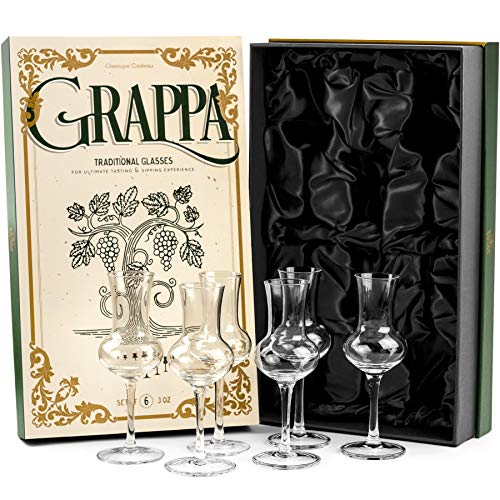
As an Amazon Associate we earn from qualifying purchases at no extra cost to you. Ratings are shown as listed on Amazon.
What to compare before buying
Bowl capacity: match the glass to the pour
Cordial glasses are intended for concentrated drinks such as liqueurs, dessert wines, fortified wines, and small after-dinner cocktails. A useful glass should not be filled to its rim. Leaving roughly one-third of the bowl empty makes the drink easier to swirl, smell, and sip without spilling.
- 1.5–2 oz capacity: Best for very small liqueur servings and formal tasting pours. These glasses look delicate but offer little room for ice or garnish.
- 2.5–3.5 oz capacity: The most versatile range for 1–2 oz servings of amaro, dessert wine, port, sherry, or cream liqueur.
- 4–6 oz capacity: Better for larger fortified-wine pours, small cocktails, or drinks served over one large ice cube. They may look oversized when used for a neat 1 oz pour.
- More than 6 oz: Usually a dessert-wine or cocktail glass rather than a traditional cordial glass. Buy this size only if you want one glass to handle multiple drink styles.
Capacity figures are often quoted to the rim, not to the practical fill line. A 3 oz glass typically holds a comfortable 1.5–2 oz serving, while a 2 oz glass may be effectively limited to about 1 oz if you want a visible air space.
Stem height: elegance versus control
A taller stem keeps your hand farther from the bowl, helping chilled drinks stay cool and preserving the glass’s formal appearance. However, a tall, narrow stem raises the center of gravity and makes a small glass easier to knock over.
Look for a stem around 2.5–3.5 inches tall for a traditional cordial silhouette. A stem under 2.5 inches is easier to handle and store, while a stem over 4 inches is more decorative than practical unless your table is spacious and guests are comfortable handling delicate glassware.
Stability: inspect the base, not just the bowl
Small glasses can be surprisingly unstable because their bowls are narrow and their stems are light. A broad foot is more important than an especially tall stem. As a useful rule, the base diameter should be at least about 60 percent of the glass’s overall height.
Stemless glasses avoid breakage at the stem and are particularly practical for crowded tables, outdoor use, or households with limited cabinet space. Their disadvantage is that the drink warms more quickly in the hand, and fingerprints are more visible on clear glass.
Glass material: clarity, rim feel, and longevity
Soda-lime glass is the common, affordable option. It is generally thicker and heavier than crystal, but it can be an excellent choice for frequent use, dishwashers, and larger gatherings.
Lead-free crystal usually contains mineral additives such as titanium or zirconium rather than lead. It can offer a thinner rim, good clarity, and a lighter feel. “Crystal” does not automatically mean unbreakable; a thin crystal stem can be more vulnerable than a sturdy soda-lime glass.
Traditional lead crystal is valued for its brilliance and weight, but it requires more care. Do not store acidic drinks in it for extended periods, and follow the manufacturer’s washing guidance. For ordinary after-dinner service, lead-free crystal gives most buyers the best balance of appearance and practicality.
Head-to-head comparison of useful cordial glass formats
| Glass format | Typical capacity | Typical height | Typical base diameter | Best use | Main compromise |
|---|---|---|---|---|---|
| Mini tulip stemmed | 2–3 oz | 4.5–5.5 in | 2.25–2.75 in | Neat liqueurs, tasting flights, small dessert wines | Less room for ice and more delicate handling |
| Classic cordial stemmed | 3–4 oz | 5.5–6.5 in | 2.5–3 in | Everyday after-dinner service | Needs more cabinet height |
| Port or sherry glass | 4–6 oz | 6–7 in | 2.5–3.25 in | Port, sherry, Madeira, amaro, small cocktails | Can make a small pour look undersized |
| Stemless cordial | 2–4 oz | 2.5–3.5 in | 1.75–2.5 in | Outdoor meals, crowded tables, casual use | Warms faster and shows fingerprints |
| Small snifter | 5–8 oz | 4.5–6 in | 2.5–3.5 in | Brandy, aromatic liqueurs, drinks with ice | Too large for a restrained cordial pour |
The dimensions are useful buying targets rather than universal standards. Manufacturers measure capacity and height differently, and a thick rim or decorative foot can reduce usable space.
Best choices by serving style
For a formal dinner: a 3 oz tulip glass
Choose a clear, stemmed bowl with a gently narrowed rim, a 2.5–3 inch base, and a capacity near 3 oz. This format looks proportionate with a 1.5 oz pour and works for liqueurs, port, and dessert wine. Lead-free crystal is a strong choice if a fine rim and light visual profile matter.
For frequent entertaining: durable soda-lime glass
If you need 8–12 matching glasses, durability and replacement cost matter more than maximum brilliance. Look for a thicker rim, a reinforced stem, and a foot that sits flat without wobbling. A 3–4 oz capacity keeps the glasses versatile while avoiding the bulk of a snifter.
Commercially oriented glassware from established manufacturers such as Libbey is often available in durable, stack-friendly formats. Check the specific product’s care instructions rather than assuming every glass from a brand has the same dishwasher rating.
For spirits served over ice: a 5–6 oz port or small cocktail glass
A 1 oz pour over a large cube needs more headroom than a neat pour. A small port or sherry glass gives the ice space without requiring a full tumbler. Avoid a very narrow bowl if you regularly add citrus peel, a cocktail pick, or a spoon.
For limited storage: stemless glasses
Stemless cordial glasses fit more easily in shallow cabinets and are less likely to snap at the stem. They are also convenient for guests who prefer a relaxed setting. Select a base that is noticeably wider than the bowl and a rim that is not excessively thin; these details make a compact glass feel secure rather than fragile.
Decision matrix: which format fits your home?
| Your situation | Recommended specification | Why it fits |
|---|---|---|
| Occasional use, limited budget | 2.5–4 oz soda-lime, stemmed or stemless | Lower replacement cost and broad drink compatibility |
| Weekly after-dinner drinks | 3 oz lead-free crystal tulip | Balanced presentation, aroma, and manageable storage |
| Large dinner parties | 3–4 oz durable glass with 2.75–3.25 in base | Stable on a busy table and easier to replace in sets |
| Small cabinets | 2–4 oz stemless, under 4 in tall | Uses less vertical space and has no vulnerable stem |
| Neat tasting and comparison pours | 2–3 oz tulip, narrow rim | Controls serving size and concentrates aromas |
| Ice, garnish, or small cocktails | 5–6 oz port or cocktail format | Leaves room for ice and prevents splashing |
A practical serving-size calculation
Suppose you serve four people a 1.5 oz pour. The drink itself requires 6 oz, but the glasses should hold at least twice that amount so the liquid sits below the rim and can be swirled safely. Four 3 oz glasses provide 12 oz of total capacity, leaving a 50 percent air space at a 1.5 oz serving.
By contrast, four 2 oz glasses provide only 8 oz of capacity. They can still work, but each pour occupies 75 percent of the glass. That is more likely to splash and leaves less room for aroma. This is why a nominal 3 oz glass is often more useful than a smaller “true cordial” glass for ordinary home service.
Cleaning, storage, and durability realities
- Wash soon after use: Sugary liqueurs and cream-based drinks can leave a sticky film that becomes harder to remove when dry.
- Check the dishwasher guidance: Even dishwasher-safe crystal can suffer from clouding, detergent damage, or collisions. Use a low-temperature cycle, space glasses apart, and avoid the hottest drying setting when permitted by the manufacturer.
- Never twist the bowl against the stem: Hold the bowl and foot separately when drying or polishing. Twisting creates stress at the joint, where many stemmed glasses eventually fail.
- Store upright: Storing on the rim can chip the lip and put unnecessary pressure on a thin edge. Keep glasses upright with enough clearance that they do not touch.
- Inspect the foot: A slightly uneven base causes more practical trouble than a small cosmetic mark. Set each glass on a flat surface before buying a full set.
For most buyers, the strongest all-purpose specification is a 3 oz, lead-free crystal tulip with a 5.5–6.5 inch height and a base at least 2.5 inches wide. Choose a sturdy soda-lime version if the glasses will see heavy dishwasher use or frequent parties. Move to a 5–6 oz port or cocktail format when you serve ice, and choose stemless when storage and stability outweigh formal presentation.




Write Your Review
No reviews yet. Be the first to share your experience!