

Key takeaways
- Prefer a replaceable gasket. Seals are consumable parts and may flatten, stiffen, or absorb flavor over time.
- Check the handle action. A short, positive open-and-close movement is easier to control than a loose lever that continues dripping after release.
- Look for a smooth outlet. Threads and crevices around the nozzle collect sticky lemonade and are harder to sanitize.
- Inspect the interior nut. It should be accessible for tightening without requiring special tools.
- Do not overtighten. Excessive force can stress the glass around the drilled hole or distort a silicone seal.
Best Glass Beverage Dispensers
The best glass beverage dispenser for most homes is a 1-gallon jar with a replaceable stainless-steel spigot, a wide removable lid, and enough clearance beneath the tap for a standard tumbler; larger 2-gallon models make more sense for parties, while insulated drink urns are better when temperature control matters more than appearance.
Glass dispensers are attractive because guests can see the drink, fruit, herbs, or ice inside. They are also less likely than some plastics to retain odors and colors. The trade-offs are weight, breakage risk, and spigots that may drip when seals loosen or the dispenser is filled above the tap assembly. The right choice depends less on the decorative shape than on capacity, tap construction, cleaning access, and the amount of counter space available.
Our top picks


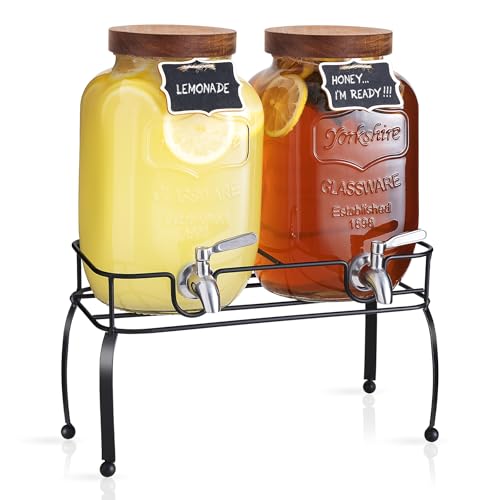

As an Amazon Associate we earn from qualifying purchases at no extra cost to you. Ratings are shown as listed on Amazon.
Best glass beverage dispensers by situation
| Situation | Best configuration | Why it fits | Watch for |
|---|---|---|---|
| Everyday iced tea or lemonade | 1-gallon glass jar, stainless-steel or food-safe plastic spigot | Manageable weight and enough volume for a family meal | A narrow opening that makes scrubbing difficult |
| Large gatherings | 2-gallon jar with a sturdy base and high-flow tap | Fewer refills and better visibility on a buffet | More than 16 pounds when full, before adding ice |
| Fruit-infused water | Dispenser with a removable infusion basket or internal ice tube | Fruit stays contained and is less likely to block the spigot | A chamber that is too narrow to remove and wash easily |
| Small kitchen or apartment | 0.75- to 1-gallon compact jar with a footprint under 9 inches square | Fits a refrigerator shelf or a small serving cart more easily | Low taps that require a stand |
| Occasional entertaining | Wide-mouth jar with simple two-piece tap assembly | Less difficult to empty, dry, and store between uses | Decorative ceramic or wood trim that cannot be submerged |
| Cold drinks outdoors | Glass beverage dispenser placed in an insulated tub or shaded area | Glass provides visibility without relying on a battery or pump | Glass heats quickly in direct sun and can be damaged in transport |
Capacity, weight, and countertop footprint
Capacity labels usually describe the container to its brim, not the practical serving volume. Leave roughly 5 percent of the vessel empty so the lid can be fitted without splashing and the drink can be moved safely. A gallon holds 128 fluid ounces, so a 1-gallon dispenser yields about 16 eight-ounce servings before allowing for ice, fruit, and sediment. A 2-gallon model provides about 32 such servings, but it also doubles the handling risk.
| Nominal capacity | Approximate drink weight when full | Typical footprint | Approximate 8-ounce servings | Best use |
|---|---|---|---|---|
| 0.75 gallon | 6.5 pounds | 7 to 8 inches square | 9 to 10 | Small households and compact counters |
| 1 gallon | 8.5 pounds | 8 to 10 inches square | 14 to 16 | Most family meals |
| 1.5 gallons | 12.5 pounds | 9 to 11 inches square | 21 to 24 | Brunches and medium gatherings |
| 2 gallons | 17 pounds | 10 to 13 inches square | 28 to 32 | Large buffets and repeated serving |
These weights assume a drink with a similar density to water and do not include the glass itself. Add the container weight, commonly several pounds, when deciding whether a shelf or serving table is strong enough. A 2-gallon dispenser can exceed 20 pounds in use. It should be filled where it will be served rather than carried across the room by the tap or lid.
Spigot reliability: the feature that matters most
A glass jar can look excellent and still be frustrating if its spigot drips. The most dependable designs use a metal or rigid food-safe plastic valve, two silicone or rubber gaskets, and a threaded retaining nut on the inside of the vessel. This arrangement compresses the gasket against the glass instead of relying on a thin washer or decorative fitting alone.
- Prefer a replaceable gasket. Seals are consumable parts and may flatten, stiffen, or absorb flavor over time.
- Check the handle action. A short, positive open-and-close movement is easier to control than a loose lever that continues dripping after release.
- Look for a smooth outlet. Threads and crevices around the nozzle collect sticky lemonade and are harder to sanitize.
- Inspect the interior nut. It should be accessible for tightening without requiring special tools.
- Do not overtighten. Excessive force can stress the glass around the drilled hole or distort a silicone seal.
For a dispenser used several times a week, a standard spigot with widely available replacement washers is usually a better long-term choice than an unusual proprietary mechanism. If a product has a permanently sealed tap, cleaning and repair become more difficult when the valve eventually wears.
Ice chambers and fruit infusion baskets
An internal ice tube or removable infusion basket solves two common problems: diluted drinks and clogged taps. Ice placed directly in the main chamber melts into the beverage, while an isolated tube cools without adding as much water. Fruit baskets keep citrus slices, berries, cucumber, or herbs away from the outlet and make removal easier.
These features are useful only when they are large enough to clean. A narrow tube may accept ice cubes but prevent a hand, bottle brush, or drying cloth from reaching its base. Choose a removable chamber with an opening of at least 2.5 to 3 inches where possible. For chopped fruit or herbs, a basket with perforations around 2 to 4 millimeters is a practical compromise: small enough to contain most pieces but open enough to allow liquid to circulate.
Ice tubes are not essential for short meals. If the dispenser will be emptied within an hour, large chilled ingredients or a small amount of ice may be simpler. For longer service, chill the drink before filling the dispenser; an ice chamber maintains temperature but cannot quickly cool a warm gallon of liquid.
Cleaning access and leak resistance
Wide-mouth construction is more important than an attractive embossed design. You should be able to put a hand or a substantial brush into the main vessel, reach the corners around the base, and remove the spigot for separate washing. A lid opening under 3 inches is often awkward for a gallon jar, particularly when fruit pulp or syrup has dried inside.
After each use, drain the dispenser promptly and rinse it with warm water. Remove the spigot, gasket, and infusion parts according to the manufacturer’s instructions. Wash them separately with dish soap, then leave every piece disassembled until fully dry. This prevents sticky residue from remaining behind the retaining nut and reduces stale odors.
For a simple capacity calculation, suppose a 1-gallon dispenser is filled for a 12-person dinner. At 8 ounces per guest, the group needs 96 fluid ounces. That leaves 32 ounces of nominal capacity for ice, fruit, and refills. If the drink is served in 12-ounce glasses, however, the same vessel provides only about 10 full servings, so a second container or a planned refill becomes sensible.
Durability and ownership realities
- The glass is not the only failure point. Spigot seals, retaining nuts, and plastic threads typically wear before the vessel does.
- Thermal shock is risky. Do not pour boiling tea into a cold jar or place a hot vessel on a cold stone counter. Let drinks cool first and follow the product’s temperature instructions.
- Decorative stands can wobble. A raised stand improves cup clearance, but it must support the full filled weight without rocking.
- Sticky drinks demand immediate rinsing. Lemonade, punch, and sweet tea can harden around a valve within hours.
- Storage needs space. A 2-gallon jar may fit on a buffet but be too tall for a cabinet, especially with its stand attached.
- Transport is a separate problem. Empty the vessel before moving it, and carry it with two hands around the base rather than by the lid or tap.
How to choose the right dispenser
Start by measuring the serving surface, including the clearance needed to place a glass beneath the outlet. Then estimate servings using the actual glass size rather than the container’s advertised capacity. If the filled weight approaches what one person can comfortably lift, select a smaller dispenser or plan to fill it in place.
Next, decide whether an ice chamber or fruit basket solves a real serving problem. Choose one when you regularly serve infused water, punch with floating fruit, or drinks that must remain undiluted. Otherwise, the simpler wide-mouth jar is often easier to wash and less likely to develop trapped residue.
Finally, examine the tap assembly before choosing decorative details. A replaceable gasket, accessible retaining nut, smooth outlet, stable base, and wide cleaning opening are better indicators of ownership quality than a patterned exterior. For most kitchens, a 1-gallon wide-mouth dispenser is the best balance of capacity, footprint, and manageable weight; choose a 1.5- or 2-gallon model only when the extra servings justify the harder handling and storage.



Write Your Review
No reviews yet. Be the first to share your experience!