

Key takeaways
- For a roast, whole fish, or carved poultry: choose a 16- to 20-inch oval platter with a gentle rim and a broad underside for stable lifting.
- For appetizers and desserts: choose a 12- to 16-inch rectangular or round platter with a low rim, which gives guests easy access and keeps small pieces from sliding.
- For buffet service: choose a 16- to 18-inch rectangular platter with a 1- to 1.5-inch rim and enough flat surface for serving utensils.
- For outdoor meals or children’s parties: choose melamine or lightweight stainless steel rather than breakable ceramic or glass.
- For a small kitchen: choose stackable platters with consistent shapes and a maximum length of 14 to 16 inches.
The best serving platters are usually a large porcelain oval for entrees, a rimmed rectangular platter for buffet food, and a lightweight melamine or stainless-steel option when carrying, outdoor use, or frequent washing matters most.
Our top picks
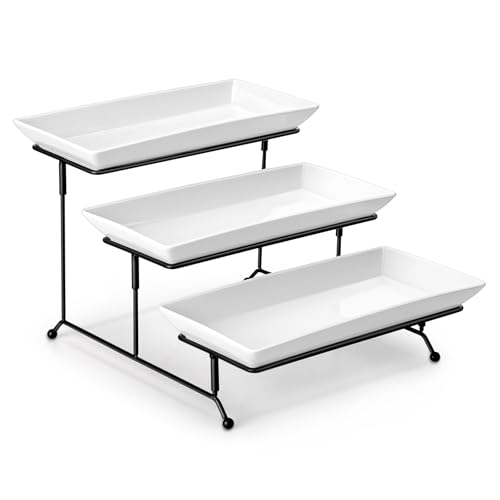


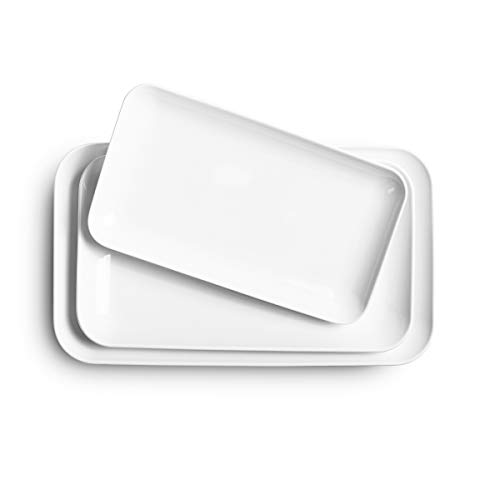
As an Amazon Associate we earn from qualifying purchases at no extra cost to you. Ratings are shown as listed on Amazon.
Quick picks by serving situation
- For a roast, whole fish, or carved poultry: choose a 16- to 20-inch oval platter with a gentle rim and a broad underside for stable lifting.
- For appetizers and desserts: choose a 12- to 16-inch rectangular or round platter with a low rim, which gives guests easy access and keeps small pieces from sliding.
- For buffet service: choose a 16- to 18-inch rectangular platter with a 1- to 1.5-inch rim and enough flat surface for serving utensils.
- For outdoor meals or children’s parties: choose melamine or lightweight stainless steel rather than breakable ceramic or glass.
- For a small kitchen: choose stackable platters with consistent shapes and a maximum length of 14 to 16 inches.
Serving platter comparison
The most useful distinction is not appearance but how the platter moves food from kitchen to table. Oval platters handle long foods and look balanced at the center of a dining table. Rectangular platters use buffet space efficiently and divide naturally into sections. Round platters are sociable for shared appetizers but can waste counter or refrigerator space. Rim height also matters: a flat cheese board is easy to reach, while a deeper rim is safer for sauced foods.
| Platter type | Useful size | Approximate usable capacity | Typical weight | Best use | Main compromise |
|---|---|---|---|---|---|
| Small round | 10–13 inches | 12–24 bite-size pieces | 1–2.5 lb | Dips, pastries, small appetizers | Limited room for serving utensils |
| Large oval | 16–20 inches | 4–7 lb of food | 3–6 lb | Roasts, fish, vegetables | Awkward in narrow cabinets and refrigerators |
| Rectangular buffet platter | 14–18 inches long | 24–40 appetizer pieces or 5–8 side portions | 2–5 lb | Buffets, sandwiches, mixed appetizers | Corners can be vulnerable to chipping |
| Deep rimmed platter | 14–18 inches | 3–6 cups of sauced food | 2.5–6 lb | Pasta, saucy vegetables, carved meat with gravy | Higher sides make serving less convenient |
| Lightweight melamine | 12–18 inches | Similar to its ceramic equivalent | 1–3 lb | Outdoor dining and large gatherings | Not suitable for oven or microwave use |
How shape and rim style change the decision
Oval platters: best for centerpiece entrees
An oval gives long foods more support without forcing them into a rectangular corner. It is a strong choice for a roast, salmon fillet, asparagus, or a row of enchiladas. A 16-inch oval is suitable for many family dinners; a 20-inch version is more useful for holiday portions but needs a clear path from oven or counter to table.
Look for a rim that rises gradually rather than an abrupt vertical wall. The sloped edge helps a spatula slide underneath food while still containing juices. Two recessed grip areas on the underside are more useful than decorative handles, which can reduce usable surface area and complicate storage.
Rectangular platters: best for buffet efficiency
Rectangular designs make better use of a straight buffet table. They can line up with matching dishes and leave room for tongs at one end. A 14-inch platter works for sandwiches, cookies, or a modest appetizer selection. For a crowd, an 18-inch platter offers more capacity, but only if your table and refrigerator can accommodate it.
A low rim of about 0.5 to 1 inch is suitable for dry foods. For sauced dishes, choose roughly 1 to 1.5 inches. Very tall rims protect food during carrying but force diners to reach over the edge and can hide smaller items from view.
Round platters: best for shared grazing
Round platters encourage guests to approach from any direction, making them useful for a coffee table or the center of a small dining table. They are particularly practical for cheese, fruit, cookies, and bite-size appetizers. The drawback is wasted space between a round dish and a rectangular refrigerator shelf, cabinet, or buffet arrangement.
Materials compared: durability, heat, and carrying comfort
- Porcelain: polished, relatively nonporous, and suitable for many ovens, microwaves, and dishwashers when the manufacturer allows it. It is heavier than melamine and can chip at exposed edges. Avoid moving a very hot platter directly onto a cold stone surface.
- Stoneware: substantial and attractive for rustic table settings, but commonly heavier and more prone to edge damage from hard impacts. Its weight can be reassuring on a table and tiring when carried one-handed.
- Tempered glass: easy to see through, stain-resistant, and often dishwasher-safe. It can still break if dropped or exposed to a severe temperature change, so it is less forgiving for crowded kitchens.
- Melamine: light, colorful, and resistant to ordinary drops. It is a practical outdoor material, but it should not go in the oven or microwave. Deep scratches can make it harder to clean thoroughly, so replace heavily worn pieces.
- Stainless steel: durable, light for its strength, and useful for buffets or outdoor service. It may show fingerprints and can make food look less formal. Choose a weighted base or rolled edge if stability matters.
- Wood: warm-looking and comfortable to carry, especially for bread, cheese, and dry appetizers. It requires more careful drying and periodic conditioning according to the manufacturer’s instructions. It is not the first choice for wet, oily, or strongly colored foods.
Decision matrix for choosing the best serving platters
| Your situation | Recommended specification | Why it fits |
|---|---|---|
| Budget-conscious, occasional use | One 16-inch porcelain oval with a 1-inch rim | Handles entrees and many side dishes without buying several specialized shapes |
| Frequent host with limited storage | Two stackable 14–16-inch rectangular platters | They cover appetizers, sandwiches, desserts, and buffet food while nesting efficiently |
| Beginner cook or cautious carrier | Lightweight platter under 3 lb, with underside grips and a low center of gravity | Reduces fatigue and makes a loaded dish easier to control |
| Large holiday meals | One 18–20-inch oval plus one 16–18-inch deep rimmed rectangle | The oval suits the main entree; the rectangular piece contains sauced or carved sides |
| Outdoor or poolside service | Melamine or stainless steel, preferably 12–16 inches | Lower breakage risk and easier carrying than heavy ceramic |
| Very small cabinets | Maximum 14 inches, stackable, with vertical or nested storage | Avoids a platter that technically fits but blocks shelves or refrigerator space |
Size it before buying
Manufacturers usually measure the outside length, not the food area. A platter advertised as 16 inches long may offer only 14 inches of usable surface after accounting for the rim. For a main entree, allow about 2 inches of clearance around the food for lifting and presentation. That means a 12-inch roast often needs at least a 16-inch platter.
For appetizers, estimate about 2.5 to 3 inches of width per item when guests need to pick them up with fingers or tongs. Twenty-four small pieces therefore need approximately 60 to 72 inches of linear placement, but arranging them in several rows on a 16-inch round or rectangular platter usually provides that coverage. Leave one open area for tongs; otherwise guests may disturb the arrangement while serving.
Ownership details that affect long-term value
The first parts to show wear are usually corners, unglazed feet, painted decoration, and the underside where dishes rub against shelves. Stack ceramic platters with a thin protective separator, and do not slide them across stone countertops. Felt or silicone shelf liners can reduce impact during storage, but they should be kept dry.
Check dishwasher clearance before choosing a large platter. A dish can fit on the rack yet prevent the spray arm from rotating, leaving both the platter and neighboring dishes dirty. Place tall platters at an angle only when they cannot contact the heating element. Hand-wash wood, inspect melamine for deep scratches, and avoid sudden temperature changes with glass or stoneware.
Do not overload a large platter simply because its surface allows it. A 5-pound food load plus a 5-pound ceramic dish can approach 10 pounds, enough to make a two-handed carry necessary. Test the empty platter’s grip and balance, then choose one with a broad underside and no slippery glaze where your hands naturally rest.
Bottom line
For the most versatile starting point, buy a 16-inch porcelain oval with a gently sloped rim and comfortable underside grips. Add a 14- to 16-inch rectangular platter if you serve buffets, sandwiches, or appetizers often. Choose melamine or stainless steel when carrying comfort and break resistance outweigh formal presentation, and measure your cabinet, refrigerator shelf, and dishwasher rack before committing to an extra-large design.






Write Your Review
No reviews yet. Be the first to share your experience!