

Our Top Picks
 Glass Polishing Cloth Microfiber Cleaning Cloths Kitchen TowelSmall10 x 10 x 0.2 inchesCheck on Amazon
 Wine Enthusiast No Fingerprints! Microfiber Glassware Drying Towels31.5"L x 23.5"W39.4 x 19.7 x 0.2 inchesCheck on Amazon
The best lint-free towel for glassware is whichever one dries the glass in a single pass without leaving a fiber behind, and on this list that comes down to two weaves: tight microfiber made for polishing, or flour sack and herringbone cotton once it has been washed a few times. For stemware specifically, the Wine Enthusiast microfiber set with hand pockets is the specialist pick, while the Simpli-Magic flour sack 12 pack is the value pick for a household that dries a lot of glasses.
Two warnings before the list. “Lint-free” is a seller description, not a certification, and new cotton usually sheds a little until it has been laundered. And one of the eight listings is a window-and-mirror cloth rather than a kitchen towel, so it is flagged as such below. Everything stated about each product comes from its title; the rest is a prompt to check the listing.
Weave decides everything: eight towels sorted by fabric
Glass Polishing Cloth Microfiber Cleaning Cloths Kitchen Towel Streak Free | For Wine Glass, Cup, Glassware, Polish Waper Lint Free Spotless Shine, Thick Soft Fabric Black 10x10in 4 Pack


As an Amazon Associate we earn from qualifying purchases. Product prices and availability are accurate as of the date/time indicated.
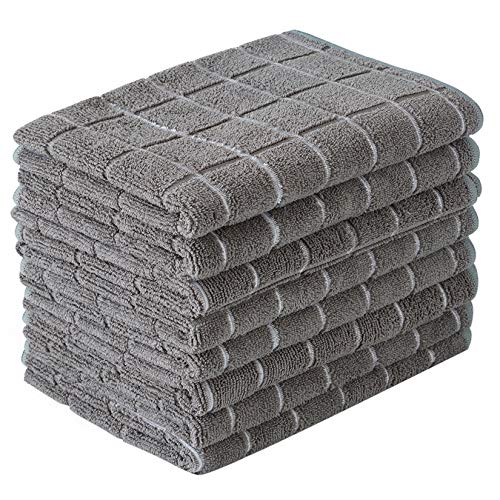
Microfiber Dish Towels - Soft, Super Absorbent and Lint Free Kitchen Towels - 8 Pack (Lattice Designed Gray Colors) - 26 x 18 Inch


As an Amazon Associate we earn from qualifying purchases. Product prices and availability are accurate as of the date/time indicated.
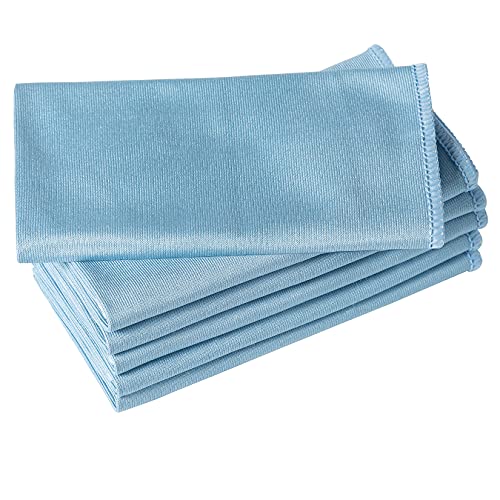
Puomue 6 Pack Microfiber Glass Cleaning Cloth, 16 Inch X 16 Inch, Lint Free Quickly Clean Window, Glasses, Windshields, Mirrors, and Stainless Steel, Blue



As an Amazon Associate we earn from qualifying purchases. Product prices and availability are accurate as of the date/time indicated.
Wine Enthusiast No Fingerprints! Microfiber Glassware Drying Towels with Hand Pockets – Set of 2 Highly Absorbent, Lint-Free Kitchen Towels for Spotless Glassware Drying, Ideal Wine Glasses Decanters


As an Amazon Associate we earn from qualifying purchases. Product prices and availability are accurate as of the date/time indicated.

Simpli-Magic Flour Sack Kitchen Towels 24"x24" (12 Pack) – 100% Cotton, Lint-Free, High Absorbent Tea Towels – Perfect for Dish, Baking, Crafting


As an Amazon Associate we earn from qualifying purchases. Product prices and availability are accurate as of the date/time indicated.

LANE LINEN Dish Towels 100% Cotton Absorbent Lint-Free 6 Pack | For Hand Drying and Cleanup, Classic Herringbone Weave, Dish Towels For Kitchen, Quick Drying Cotton - Blue Stripe


As an Amazon Associate we earn from qualifying purchases. Product prices and availability are accurate as of the date/time indicated.

LANE LINEN Tea Towels 100% Cotton Absorbent Lint-Free 6 Pack | For Polishing Glass and Windows, Classic Herringbone Weave, Hand Towels For Kitchen, Soft Absorbent Cotton - Grey


As an Amazon Associate we earn from qualifying purchases. Product prices and availability are accurate as of the date/time indicated.

LANE LINEN 100% Cotton Kitchen Towels, Soft Dish Towels for Kitchen 6 Pack | Kitchen Towel Set for Drying, Cleaning and Gifting, Tea Towels for Kitchen With Classic Herringbone Weave, Lint Free - Blue


As an Amazon Associate we earn from qualifying purchases. Product prices and availability are accurate as of the date/time indicated.
Tiers are relative within these eight listings. Pack counts differ widely, from a set of two to a pack of twelve, so a higher tier is not automatically a higher cost per towel.
| Listing | Fabric as titled | Size and count as titled | Price tier | Best for |
|---|---|---|---|---|
| Wine Enthusiast No Fingerprints | Microfiber with hand pockets | Set of 2, size in listing | Premium | Stemware and decanters |
| JIAMI HOME polishing cloths | Microfiber, thick soft fabric, black | 10 x 10 in, 4 pack | Budget | Final polish on single glasses |
| Puomue glass cleaning cloth | Microfiber, blue | 16 x 16 in, 6 pack | Budget | Windows and mirrors, light glassware |
| HYER KITCHEN dish towels | Microfiber, lattice pattern, gray | 26 x 18 in, 8 pack | Mid-range | General drying, large surfaces |
| Simpli-Magic flour sack | 100% cotton flour sack | 24 x 24 in, 12 pack | Mid-range | High-volume glass drying |
| LANE LINEN tea towels | 100% cotton herringbone, grey | 6 pack, size in listing | Mid-range | Polishing glass, per the title |
| LANE LINEN dish towels | 100% cotton herringbone, blue stripe | 6 pack, size in listing | Mid-range | Hand drying and cleanup |
| LANE LINEN kitchen towels | 100% cotton herringbone, blue | 6 pack, size in listing | Budget | Everyday kitchen drying |
Microfiber: four ways to polish without fibers
Microfiber is generally a synthetic fabric woven from very fine fibers, and the exact blend is a listing detail the titles here do not give. It tends to grab water and oils quickly and to leave a clear finish, which is why it is popular for stemware.
Wine Enthusiast No Fingerprints Microfiber Glassware Drying Towels, Set of 2
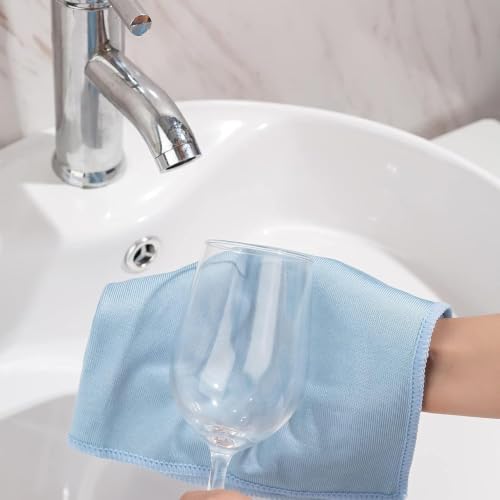
This is the only listing built around the glassware job itself. The title describes a set of two highly absorbent, lint-free microfiber towels with hand pockets, aimed at spotless drying of wine glasses and decanters, with a “no fingerprints” promise. The hand pockets are the feature that earns the price: you slide a hand in, so the towel covers your fingers and thumb and you can polish the inside and outside of a bowl without touching the glass directly.
That matters for stemware because bare fingers leave oils, and because twisting a stem against a bowl is the classic way to snap a glass. With the towel on one hand holding the bowl and the other hand supporting the base, the stress on the stem is lower. The towel does not remove the risk. Hold stemware by the base and the lower stem, never grip the bowl and the stem in opposite twisting directions, and stop if you feel resistance.
The size of the towels and the exact fiber content are not in the title. The set of two is also a limitation: a dinner for eight leaves you short without washing mid-event, as our drying plan below shows.
Before ordering, decide whether the second towel will live in the drawer or in the dishwasher area. With only two in the set, the practical routine is one towel in use and one in the wash, which is a fine rhythm for everyday glasses and a poor one for a party. Rinse the towels after each session so wine residue and soap do not dry into the fibers.
Pros
- Hand pockets give control inside tall bowls and decanter necks.
- Marketed specifically for wine glasses and decanters.
- No separate polishing cloth needed for fingerprints.
Cons
- Highest price tier for only two towels.
- Two towels will saturate during a big wash-up.
- Size, material blend and care instructions are listing questions.
Who it’s for: people with a collection of stemware or decanters who want a dedicated polishing tool, and who run a dishwasher or hand wash and do the final polish by hand.
JIAMI HOME Glass Polishing Cloths, Microfiber, 10 x 10 in, 4 Pack, Black
Small, thick and dark. The title describes four black microfiber cloths measuring 10 by 10 inches, with a thick soft fabric, marketed as streak free for wine glasses, cups and glassware. Ten inches square is roughly the size of a large napkin, which is handy for one glass at a time and fiddly for a stack of dishes.
The small size is both the point and the limitation. A compact cloth fits inside a tumbler or champagne flute more easily than a 24-inch towel, and it is less likely to snag on a delicate rim. But it also saturates faster, so for an evening of washing you would rotate through more of them. The black color is a question of taste: dark cloths can make light lint visible at a glance, which helps you notice a problem, and can also show every speck of detergent.
The title lists a four-pack, so check whether the cloths are meant to be used dry for polishing after a rinse or as a drying cloth after hand washing. A towel that is already damp from the dish rack will smear rather than polish. Keep one cloth dry and clean for the finishing wipe.
A neat use for cloths this size is as a dedicated cloth for the inside of narrow glasses, wrapped around a clean wooden spoon handle or a finger. Keep one cloth per day of use so you are never tempted to reuse a damp one. Because the pack is cheap, replace any cloth that begins to feel stiff or smells sour after washing, rather than trying to rescue it.
Pros
- Compact squares reach into tumblers and flutes.
- Budget tier for four cloths.
- Thick soft fabric per the title.
Cons
- Saturate quickly for a full set of glasses.
- Black color highlights light lint and detergent residue.
- Fiber blend and care instructions are not in the title.
Who it’s for: a small household that polishes a few glasses at a time, or anyone who wants a dedicated finishing cloth.
HYER KITCHEN Microfiber Dish Towels, 8 Pack, Lattice Gray, 26 x 18 in
The title calls these soft, super absorbent, lint-free kitchen towels in a lattice pattern, sold in an eight pack and measuring 26 by 18 inches. That is a full-size dish towel, big enough to lay on the counter as a drying mat and to wrap around a hand for polishing a pitcher or a larger glass.
Eight pieces make this a laundry-friendly pack. You can use two for glassware and keep the rest for general kitchen drying without worrying about cross-contamination, if you assign towels by task: one color, pattern or corner mark for glass, others for dishes. The lattice pattern is a texture, which can help with scrubbing and absorbing, and might leave faint marks on glass if the surface is pressed hard; use a lighter touch for the final polish.
Because the title says “dish towels,” the seller targets general kitchen drying rather than a glass-only job. Do not use the glass towel to wipe the stovetop or the counter, since grease transfers to fibers, and transferred grease is the main cause of smears on the next glass. Wash glass towels separately from greasy cloths.
A useful trick with a pack this big is color or corner coding. Fold a small knot in one corner of the glass towels, or keep them in a labeled drawer compartment, so family members do not grab one for a greasy skillet. Eight towels at this size also let you lay one flat as a drying mat for freshly washed glasses before you polish them, which keeps the counter dry.
Pros
- Large 26 x 18 in size covers counters and big glasses.
- Eight towels allow task-based rotation.
- Mid-range tier for a big pack.
Cons
- Not marketed specifically for glassware.
- Textured pattern may not be ideal for the final polish.
- Fiber content and wash guidance are for the listing to confirm.
Who it’s for: households that want a general-purpose, lint-resistant microfiber set that can cover glasses and the rest of the kitchen.
Puomue Microfiber Glass Cleaning Cloth, 16 x 16 in, 6 Pack, Blue
Be clear about what this is. The title describes a six pack of microfiber cloths, 16 by 16 inches, “lint free” and aimed at windows, glasses, windshields, mirrors and stainless steel. It is a glass-surface cleaning cloth, closer to a window or car-care product than a kitchen towel. “Glasses” in the title may refer to eyeglasses as easily as drinking glasses, and the listing is the place to see how it is pitched.
That does not rule it out. A 16-inch square is a comfortable size for polishing drinking glasses, and a lint-free glass-cleaning cloth is the same job at a different scale. The catch is the drying step: the title does not say these are designed to absorb large volumes of water, so they are better for the final polish than for drying a rack of freshly washed glasses.
If you buy them for the kitchen, wash them separately from the cloths you use for windshields and mirrors. Glass-cleaner residue on a cloth can transfer to a drinking glass, and cleaning products and food contact surfaces should not be mixed. Keep a set marked for kitchen use only.
If you want to keep it simple, let this pack handle windows, mirrors and the glass front of an oven door, and buy a separate kitchen-only set for drinkware. That avoids any chance of cleaner residue reaching a glass you drink from, and it keeps the kitchen cloths from picking up the dust and grime that windows collect. The price tier makes owning both sets realistic.
Pros
- Six cloths at the budget tier.
- 16-inch square size works for polishing and for mirrors and windows.
- Lint-free claim aimed at glass surfaces.
Cons
- Not marketed for kitchen use or glassware drying.
- Absorbency for drying wet glasses is not described in the title.
- Risk of cleaner residue if shared with window-cleaning jobs.
Who it’s for: buyers who want one lint-free cloth set for glass surfaces around the house, including the occasional glass or mirror.
Cotton: four towels that need a wash first
Cotton is a plant fiber, and new cotton towels often shed loose fibers until they have been laundered several times. Plan on washing any cotton towel before you use it on stemware, and again when it first feels dry and fluffy rather than slick.
Simpli-Magic Flour Sack Kitchen Towels, 24 x 24 in, 12 Pack
The title says 100% cotton flour sack towels, 24 by 24 inches, in a 12 pack, described as lint-free, highly absorbent tea towels suited to dishes, baking and crafting. Flour sack fabric is a thin, plain weave that tends to be lighter than terry, so these dry quickly on a line or over a bar. That thin weave is why it is commonly chosen for glasses: there is little loft to shed fibers once it has been washed.
A 12 pack is the largest in the group by count, and the title’s range of uses (dish, baking, crafting) shows it is a general-purpose towel, not a glassware-only one. For drinkware, it is a good fit for the primary drying step, with a smaller, drier cloth for the final polish. Those uses are described by the seller, and the real comparison is in your laundry: a pack that size lets you dedicate four towels to glass and keep eight for everything else.
The width of the fabric, 24 inches square, is a convenient fold: folded in thirds, it forms a thick pad that does not slide off a counter. Expect more wrinkling than microfiber, but that does not affect function.
Because the title mentions baking and crafting, the same pack can also line a bread basket, cover rising dough or wrap cheese. That versatility is a reason to buy twelve, but it is also a reason to label the glass towels. A towel that has covered dough carries flour, which is not what you want on a champagne flute. Keep a clean glass stack on its own shelf.
Pros
- Twelve towels at 24 x 24 in for a mid-range tier.
- Thin 100% cotton weave dries quickly after use.
- Large enough to cover a drying mat.
Cons
- New cotton sheds some lint before it is laundered.
- Thin weave saturates at some point, so rotate during a big wash-up.
- Edge stitching and fabric weight are not in the title.
Who it’s for: households and hosts who dry a lot of glasses and want a large, washable stock of cotton.
LANE LINEN Tea Towels, 100% Cotton, 6 Pack, Herringbone Weave, Grey
Of the three LANE LINEN listings, this is the one whose title mentions polishing glass and windows. It describes 100% cotton tea towels in a six pack with a classic herringbone weave and a soft absorbent finish, in grey. That wording makes it the most glass-oriented of the cotton options.
Herringbone is a woven pattern of angled ridges. In general a herringbone weave is a little more textured than a flat flour sack weave, so it may feel sturdier for hand drying; whether it is gentle enough for your glass is something to judge after washing, and the listing is the place to check the weight. The size of each towel is not given in the title, so confirm it before assuming it will cover a decanter or a large wine glass bowl comfortably.
Heads-up: the three LANE LINEN listings are near-duplicates in fabric and weave. They differ in name (tea, dish, kitchen), color and the use cases emphasized in the titles, and possibly in size. If the dimensions in the listing are identical, the choice is mostly about color and the price tier. Do not assume a tea towel is thinner than a dish towel; read the product page.
Grey is a quiet color that hides stains and shows lint less than black does. For a drying schedule, use one grey towel for glass only and keep other colors for other jobs.
Tea towels in many households are the polish-and-present towels, folded over a shoulder or the oven handle, while dish towels do the heavy lifting. Treating this pack that way, with six towels, gives you two for polish, two for wiping hands and two in the wash. That simple split keeps the glass towels cleaner without adding any extra products to the kitchen.
Pros
- Title mentions polishing glass and windows.
- 100% cotton, six towels, mid-range tier.
- Herringbone weave is sturdy and washable.
Cons
- Near-duplicate of the other LANE LINEN listings.
- Towel size and weight are not in the title.
- New cotton may shed until laundered.
Who it’s for: buyers who prefer cotton, want a glass-focused set from a brand that also sells matching towels, and don’t need a huge pack.
LANE LINEN Dish Towels, 100% Cotton, 6 Pack, Herringbone, Blue Stripe
The second LANE LINEN listing positions itself for hand drying and cleanup. The title describes absorbent, lint-free 100% cotton dish towels in a six pack with a classic herringbone weave, quick drying, in blue stripe. A striped pattern can help when you keep glass towels separate from other jobs: assign stripe for glasses, grey for hands, solid blue for cleanup.
Functionally it is a close relative of the tea towel listing. The title gives no size, so measure before you decide whether it will become your main glass towel or your hand towel. A towel intended for hand drying is often thicker, which is good for volume and a little less ideal for a final polish.
Mid-range price, same pack count, similar fabric. If you only want one LANE LINEN set, choose by color and by the listing’s size and weight. If you want two jobs covered, buying one set for glass and one for hands or cleanup is a practical split, as long as you wash them separately.
Stripes can mask lint a little. If you are hunting a stray fiber on a flute, a plain towel helps you see what you are doing.
Here is a way to choose between near-identical packs. Open both listings side by side and compare four things: stated towel dimensions, fabric weight or thickness if given, color options and any wash-before-use note. If the dimensions and weight match, choose by color, because you will want to tell glass towels from other towels at a glance. If they differ, pick the lighter, thinner towel for glass and the thicker for hands. Keep the packaging until you have washed the first towel and are happy.
Pros
- Six 100% cotton towels for a mid-range tier.
- Stripe pattern helps with color-coding by task.
- Quick-drying is claimed in the title.
Cons
- Marketed for hand drying, not glassware.
- Size and thickness are not in the title.
- Near-duplicate of the other LANE LINEN listings.
Who it’s for: buyers who want a second, general-purpose cotton set alongside a dedicated glass towel.
LANE LINEN Kitchen Towels, 100% Cotton, 6 Pack, Herringbone Weave, Blue
The third LANE LINEN listing is described as soft kitchen towels for drying, cleaning and gifting, in a six pack, 100% cotton with a classic herringbone weave, lint-free and blue. Of the three it sits in the lowest price tier in this set, and the gifting angle in the title suggests it might be packaged as a presentation set.
It belongs in this guide because it is the cheapest cotton route to a stack of towels you can wash in bulk. As with the other two, the title does not state the dimensions, and it does not say it is intended for glassware. Use it the way you would use any cotton towel: wash it first, dry it fully and keep a dedicated glass towel apart from greasy jobs.
Gifting is a reasonable use for wine lovers, but remember that a decorative towel is not necessarily a glass-polishing towel. The best check is the first wash: if it sheds in the dryer lint trap and then stops, you have a candidate.
Cleaning the dryer lint trap after every load is more than a lint-control habit; it is a fire-safety step that dryer manufacturers instruct. Follow your dryer’s manual, especially after drying a lot of new cotton.
For a gift, pair the pack with something useful, such as a pair of glasses or a bottle of wine, and tell the recipient to wash the towels before first use. A gift towel that arrives shedding on a fresh glass is a poor introduction. As with the other cotton sets here, the fabric weight and exact dimensions are details to confirm on the product page rather than assume from the pack name.
Pros
- Lowest price tier among the cotton listings.
- 100% cotton and a six-pack for rotation.
- Gift-ready positioning in the title.
Cons
- Not aimed at glassware in the title.
- Size and weight are not in the title.
- Near-duplicate of the other LANE LINEN sets.
Who it’s for: budget-minded buyers who want an affordable cotton stack for general drying and the occasional glass.
How we picked these
The Editorial team built this list from published specifications, manufacturer documentation and buyer reviews. Nobody on the team used or measured these units. We worked from each listing title and report only what it says, and mark everything else as a point to confirm on the live page.
First, we sorted by weave, because weave drives behavior. Microfiber and cotton shed and absorb differently, and the keyword asks for lint-free, so we wanted both families represented. Second, we looked for sizes and pack counts in the titles, since pack count changes how many towels you can dedicate to glass. Third, we flagged mismatches: the Puomue pack is a glass-surface cloth, and the three LANE LINEN sets are close to interchangeable in fabric and weave.
The price tiers are relative to these eight listings, and they are tiers, not exact prices. We do not use star ratings or review counts, which move daily. Absorbency, softness and lint-free statements in the listings are the sellers’ claims and are described as such. The washing, drying and glass-handling advice here is general household guidance, so follow the care label on your towels and the manuals for your dryer and glassware.
A 24-glass drying plan, with the arithmetic
Suppose you are hosting eight people and expect to wash 12 wine glasses and 12 tumblers, 24 glasses in all. How many towels do you need so every glass gets a dry cloth on the final pass?
Assumptions (estimates, not measurements): a small 10-inch cloth is damp enough to start streaking after about 4 glasses; a large 24-inch square cotton towel after about 10; a mid-sized towel such as 26 x 18 inches after about 8. Dry the glass within seconds of rinsing, and swap in a fresh towel when the current one feels damp. These numbers vary with fabric and how wet each glass is.
| Towel type | Glasses per towel (assumed) | Towels for 24 glasses | Does one pack cover it? |
|---|---|---|---|
| JIAMI 10 x 10 in | 4 | 6 | No, a 4 pack gives 16 glasses |
| HYER 26 x 18 in | 8 | 3 | Yes, 8 in the pack |
| Simpli-Magic 24 x 24 in | 10 | 3 | Yes, with 9 spare for later nights |
| Wine Enthusiast set of 2 | unknown, size not in title | depends | Likely needs a back-up towel |
The pattern is simple: pack size matters more than any single towel when you wash many glasses at once. A set of two stemware towels is excellent for the final polish on 12 wine glasses, but you would pair it with a large cotton towel for the first dry. A 12 pack gives four dinners of towels before you need a laundry run.
Wash day math follows. A dinner that uses 3 large towels and 2 polishing cloths is a small load, and the towels are best washed promptly rather than left in a damp pile. Use a hot enough wash for cotton as the care label allows, and give microfiber its own load.
Washing and drying: how to keep lint out of the towels
Most lint problems on glassware start in the laundry, not in the weave. The rules are simple and widely repeated by textile makers, and your care labels have the last word.
Wash new cotton two or three times before first use on stemware. Wash glass towels apart from fleece, terry, flannel and blankets, which shed. Skip fabric softener and dryer sheets for microfiber and for glass towels, because they can coat fibers and reduce absorbency. Many microfiber makers advise a gentle cycle and low heat; check the label.
Dry fully, then store folded in a drawer or cupboard away from the stove. A towel that is put away damp can smell musty and cannot be trusted on glass.
Clean the dryer lint trap after every load. Dryer lint is flammable, and dryer makers instruct you to clear the trap each time and to have the exhaust duct cleaned periodically; follow your manual, and call an appliance professional if your dryer takes unusually long to dry or runs hot.
Separate glass towels from greasy jobs. A towel that has wiped bacon fat from a pan will leave smears on a wine glass even if it has been washed once.
The streak-free routine, step by step
Technique matters as much as the towel. This routine suits both fabrics.
Wash glasses in hot, soapy water or the dishwasher and rinse them well. A final rinse in hot tap water, not boiling, helps water sheet off the glass, and the warmth speeds drying. Do not pour boiling water into cold glass; the sudden temperature change can crack it.
Dry quickly, because mineral spots form as droplets evaporate. Take a large towel for the first pass on the outside of the glass and the base, then use a small, dry cloth or a hand-pocket towel for the inside and the final polish.
For stemware, hold the base or the lower stem in one hand and polish the bowl with the other, supporting the bowl so the stem does not twist. Never twist the bowl against the stem. For narrow flutes and decanters, wrap a small cloth around a long spoon handle or use a pocketed towel, and do not force a hand or tool into a narrow neck.
Hold the glass up to a window or a lamp. Streaks show at an angle. A second dry pass with a clean section of the cloth usually clears them. If a glass is chipped or cracked at the rim, retire it, because a chip can cut a hand or a lip.
Once dry, store glasses upright or hung, away from dust. If you are planning a storage change, a hanging wine glass rack for the kitchen keeps stems off the shelf and lets them air out.
Reading “lint-free” and “absorbent” claims
All eight titles use some version of lint-free, absorbent or streak-free. These are seller descriptions. There is no standard cited in any of them, and the real behavior depends on fabric, age and laundering.
What to look for on the product page: fiber content, with percentages for any blend; fabric weight if given; dimensions of one towel; care instructions; and any note about washing before first use. If the page has customer questions and answers, scan them for words like “shed,” “lint,” “streak” and “smell.”
Be skeptical of any claim with no condition. “Super absorbent” compared to what? A thin flour sack and a thick microfiber both absorb well, in different ways. Microfiber holds water within a dense structure and can feel damp quickly; cotton absorbs and releases moisture slowly and benefits from airflow.
The safest approach is a small first purchase and a simple home trial: dry a clean, dark glass, hold it to the light and look for fibers and streaks. Keep packaging until you are happy.
Mistakes that leave smears and lint on your glasses
Skipping the first wash on cotton is the classic. New cotton sheds; launder it first.
Using fabric softener is a second. It leaves a film that blocks absorbency and can streak glass.
Mixing glass towels with greasy or cleaning-chemical towels causes smears. Keep a dedicated set, color-coded.
Polishing with a damp towel simply moves water around. Swap in a dry one.
Forcing a towel into a narrow flute or twisting stems is a safety mistake. Glass breaks and cuts; use a pocketed towel or a long handle, and stop if it feels tight.
The last one is buying a pack for the wrong job. A window cloth, a general dish towel and a stemware polisher are three different tools, and the titles in this guide show all three.
Verdict
For stemware and decanters, buy the Wine Enthusiast microfiber set with hand pockets, and accept that two towels is a small stock. For the best value in volume, the Simpli-Magic flour sack 12 pack covers dinner parties and daily use once washed. The JIAMI polishing cloths are a budget finishing option, the HYER microfiber pack is a kitchen all-rounder, and the LANE LINEN herringbone sets are interchangeable cotton choices, with the tea towel set the one that names glass in its title. Treat the Puomue pack as a window and mirror cloth that can double on glass.
Whatever you choose, wash it first, keep it away from grease, and dry glasses while they are still warm from the rinse.
Related guides
Frequently asked questions
Is microfiber or cotton better for drying wine glasses?
Both can work, and each has a trade-off. Microfiber tends to pick up water and fingerprints quickly and can leave a very clear finish, while cotton such as flour sack or herringbone weave is gentler on lint once it has been washed a few times and dries thoroughly between uses. New cotton often sheds some fibers at first, so wash it before using it on stemware. The better pick depends on your washing routine and on whether you prefer a thin cloth or a thick towel.
How do I stop lint from sticking to glasses?
Wash new towels before the first use, keep them away from fuzzy items like fleece and terry in the laundry, and skip fabric softener, which can coat fibers and reduce absorbency. Dry them fully and fold them in a clean drawer. Use a dry, clean towel for the final polish, because a damp towel can leave streaks and drag lint onto the glass. Clean your dryer’s lint trap after every load, as the dryer manufacturer instructs.
Should I air-dry glasses instead of towel-drying?
Air-drying avoids lint, but hard water can leave spots as drops evaporate, and a rack takes space. A quick polish with a clean towel removes mineral spots while the glass is still warm from rinsing. A compromise is to rinse in hot but not scalding water, let the glass drain for a few seconds, then polish. Never pour boiling water into cold glass, because the sudden temperature change can crack it.
How often should I wash glassware towels?
Wash them after each dinner party or every few days of regular use, and immediately if they smell musty or feel damp. Towels used on glassware should be kept apart from towels that touch raw meat, greasy pans or cleaning chemicals. Wash according to the care label; most cotton towels tolerate warm or hot wash, while microfiber labels often recommend a gentler setting and no fabric softener. Hang towels to dry fully between uses so they do not sour.
Are the listings with a lint-free claim guaranteed lint-free?
No. Lint-free is a seller description, not a standard, and performance depends on fabric quality, age and how the towel has been washed. A towel can shed less after several washes, and any towel can pick up lint from a dryer or from other laundry. Treat the claim as a starting point, wash new towels first, and check the product page for fiber content and care instructions, which titles do not always give.


Write Your Review
No reviews yet. Be the first to share your experience!