

Key takeaways
- Best for most hosts: A modular 2-liter dispenser, eight reusable glasses, an ice bucket, and six small garnish bowls. It balances capacity, cleanup, and table space.
- Best for a small apartment brunch: A compact six-glass set with a 1-liter carafe or bottle chiller. It occupies roughly 2 square feet and avoids a bulky drink dispenser.
- Best for a large brunch: Two 2-liter dispensers—one for orange juice and one for a second juice—plus 12 to 16 glasses. Two smaller dispensers are easier to lift and clean than one oversized vessel.
- Best for frequent entertaining: A component-based kit with borosilicate glass or stainless-steel pieces, dishwasher-safe bowls, and replaceable silicone seals.
- Best on a tight budget: A kit with reusable plastic flutes and ordinary glass pitchers. Spend less on decorative signs and more on a good ice bucket and leak-resistant pitchers.
The best mimosa bar kit for brunch entertaining is a modular set with a leak-resistant 2-liter beverage dispenser, at least eight glasses, a separate ice bucket, and reusable garnish tools; choose a compact six-glass kit for a small table and a two-dispenser setup for a crowd.
“Mimosa bar kit” can mean anything from a tray of plastic flutes to a complete serving station. The important difference is whether the kit helps you keep sparkling wine cold, serve juice without spills, and replenish the bar without taking over the dining table. The picks below are organized by situation rather than by a single universal winner.
Our top picks


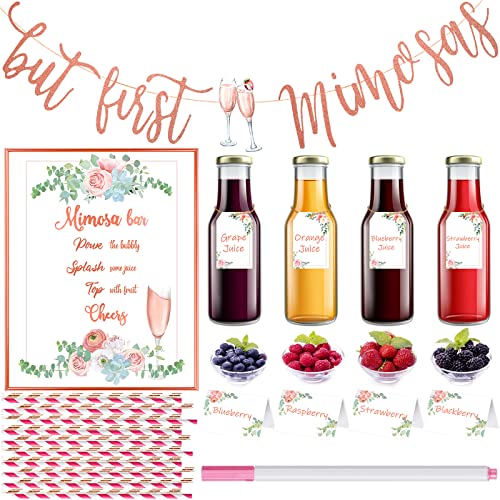

As an Amazon Associate we earn from qualifying purchases at no extra cost to you. Ratings are shown as listed on Amazon.
Quick picks by brunch situation
- Best for most hosts: A modular 2-liter dispenser, eight reusable glasses, an ice bucket, and six small garnish bowls. It balances capacity, cleanup, and table space.
- Best for a small apartment brunch: A compact six-glass set with a 1-liter carafe or bottle chiller. It occupies roughly 2 square feet and avoids a bulky drink dispenser.
- Best for a large brunch: Two 2-liter dispensers—one for orange juice and one for a second juice—plus 12 to 16 glasses. Two smaller dispensers are easier to lift and clean than one oversized vessel.
- Best for frequent entertaining: A component-based kit with borosilicate glass or stainless-steel pieces, dishwasher-safe bowls, and replaceable silicone seals.
- Best on a tight budget: A kit with reusable plastic flutes and ordinary glass pitchers. Spend less on decorative signs and more on a good ice bucket and leak-resistant pitchers.
What to compare before buying
Dispenser capacity and pouring control
A 1-liter dispenser holds about six 5-ounce pours, while a 2-liter dispenser holds approximately 13 pours. That calculation assumes the container is filled with juice rather than ice and that each mimosa uses 2.5 ounces of juice. In practice, leave at least 10 percent of the vessel empty to prevent sloshing when guests move it.
Look for a wide opening for cleaning, a sturdy handle, and a spigot positioned high enough to leave fruit pulp below it. A narrow beverage dispenser may look elegant but can be frustrating when pulp blocks the tap. A carafe is often better for thick peach nectar or grapefruit juice because it can be shaken, poured, and refrigerated easily.
Glassware and serving capacity
Six glasses are adequate for a brunch of up to four people if you are comfortable washing or refilling during the meal. Eight to 12 glasses work better for six to eight guests. Flutes between 6 and 8 ounces encourage smaller pours and preserve carbonation; oversized wine glasses use more sparkling wine and take up more table space.
Glass is attractive and reusable but breaks easily around crowded food tables. Tritan or other durable reusable plastic is a practical choice for outdoor brunches, children’s birthday gatherings, and buffet service. Avoid very thin disposable plastic flutes that flex when filled; they tend to tip and make a full garnish bar harder to manage.
Garnish tools that earn their space
The useful parts of a garnish station are small tongs, a citrus knife or peeler, picks, and shallow bowls. A garnish bowl with a lid is especially valuable because cut fruit dries out quickly and attracts insects outdoors. Decorative labels, stirrers, and a small cutting board are pleasant extras, but they should not replace functional tools.
Choose stainless-steel tongs and picks when possible. Painted wood and soft bamboo can stain from berries and citrus oils, while inexpensive metal plating may discolor in the dishwasher. If the kit includes a zester, use it for aromatic citrus peel rather than dropping long strips into every glass, where they can interfere with pouring.
Head-to-head comparison
| Kit format | Typical capacity | Glassware | Table footprint | Reusable components | Best use |
|---|---|---|---|---|---|
| Compact carafe kit | 1 liter of juice; 6–8 pours | 6 x 6–8 oz glasses | About 18 x 12 inches | Carafe, glasses, bowls, tongs | Small kitchens and brunches of 2–4 |
| Standard dispenser kit | 2 liters; 12–13 pours | 8 x 6–8 oz glasses | About 24 x 18 inches | Dispenser, glasses, ice bucket, bowls | Most indoor brunches of 4–8 |
| Two-dispenser station | 4 liters total; 24–26 pours | 12–16 glasses | About 36 x 24 inches | Two dispensers, glasses, bowls, tongs | Large groups and multiple juice choices |
| Disposable party kit | Usually 1–2 liters of juice | 10–20 plastic glasses | About 24 x 18 inches | Often only signs and serving trays | One-off outdoor events |
These are useful comparison ranges, not specifications for one particular brand or package. Product dimensions vary, and a dispenser’s advertised capacity may include space that should remain empty for safe pouring.
Which format is the best value?
For occasional hosts, a standard dispenser kit usually offers the best compromise. It creates a recognizable mimosa bar without requiring several separate purchases, and eight glasses cover a typical breakfast gathering. The drawback is storage: a dispenser with a tap can occupy as much cabinet space as a large pitcher and may not nest with the glasses.
A compact carafe kit costs less to store and is often easier to chill. It is the better choice when the bar will sit on a narrow kitchen island or when guests will assemble drinks at the table. The limitation is replenishment. Once six or seven pours have been served, someone must return to the refrigerator for more juice.
A two-dispenser station costs more initially, but it prevents one of the most common brunch bottlenecks: guests waiting for the only juice container while the host is cooking. Use one dispenser for orange juice and the other for grapefruit, pineapple, cranberry, or a nonalcoholic sparkling option. Keep sparkling wine in bottles or an ice bucket rather than transferring it to a dispenser, since agitation and prolonged exposure to air quickly reduce carbonation.
How much space do you really need?
Measure the serving surface before buying. A practical station needs room for the juice dispenser, sparkling wine, glasses, and garnishes—not merely the decorative tray. For eight guests, allow approximately 24 inches of width and 18 inches of depth. Add another 12 inches of width for a second dispenser or a separate ice bucket.
A useful layout is to place the glasses at one end, juices in the center, and garnishes at the opposite end. Put sparkling wine in an ice bucket behind or beside the main line. This arrangement keeps guests from reaching over cut fruit and reduces collisions between full glasses and bottles.
Setup and cleaning details that affect ownership
- Chill the liquids separately. Refrigerate juice and sparkling wine before setting up. Ice in the juice dispenser dilutes it and can obstruct a spigot.
- Test the dispenser. Fill it with water the night before. Check the gasket, tap, and base for leaks, then dry every part before storing it.
- Prepare garnishes shortly before serving. Slice oranges and strawberries within a few hours of brunch. Keep them covered and chilled rather than leaving them beside a warm window.
- Use small replenishment containers. Instead of topping up a nearly empty dispenser, wash it first if pulp or fruit has entered the liquid. A spare carafe makes this easier.
- Disassemble after the meal. Remove the spigot and silicone washer, rinse pulp from threads, and let every piece air-dry. Trapped moisture is the most common cause of odors and sticky seals.
The parts most likely to wear first are silicone gaskets, plastic spigot threads, and printed labels. Replacement seals are worth seeking before purchase, particularly for a kit intended for yearly use. Do not assume that every “dishwasher-safe” claim applies to the dispenser tap or decorative lettering; check the care instructions for each component.
Decision matrix
| Your situation | Recommended format | Why | What to avoid |
|---|---|---|---|
| Budget under roughly $50 | Carafe, reusable plastic glasses, separate bowls | Lower replacement risk and flexible storage | Paying for a large decorative tray |
| Limited counter space | 1-liter carafe kit | Small footprint and easy refrigerator storage | Two-tier stands and wide dispensers |
| Six to eight guests | 2-liter dispenser with 8 glasses | Enough juice for roughly 12–13 standard pours | A single 1-liter vessel |
| More than 10 guests | Two-dispenser station with 12–16 glasses | Shorter lines and two flavor choices | One oversized, difficult-to-clean container |
| Frequent seasonal use | Glass or stainless-steel components with replaceable seals | Better long-term durability and less waste | Permanent labels and nonreplaceable taps |
Bottom line
For most households, the best mimosa bar kit for brunch entertaining is an eight-glass, 2-liter modular set with a reliable dispenser, a real ice bucket, and dishwasher-friendly garnish tools. Choose the smaller carafe format when space and storage matter more than capacity, and move to two dispensers when serving more than eight guests or offering multiple juices. The strongest kit is not the one with the most decorations; it is the one that pours cleanly, fits your surface, survives repeated washing, and lets guests serve themselves without creating a new task for the host.





Write Your Review
No reviews yet. Be the first to share your experience!