

Our Top Picks
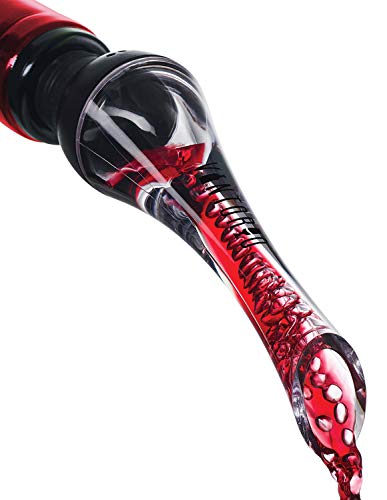

The Vinturi V1010 Essential Red Wine Aerator is the best all-around choice in this group for anyone who mostly pours young, bold reds and wants a tool that works the same way every time. A wine aerator mixes air into wine as it pours, which softens harsh tannins and opens up aroma in seconds instead of the half hour a decanter can need. If you would rather leave a spout in the bottle all evening, the in-bottle pourers below make more sense, and the electric opener set suits gift buyers who want an aerator and a corkscrew in one box.
Quick List
- Vinturi V1010 Essential Red – best for young, tannic reds poured glass by glass over a stand
- Rabbit Aerator Pourer Spout – best for leaving in the bottle neck for a relaxed dinner pour
- Vintorio Aerating Pourer – best for a single-piece black spout with a decanter-style chamber
- Wine Aerator Pourer Spout, 2 Pack – best for households that want a spare, one for red and one for white
- TenTen Labs Aerator Pourer (2-Pack) – best for a Bernoulli-style spout with a silicone no-drip base, two included
- Electric Wine Aerator and Opener Set – best for gifting or anyone who wants a corkscrew, foil cutter and aerator together
Which One Is Right for You?
| If you… | Choose |
|---|---|
| mostly drink young Cabernet, Syrah or other bold reds and want a proven handheld design | Vinturi V1010 Essential Red |
| want to pour from the bottle all evening without handling a separate gadget over each glass | Rabbit Aerator Pourer Spout |
| like a spout that doubles as a small decanter chamber | Vintorio Aerating Pourer |
| host often and want a spare spout so two bottles can be open at once | Wine Aerator Pourer Spout, 2 Pack |
| want two Bernoulli-style spouts and a silicone base that grips the bottle neck | TenTen Labs Aerator Pourer (2-Pack) |
| are shopping for a gift or want opener, foil cutter and aerator in a single set | Electric Wine Aerator and Opener Set |
Start with how you pour. If you fill one glass at a time and enjoy the small ritual, a handheld unit like the Vinturi is the clearest fit. If you pour for a table and want less fuss, an in-bottle spout does the same job with one hand. The two-pack options simply give you a spare, which matters more than any single spec once you start opening a red and a white on the same night.
All 6 Picks in Detail
1. Vinturi V1010 Essential Red Wine Aerator – Best for Young Reds Poured by the Glass
As an Amazon Associate we earn from qualifying purchases at no extra cost to you.

This is the classic handheld design: you hold it above the glass and pour the bottle through it. Vinturi describes the internal passage as a venturi that speeds the wine up, drops the pressure and pulls air in through intake channels, so oxygen mixes with the wine on its way down. The V1010 is the version made for red wine, and this listing includes a base, which is a stand that catches drips and keeps the unit upright between pours.
It suits people who drink young reds with firm tannins and want a visible, repeatable routine. Because you control the pour, you can aerate one glass or a whole bottle without committing the rest of the wine to a spout.
In daily use, the stand is what separates this from a bare plastic tube. You set the aerator on it after a pour, and the last drops fall into the base rather than onto the table. If you entertain, keep the aerator at the bar area so guests can see how it works; people tend to enjoy the pour more when the process is visible. Because the V1010 is built for reds, treat it as the red-wine tool in a household that also owns a spout for whites.
- Handheld venturi-style aerator made for red wine
- Acrylic body with a silicone grip, per the maker’s description
- Includes a base or stand for drip control
- Roughly six inches tall; confirm exact dimensions on the listing
- Rinsing after use is recommended; check the maker’s care notes before using a dishwasher
Pros
- Well-known design with a clear aeration path
- Stand keeps counters and tablecloths clean
- Works for a single glass or a full bottle
Cons
- You must hold it over every glass
- Larger to store than a pourer spout
Compared with the Rabbit spout, the Vinturi gives you more control over how much wine you aerate, while the Rabbit is easier to use when you are serving a crowd.
2. Rabbit Wine Aerator Pourer Spout – Best for Leaving in the Bottle

The Rabbit spout sits in the neck of the bottle and aerates as you tilt and pour. The listing promises instant in-bottle aerating and a dripless pour for both red and white wine, which makes it a good match for casual dinners where one person is topping up several glasses.
It suits anyone who dislikes holding a separate gadget over a glass. You insert it once and pour normally, so the routine is closer to using a standard bottle stopper than to a decanting ceremony.
A spout like this earns its place on busy evenings. You can open the bottle, seat the spout, and then hand the bottle to a guest who just tilts and pours without being told how. That matters at dinner parties where nobody wants to explain a gadget. Keep a small cloth nearby for the rim of the spout, and rinse it between different bottles so a heavy red does not flavor the next white.
- In-bottle pourer spout design
- Listing states dripless pouring
- Marketed for red and white wine
- Single spout; confirm material and fit range on the listing
- Compact enough to keep in a drawer with other bar tools
Pros
- One-handed use
- Small and easy to store
- Same spout works across several bottles
Cons
- Only one spout, so rinsing between bottles is required
- Aeration happens only while pouring, not while the bottle rests
Next to the Vintorio, the Rabbit is the simpler of the two; the Vintorio leans on a larger aerating chamber, so check which shape feels better in your bottle neck.
3. Vintorio Wine Aerator Pourer – Best for a Decanter-Style Spout

Vintorio sells this black pourer as an aerating spout and decanter in one. The maker’s page describes an air intake design based on the Bernoulli effect and a larger aerating chamber, and says it can improve a wine in under thirty seconds. That is a marketing claim from the company, so treat it as a description of the intent rather than a measured result.
It is a good fit for people who want something that looks neat on a dinner table and who pour from the bottle rather than into each glass separately.
The practical advantage of a chamber-style spout is that wine has a little more room to mix with air before it exits. That can make the pour feel smoother and slightly slower, which many people prefer for bold reds. If you pour for a toast and need speed, a simpler spout may be quicker. Check the bottle-neck fit on your favorite bottles before a dinner party rather than during it.
- Black aerating pourer spout
- Air intake design that follows the Bernoulli principle, per the maker
- Marketed as both aerator and decanter spout
- Leak-resistant seal claimed by the maker; confirm fit on your bottles
- Single unit
Pros
- Clean, understated look
- Works with a normal pouring motion
- Larger chamber than a plain pourer
Cons
- Single unit, no spare
- Claims about speed come from the seller, not independent measurement
If you want a spare, the two-pack spout that follows is the more practical pick, but the Vintorio is the one with the most developed aerating chamber in this pair.
4. Wine Aerator Pourer Spout, 2 Pack – Best for Keeping a Spare

This listing is a generic two-pack of pourer spouts promising drip-free pouring and instant aeration. The name does not state a brand, so the best way to judge it is by what it is: two in-bottle spouts for the same shelf space as a single unit. Having a pair means one spout can stay with a red while the other serves a white or rosé, without rinsing in between.
It suits hosts, family dinners and gift baskets, where two spouts are more useful than a single premium one.
Two spouts in one package solve a common problem: you often want to open a red and a white, or two reds, at the same event. Label them mentally by color or keep one in the bar drawer and one in the kitchen. Since the listing name gives little detail, read the product page for the material and for the bottle neck sizes it fits, and check the return policy if a first pour leaks.
- Two pourer spouts in the package
- Listing promises drip-free pouring and instant aeration
- Brand, material and bottle-neck fit range are not stated in the title; confirm on listing
- Useful for two bottles at the same table
- Rinse and dry before storing
Pros
- Two spouts mean no mid-dinner rinsing
- Easy to give one away as a gift
- Simple, familiar use
Cons
- Limited detail in the listing name
- Less brand history to rely on
Compared with the TenTen Labs pair, this one is the more basic option; the TenTen listing spells out the Bernoulli design and silicone base, which is easier to evaluate.
5. TenTen Labs Wine Aerator Pourer (2-Pack) – Best for a Silicone No-Drip Base

TenTen Labs ships two black decanter spouts that the listing says use the Bernoulli effect to add oxygen as the wine passes through. The silicone no-drip base is the practical detail: it is meant to grip the bottle neck and keep wine from running down the glass, and the listing states it fits all bottles. The brand describes the design as sommelier-developed, which is the seller’s own claim.
This is the pick for someone who likes the Rabbit-style routine but wants a pair and a clearer description of how the spout works.
A silicone base matters most when you pour slowly at the end of a bottle, because dribbles tend to appear when the angle is shallow. A snug base also reduces the chance of a spout slipping out when you tilt a full bottle. Keep both spouts clean and dry, and store them in a drawer away from sharp tools, because silicone can pick up nicks that spoil the seal.
- Two black pourer spouts per pack
- Bernoulli-effect aeration, per the listing
- Silicone base for a snug fit and drip control
- Listing says it fits standard bottles; confirm for oversized or unusual necks
- Easy to rinse by hand
Pros
- Two spouts in one pack
- Clear description of the aeration method
- Silicone seal helps stay put
Cons
- Spout design is less eye-catching than a stand-mounted unit
- Performance claims are from the seller
Against the generic two-pack, the TenTen Labs gives you a named design and a stated silicone base, which is why it sits ahead of it for most buyers.
6. Electric Wine Aerator and Opener Set – Best Gift Set

This listing is a different kind of product: a rechargeable automatic corkscrew packaged with an aerator, dispenser, foil cutter, stopper and other accessories. It is less a dedicated aerator than a barware kit that includes aeration. For readers who open wine rarely and want everything in one tidy box, that bundle is the appeal.
It is best treated as a gift or an all-in-one starter kit, not as the sharpest aeration tool on this list.
Electric sets are popular for older relatives, people with sore hands and anyone who opens bottles in a busy bar area. Charge the opener fully before an event and keep the foil cutter and stopper in the same box so nothing goes missing. Do not rely on this kind of kit as your main route to better flavor; it is a convenience bundle, and a dedicated aerator or decanter will do more for a tight young red.
- Rechargeable automatic corkscrew and aerator
- Includes dispenser, foil cutter and stopper per the listing
- Battery capacity and charge time: confirm on listing
- Extra accessories may vary by seller
- Wipe clean; keep electronics away from water
Pros
- Several tools in one package
- Good for gifting
- Less effort than a manual corkscrew
Cons
- Aeration is only one part of the kit
- Requires charging before use
Compared with the Vinturi, this set trades focused aeration for convenience; if aeration is the priority, choose the first pick instead.
Specs Compared
| Product | Type | Pieces in listing | Aeration method | Base or stand | Power |
|---|---|---|---|---|---|
| Vinturi V1010 Essential Red | Handheld over-glass aerator | One aerator plus base | Venturi air intake | Yes, drip stand | None |
| Rabbit Aerator Pourer Spout | In-bottle spout | Confirm on listing | In-bottle aerating | Dripless spout, per listing | None |
| Vintorio Aerating Pourer | In-bottle spout and decanter | One | Bernoulli-style intake, per maker | Confirm on listing | None |
| Wine Aerator Pourer Spout, 2 Pack | In-bottle spout | Two | Instant aeration, per listing | Confirm on listing | None |
| TenTen Labs Aerator Pourer (2-Pack) | In-bottle spout | Two | Bernoulli effect | Silicone no-drip base | None |
| Electric Wine Aerator and Opener Set | Electric opener set with aerator | Multiple accessories | Confirm on listing | Confirm on listing | Rechargeable |
How We Chose These
This guide is built from research, not from our own use of the products. We started with the product set shown in current catalog listings for wine aerators, then read each listing name and the maker’s own product pages where they exist. We grouped the picks by how you pour: handheld, in-bottle spout, and electric set. We looked at what each listing states about aeration method, drip control, number of pieces and extras, and we flagged anything the listing does not say as something to confirm. Where a claim comes from the seller, we say so rather than presenting it as a measured result. Brand reputation, simplicity of design and clarity of the listing were used as tie-breakers.
What to Look For
Match the aerator to the wine
Aeration helps most with young, tannic reds such as Cabernet Sauvignon, Syrah, Malbec and Nebbiolo. Oxygen softens the grip of tannins and lets fruit and spice aromas come forward. Lighter reds and some full-bodied whites can also gain a little, but the effect is smaller. Delicate, old wines usually need less air, not more, and often benefit from a gentle pour into a decanter and a short wait. Sparkling wine should never be aerated; the bubbles are the point.
Handheld versus in-bottle design
A handheld aerator, like the Vinturi, is held above the glass and works only while wine passes through. An in-bottle spout stays in the neck and aerates every pour. The handheld is easier to rinse and gives you the choice to aerate one glass. The spout is faster for table service and is less likely to be dropped. If you rarely open a bottle, either works; if you pour for guests often, a pair of spouts is the more practical setup.
Drip control and bottle fit
Most complaints about aerators come down to drips and loose fits. Silicone bases, snug rings and a clean pouring angle matter more than any claim about speed. Look for a base or stand if you use a handheld unit, and a flexible silicone seal if you use a spout. Standard wine bottle necks vary slightly, so if you drink from magnums, bottles with wax seals or unusual necks, check that the spout will sit securely before you rely on it.
Materials and cleaning. Acrylic and food-grade plastic are common, and silicone is used for grips and seals. Rinse the aerator with warm water after each use, because dried wine can leave residue in small air channels. Some makers say a dishwasher is fine and some do not, so follow the instructions that come with your unit. Never scrub with abrasive pads, which can cloud clear plastic and scratch the passages that draw in air.
Safety and care for electric and glass items. If you choose the electric set, charge it with the cable that comes with it, keep it away from sinks and dishwashers, and stop using it if it heats up or swells. Always point the opener away from your hands and keep fingers clear of the foil cutter. For any aerator, handle wet bottles with a towel so the bottle and spout do not slip, and pour over a counter rather than over a hard floor.
A simple rule of thumb
Think of an aerator as a shortcut for the first thirty minutes of breathing a wine would get in a decanter. A decanter commonly runs from about fifteen minutes to a couple of hours depending on the wine, while an aerator works in the few seconds a pour takes. Worked example: you open a young red at seven and want to drink it at seven-fifteen. Pour it through an aerator into the glass, taste, then decide whether it still needs a few minutes in the glass. If it already tastes open, stop there; more air is not always better. Treat any claim that an aerator equals a long decant as a marketing claim, because there is little independent measurement behind it.
Questions
Does a wine aerator really make wine taste better?
It often helps young, tannic reds by softening harsh edges and releasing aroma. The difference is smaller for light reds and most whites, and it can be unnoticeable for wines that are already open and smooth.
Should I use an aerator on white wine?
Usually not needed, though some full-bodied whites can show more aroma with a little air. Chilled whites also warm up as they sit in a glass, so many drinkers skip aeration for them.
How is an aerator different from a decanter?
A decanter exposes the whole bottle to air for a period of time and also separates sediment. An aerator mixes air into the wine as it pours, which is faster but does not remove sediment.
Can I use an aerator on old wine?
It is best to be cautious. Old wines can fade quickly with too much oxygen, so a gentle pour into a decanter is usually preferred over forced aeration.
How do I clean a wine aerator?
Rinse it with warm water right after use and let it dry fully. Follow the maker’s guidance on soap and dishwashers, since materials and instructions differ between products.
Are in-bottle spouts or handheld aerators better?
Neither is better for every situation. Handheld units give you control for a single glass, while spouts are quicker for table service and for bottles you plan to pour from over an evening.
Update History
- October 20, 2026 – Initial publication; product set drawn from current catalog listings.
- Check the product page for current specifications and availability before buying.
Sources
- Manufacturer product pages and descriptions for Vinturi, Vintorio and TenTen Labs
- Retailer listing titles and specification fields for each product named above
- Published wine-service articles on aeration, tannin and decanting times







Write Your Review
No reviews yet. Be the first to share your experience!