

Key takeaways
- 10–12 mm: high capacity for narrow champagne flutes and small wine glasses, but restrictive for chunky stemware.
- 15–18 mm: the most versatile range for standard wine glasses, coupes, and many martini glasses.
- 20–25 mm: better for wide-footed or handmade glasses, though fewer glasses fit in the same width.
- More than 25 mm: suitable for unusually large bases, but potentially unstable for narrow-stemmed glasses.
The best glass drying rack for a home bar is a two-tier stainless-steel rack with 10–15 mm slot spacing, removable drip control, and enough height for your tallest wine glass or cocktail coupe.
That specification balances the three problems most bar racks handle poorly: narrow glass slots that exclude thick-footed stemware, shallow trays that let water run onto the counter, and bulky frames that occupy more room than the glasses they hold. The right choice depends on whether you mainly wash wine glasses, tumblers, or a mixed collection.
Our top picks

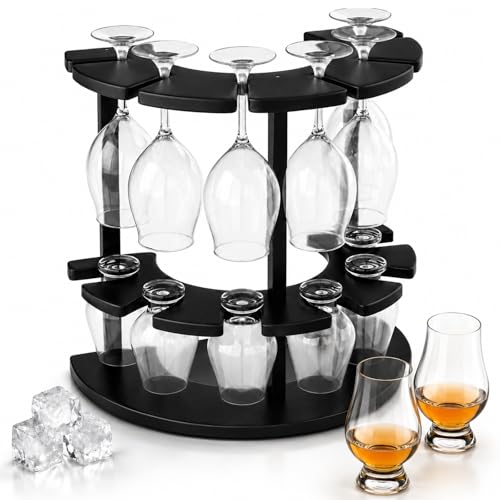
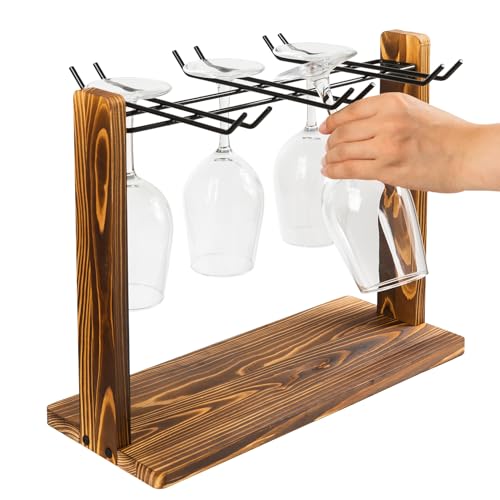
As an Amazon Associate we earn from qualifying purchases at no extra cost to you. Ratings are shown as listed on Amazon.
Quick comparison: which rack suits your bar?
| Rack type | Typical capacity | Slot spacing | Approx. footprint | Best for | Typical 2026 price range |
|---|---|---|---|---|---|
| Compact single-tier stemware rack | 6–8 wine or cocktail glasses | 18–25 mm | 300 × 180 mm | Small counters and occasional use | $15–$30 |
| Two-tier mixed-glass drying rack | 10–16 stemmed glasses plus 4–8 tumblers | 10–18 mm | 400 × 300 mm | Most home bars | $30–$65 |
| Large open-frame barware rack | 18–30 mixed glasses | 12–20 mm | 500 × 350 mm | Frequent entertaining and batch washing | $60–$120 |
| Roll-up silicone drying mat | 6–12 glasses, depending on layout | Not slotted | 400–500 × 300–350 mm | Temporary use and easy storage | $12–$30 |
| Under-cabinet hanging stemware rack | 4–12 stemmed glasses | Usually 20–30 mm | 300–600 × 100–150 mm | Bars with little counter space | $20–$55 |
These are useful buying ranges rather than fixed specifications. Actual capacity changes substantially with glass-bowl diameter, stem thickness, and whether the rack allows glasses to alternate direction.
Best overall: a two-tier stainless-steel rack with a removable tray
For a typical home bar, choose a rack approximately 400 mm wide, 300 mm deep, and 250–350 mm high. Look for stainless steel or powder-coated steel, nonslip feet, an elevated upper tier, and a removable plastic or stainless-steel drip tray.
The upper level should hold stemmed glasses by their bases or stems without allowing the bowls to touch. The lower level should be open enough for tumblers, rocks glasses, mixing glasses, and bar tools. This arrangement is more useful than a stemware-only rack because a home bar usually produces mixed loads after one evening of cocktails.
A removable tray matters more than a decorative finish. Without one, water collects under the feet and eventually stains wood, swells laminate edges, or leaves mineral rings on stone. A tray with a raised lip of at least 8 mm provides practical spill protection; drainage channels or a small pour spout make emptying easier.
Slot spacing: the specification that determines compatibility
Slot spacing is the clear distance between adjacent supports. Narrow spacing increases nominal capacity, but it can make a rack unusable with broad wine bowls, thick stems, or glasses with heavy decorative feet.
- 10–12 mm: high capacity for narrow champagne flutes and small wine glasses, but restrictive for chunky stemware.
- 15–18 mm: the most versatile range for standard wine glasses, coupes, and many martini glasses.
- 20–25 mm: better for wide-footed or handmade glasses, though fewer glasses fit in the same width.
- More than 25 mm: suitable for unusually large bases, but potentially unstable for narrow-stemmed glasses.
Measure the widest part of the glass base, not just the stem. If your largest base is 75 mm wide and each rack position is 25 mm wide, a 400 mm rack may hold only about 13 glasses after allowing room for the frame and side clearance. Manufacturer capacity figures often assume smaller bases and perfectly uniform glassware.
Stemware versus tumblers: do not force one rack to do two jobs
For wine glasses and cocktail coupes
Stemware needs vertical clearance and controlled contact points. A good rack supports the glass above the tray so air reaches the bowl and the rim does not rest on a wet surface. Allow at least 100 mm of clearance above the supporting rail for ordinary wine glasses, and closer to 150–180 mm for large red-wine bowls or tall coupes.
A rack designed only for hanging glasses upside down may not suit delicate stems. If the slot grips the stem tightly, loading and unloading repeatedly can create sideways pressure. Wider, rounded supports are safer than sharp stamped-metal edges.
For tumblers and rocks glasses
Tumblers need a flat, ventilated surface rather than slots. Choose a lower tier with wire spacing of roughly 15–25 mm, or a perforated platform that lets air circulate beneath the glasses. A solid tray dries more slowly and encourages water to remain inside the glass base.
For lowball glasses, check the lower shelf height carefully. A rack can have generous overall capacity but still fail if its lower level is too shallow for a 90–110 mm-tall mixing glass or tall rocks glass.
Drip control and cleaning: where inexpensive racks often disappoint
Prioritize a tray that can be removed without lifting the entire rack. A tray extending 10–20 mm beyond the frame gives better protection against splash, while a completely flush tray is easier to store but less forgiving when several wet glasses are loaded at once.
Stainless steel is usually the easiest material to maintain, but “stainless” does not mean stain-proof. Hard-water deposits accumulate around welds and corners. Rinse the tray after each use, dry the rack when it will be stored, and periodically wipe mineral scale with diluted white vinegar followed by a thorough water rinse. Do not leave acidic cleaning solution on metal for extended periods.
Powder-coated steel can provide a quieter, more stable surface, but chips in the coating are the first places corrosion may begin. Inspect the underside of the feet and the edges of the tray, where standing water is most likely to remain.
Assembly and storage footprint
A rack with more than one tier usually requires assembly. Prefer captive screws, clearly labeled parts, and feet that remain level after tightening. Assembly should not require permanent adhesive: glue makes later cleaning and tray replacement difficult.
Before buying, measure three dimensions:
- Counter depth: leave at least 50 mm behind the rack if glasses are loaded from the front and the bar has a wall or backsplash.
- Cabinet clearance: add the height of your tallest glass plus 20–30 mm if the rack will be stored under a cabinet.
- Drainage clearance: leave enough room to slide the tray out without moving the rack.
A 400 × 300 mm rack covers 0.12 square metres of counter. If you wash 12 glasses at a time, that is roughly 0.01 square metres per drying position before accounting for the frame. A compact single-tier rack may occupy less counter space, but it can require a second drying cycle; the larger rack can therefore be more space-efficient during entertaining.
Decision matrix by bar setup
| Your situation | Recommended design | Specification to prioritize | Trade-off |
|---|---|---|---|
| One or two drinks most evenings | Compact single-tier rack | Removable tray and 18–25 mm spacing | Limited batch capacity |
| Mixed wine, cocktail, and rocks glasses | Two-tier mixed-glass rack | 15–18 mm stem slots plus ventilated lower shelf | Needs substantial counter depth |
| Frequent parties or large dishwasher loads | Large open-frame rack | 20-plus glass capacity and reinforced feet | Harder to store between uses |
| Very limited counter space | Roll-up mat or hanging rack | Fast drying and compact storage | Less protection from bumps and spills |
| Wide handmade or heavy glasses | Wide-slot rack | 20–25 mm spacing and rounded supports | Lower stated capacity |
Common mistakes that shorten a rack’s useful life
- Overloading every slot: glasses touch and transfer impact when the rack is moved.
- Stacking tumblers on a stemware-only rack: concentrated weight can bend thin supports.
- Leaving the tray full overnight: standing water accelerates scale and can affect coated metal.
- Using abrasive powder on the tray: scratches retain residue and make future cleaning harder.
- Ignoring uneven feet: a rack that rocks is more likely to tip when a tall glass is placed on one side.
Bottom line
Choose the best glass drying rack for a home bar by matching the rack to your largest glass, not the advertised glass count. For most households, a two-tier steel rack with 15–18 mm slot spacing, a ventilated tumbler shelf, a removable raised-edge tray, and a footprint near 400 × 300 mm offers the strongest balance of capacity and practicality. Choose a wide-slot compact rack for oversized stemware, a large open frame for frequent entertaining, or a roll-up mat when storage space matters more than maximum protection.

Write Your Review
No reviews yet. Be the first to share your experience!