

Key takeaways
- For most home bars, the best glass polishing cloth set for barware is a pair or small bundle of 16-by-24-inch, low-lint microfiber cloths: one tightly woven and smooth for final polishing, and one waffle-weave or moderately textured for initial drying. Choose smooth linen instead if…
Best Glass Polishing Cloth Set for Barware
The best glass polishing cloth set for barware is a two-cloth, lint-free microfiber set with a tightly woven polishing cloth of about 16 by 24 inches and a more absorbent drying cloth for removing water before the final buff.
That combination is more useful than a large pack of identical towels. Delicate stemware needs a smooth, low-lint surface that will not leave fibers around the rim, while recently washed pint glasses and cocktail shakers benefit from a more absorbent cloth. The right set should also be large enough to hold a glass safely, dense enough to polish without snagging, and washable without fabric softener.
Our top picks

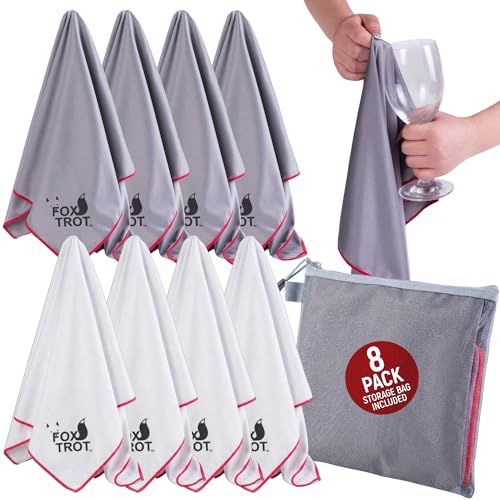


As an Amazon Associate we earn from qualifying purchases at no extra cost to you. Ratings are shown as listed on Amazon.
Quick comparison: which set suits your barware?
| Cloth type | Typical size | Material and weave | Absorbency | Best use | Limitations |
|---|---|---|---|---|---|
| Fine glass-polishing microfiber | 16 × 24 in | 80/20 or 70/30 microfiber, tight flat weave | Low to moderate | Final buffing of wine glasses, coupes, and crystal-style stemware | Not ideal for soaking up a full rinse |
| Waffle-weave microfiber | 16 × 24 to 18 × 28 in | Microfiber with raised grid texture | High | Drying tumblers, highballs, and bar tools | Texture can be less elegant on very thin rims |
| Lint-free linen or linen-cotton | 18 × 28 to 20 × 30 in | Flat woven natural fiber | Moderate | Traditional polishing and presentation service | Usually needs more laundering and can wrinkle |
| Plush general-purpose microfiber | 12 × 12 to 16 × 24 in | Thicker, looped pile | High | Drying wet exteriors and cleaning counters | More likely to shed lint or catch on delicate stems |
What to look for in the best glass polishing cloth set
Lint-free construction
Lint is the first quality test. A cloth can be highly absorbent yet unsuitable for glass if it leaves short fibers around the rim or in the bowl. Look for packaging that identifies the cloth as lint-free or low-lint, rather than relying on the vague word “soft.” A smooth, flat surface is generally safer for stemware than a long, fluffy pile.
Microfiber is usually the practical choice because its split fibers lift moisture and fingerprints without requiring much pressure. Linen is also a strong option, particularly for people who prefer natural fibers, but new linen towels may shed until they have been washed several times.
Weave density and surface texture
A dense, fine weave gives a cleaner final finish. The cloth should glide across the bowl instead of dragging, catching, or leaving a visible pattern of its own. A waffle weave is excellent for first-pass drying because its recessed channels hold water, but a very pronounced grid is not always the best surface for polishing fragile wine glasses.
For a two-piece set, choose one flat-weave polishing cloth and one waffle-weave or moderately textured drying cloth. A set containing only thick plush towels may be convenient for general cleaning but less precise for barware.
Size and handling
A 16-by-24-inch cloth is a useful minimum for stemware. It can be folded into quarters, giving four clean working surfaces, and it is large enough to keep your fingers from touching the glass repeatedly. A 20-by-30-inch linen cloth offers more coverage for restaurant-style polishing, although it can feel unwieldy around narrow stems.
Very small 12-by-12-inch cloths are easy to store but provide fewer clean sections and require more frequent replacement during a polishing session. For a home bar, two or four cloths in the 16-by-24-inch range usually provide a better balance of control and laundry efficiency.
Absorbency without residue
Absorbency matters most during the first drying pass. If the cloth becomes saturated after one or two glasses, it will spread water rather than remove it. A useful household benchmark is roughly 100 to 200 milliliters of water absorbed by a medium-sized cloth before it feels noticeably wet; manufacturers do not always publish this measurement, so weave and fiber content are useful proxies.
The polishing cloth itself does not need to be the most absorbent item. Its job is to remove remaining spots, oils, and haze after the glass is mostly dry. Excessively plush cloths can retain detergent residue, which may create more streaking than they prevent.
Best choices by situation
| Your situation | Recommended set | Why it fits |
|---|---|---|
| Occasional home cocktails | Two 16 × 24 in flat or fine-weave microfiber cloths | Low storage demand and enough capacity for a small batch of glasses |
| Frequent entertaining | Four to six cloths, including at least two waffle-weave drying cloths | Lets you rotate damp towels instead of polishing with a saturated surface |
| Thin wine stems and delicate coupes | Fine, flat-weave microfiber or smooth linen | Less snagging and better control around narrow rims and stems |
| Large collection with limited storage | Three compact microfiber cloths, each about 16 × 24 in | Dries quickly, folds small, and avoids bulky plush towels |
| Traditional table-service appearance | Two or more 18 × 28 in linen or linen-cotton cloths | Longer format provides a formal grip and broad polishing coverage |
How to polish bar glasses without streaks
-
Rinse away detergent first. Soap residue is a major cause of haze. Use clean water and avoid letting glasses air-dry beside a sink where mineral droplets can settle.
-
Remove excess water with the absorbent cloth. Hold the glass by the bowl or base, depending on its shape, and blot the exterior. Do not twist the bowl against the stem; that concentrates force at the weakest joint.
-
Switch to a dry polishing section. Fold the fine cloth into quarters. Use one section for several glasses, then turn to a clean section once it starts to feel damp or looks visibly marked.
-
Polish the outside first. Support the bowl with one hand and rotate the cloth around the exterior with the other. Use light pressure rather than squeezing the glass.
-
Finish the rim and inside. Feed only a small corner of the cloth into the bowl. Never grip the inside and outside of a thin glass while twisting, because that can stress the rim and stem.
-
Inspect against angled light. Streaks are easier to see near a window or under a bar light. If marks remain, the issue may be hard-water deposits rather than the cloth; wash the glass again with a suitable descaling solution and rinse thoroughly.
Ownership costs and washing reality
A quality microfiber set commonly falls in the general market range of about $10 to $30, while premium linen or linen-blend sets often cost roughly $15 to $40. Suppose a $24 four-cloth set lasts 18 months and is used twice a week. That is approximately 156 uses, or about $0.15 per use before laundry costs. The value improves when the cloths replace disposable paper towels and prevent re-polishing caused by lint.
What wears first is usually the edge stitching, followed by loss of absorbency from detergent or fabric-softener buildup. Wash microfiber separately from cotton towels, using a small amount of liquid detergent. Skip fabric softener, dryer sheets, bleach, and oily laundry products; they can coat the fibers and reduce their ability to pick up moisture. Air-drying is gentle, while low heat is preferable if using a dryer.
Keep polishing cloths away from bar mats, cooking oils, waxes, and cleaning sprays. A cloth that has picked up grease may redistribute it across a glass, creating a persistent film. Retire a cloth when it develops rough areas, pulled loops, frayed seams, or a smell that remains after washing.
Bottom line
For most home bars, the best glass polishing cloth set for barware is a pair or small bundle of 16-by-24-inch, low-lint microfiber cloths: one tightly woven and smooth for final polishing, and one waffle-weave or moderately textured for initial drying. Choose smooth linen instead if presentation and natural fibers matter more than quick drying. Whichever material you buy, correct handling, clean rinse water, and careful laundering have as much influence on a streak-free finish as the cloth itself.

Write Your Review
No reviews yet. Be the first to share your experience!