

Key takeaways
- Heavy base: A base weighing approximately 250 to 450 grams helps counterbalance a loaded garnish and makes the glass less likely to slide.
- Uniform rim: A smooth, even rim is more comfortable for sipping and less likely to have a weak thin spot.
- Straight or gently tapered sides: These shapes make rimming with salt or seasoning easier and provide room for skewers.
- Dishwasher-safe labeling: Check the manufacturer’s care guidance rather than assuming all glass is suitable for machine washing.
- Moderate height: Around 6 inches is convenient for many dishwasher racks. Extra-tall glasses may need hand washing.
- Stable footprint: A base at least about half the width of the glass opening is a useful rule for top-heavy drinks.
Best Bloody Mary Glass Set for Home Bars
The best bloody mary glass set for a home bar is usually a 16-ounce, straight-sided pint set with a thick rolled rim, heavy base, and dishwasher-safe soda-lime glass; choose 20- to 24-ounce glasses only if you regularly serve large garnishes or brunch-style drinks with ice and toppings.
Bloody Marys are harder on glassware than many cocktails. Ice, tomato juice, celery, pickles, skewers, hot sauce, and oversized garnishes all add weight and impact. The right set therefore depends less on appearance than on usable capacity, rim strength, stability, and how easily the glasses survive frequent dishwasher cycles.
Our top picks
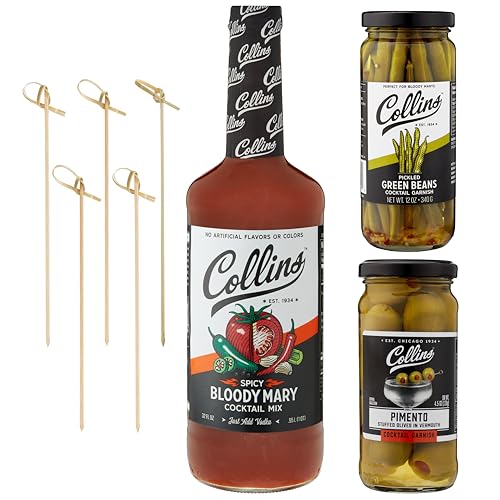

As an Amazon Associate we earn from qualifying purchases at no extra cost to you. Ratings are shown as listed on Amazon.
Quick Picks by Home-Bar Situation
| Situation | Best choice | Why it fits | Trade-off |
|---|---|---|---|
| Most home bars | 16 oz pint glasses | Enough room for ice, a standard pour, and a moderate garnish | Less space for elaborate skewers |
| Large brunch cocktails | 20–24 oz tall glasses | Accommodates extra ice, juice, and substantial garnishes | Heavier, taller, and easier to knock over |
| Experienced cocktail makers | 18–20 oz mixing glasses | More working room for layered garnishes and precise dilution | Can encourage oversized drinks |
| Frequent dishwasher use | Thick, machine-made tumbler or pint glass | Consistent rim and stronger resistance to everyday handling | Usually less refined than thin crystal |
| Small cabinets or limited counter space | 12–16 oz straight-sided glasses | Stack or nest more efficiently and occupy less vertical space | Requires a smaller garnish strategy |
Pint Glass vs. Mixing Glass: Which Size Wins?
16-ounce pint glasses: the practical default
A 16-ounce glass is the best starting point for most households. A typical Bloody Mary uses about 4 to 6 ounces of mixer, 1.5 to 2 ounces of vodka if included, and several ounces of ice. That leaves enough headroom for a lemon wedge, celery stalk, olives, or a short skewer without making the drink look underfilled.
Straight-sided pint glasses are also forgiving when guests pick them up by the rim or when a celery stalk leans against one side. They are usually easier to fit into a dishwasher rack than very tall vessels. Look for a base diameter of roughly 2.5 to 3 inches and a height of about 5.5 to 6.5 inches; those proportions offer a useful balance between stability and capacity.
20- to 24-ounce glasses: better for garnish-heavy servings
Larger glasses suit a home bar that treats the Bloody Mary as a meal-adjacent brunch drink. They provide room for a long celery stalk, pickled vegetables, citrus, bacon, shrimp, or a two-level garnish skewer. They also reduce the chance that ice and toppings spill over the rim.
The drawback is dilution and balance. A 24-ounce glass filled with ice can hold considerably more mixer than intended, turning a measured cocktail into a large, watery serving as the ice melts. Tall glasses also have a higher center of gravity. If your shelves are narrow or your guests tend to load the rim heavily, a wide 16- or 18-ounce glass may be safer than an extremely tall one.
Mixing glasses: useful, but not automatically superior
“Mixing glass” can describe either a vessel used to combine ingredients or a roomy serving glass. For Bloody Mary service, prioritize the second function. A wide 18- to 20-ounce glass can make stirring easier, but a dedicated bartender’s mixing glass is not always ideal for serving: some have thin walls, a narrow base, or a shape intended for stirring with a bar spoon rather than supporting heavy food garnishes.
If you build drinks individually, a pint glass is simpler. If you mix a batch for several people, use a separate pitcher or container and pour into sturdy serving glasses. That reduces the temptation to stir aggressively in a delicate glass and makes seasoning more consistent.
Rim Thickness and Durability Matter More Than Crystal Clarity
For a Bloody Mary set, a rim around 2 to 4 millimeters thick is a useful practical range. A thicker rolled rim is less vulnerable to small knocks from skewers, ice, and sink edges. It also feels more secure when the glass is carrying a heavy garnish. Very thin rims can look elegant, but they offer less margin for error during busy brunch service.
Do not confuse a thick rim with an indestructible glass. The rim, base edge, and point where the sidewall meets the bottom are the areas most likely to chip. Machine-made soda-lime glass is generally the sensible choice for frequent use. Tempered glass can offer additional resistance to thermal and mechanical stress, but it still should not be subjected to sudden temperature changes.
Lead-free crystal may provide greater clarity and a lighter feel, yet thin crystal is a questionable fit for garnish-heavy drinks and frequent dishwasher use. If visual refinement matters, reserve delicate crystal for smaller, lightly garnished cocktails and choose robust tumblers for Bloody Marys.
Features Worth Paying For
- Heavy base: A base weighing approximately 250 to 450 grams helps counterbalance a loaded garnish and makes the glass less likely to slide.
- Uniform rim: A smooth, even rim is more comfortable for sipping and less likely to have a weak thin spot.
- Straight or gently tapered sides: These shapes make rimming with salt or seasoning easier and provide room for skewers.
- Dishwasher-safe labeling: Check the manufacturer’s care guidance rather than assuming all glass is suitable for machine washing.
- Moderate height: Around 6 inches is convenient for many dishwasher racks. Extra-tall glasses may need hand washing.
- Stable footprint: A base at least about half the width of the glass opening is a useful rule for top-heavy drinks.
Brand and Style Options
For a dependable everyday set, look at established glassware makers such as Libbey, Bormioli Rocco, and Anchor Hocking. Their broad ranges include thick tumblers, pint-style glasses, and casual barware suited to regular household use. Availability and exact dimensions vary by collection, so compare the individual model’s capacity, height, base, and care instructions rather than choosing by brand name alone.
Restaurant-style pint glasses are often the best value because they prioritize repeat service, consistent sizing, and easy replacement. Textured or dimpled glasses can improve grip when condensation forms, although their surface is slightly harder to clean around the base. Smooth glasses look cleaner and make it easier to inspect for residue from tomato juice and spice blends.
For a more polished bar, a heavier European-style tumbler can offer better clarity and a refined silhouette while remaining practical. Avoid choosing a set solely because it is labeled “crystal”; clarity does not tell you how well it will tolerate a crowded dishwasher or a metal garnish pick.
Ownership Costs and Cleaning Reality
Suppose a four-glass set costs $25 to $50 and lasts three years with use twice per month. At 24 uses per year, that is 72 uses over its service life. The glassware cost works out to roughly 9 to 29 cents per glass-use before replacement losses. A cheaper set is not necessarily the better value if chips force you to replace individual glasses after a few months.
Tomato juice and horseradish residue are the main cleaning challenges. Rinse the glasses soon after serving so pulp and spices do not dry onto the interior. Leave enough space between glasses in the dishwasher for water to reach the base, and avoid packing metal skewers or cocktail picks where they can strike the rim. If the glasses develop a cloudy film, wash them separately with a mild detergent and inspect whether the issue is mineral scale rather than permanent damage.
The most common mistake is moving a glass directly from a hot dishwasher into ice water, or from a refrigerator into boiling water. Let it change temperature gradually. Another is using a heavy garnish as a handle. A celery stalk or skewer should decorate the drink, not support the glass’s weight.
Our Buying Recommendation
Choose a four- or six-piece set of 16-ounce, straight-sided, dishwasher-safe pint glasses with a visibly thick rolled rim and a substantial base. That specification handles the largest range of home-bar use while keeping drinks proportionate and storage manageable. Move up to 20 or 24 ounces if elaborate garnishes are central to your serving style, but favor a wider base over extra height.
Before buying, measure the dishwasher rack and cabinet shelf, then compare the actual dimensions—not just the stated capacity. The best bloody mary glass set for home bar use is the one that leaves enough room for ice and garnish without becoming unstable, survives the way you clean it, and remains comfortable to lift when the drink is fully loaded.




Write Your Review
No reviews yet. Be the first to share your experience!