

Key takeaways
- Chill Riesling to approximately 7–10°C for dry styles and around 8–12°C for richer or sweeter styles. Very cold wine can suppress aroma, while warm wine can lose its refreshing balance.
- Pour 90–150 ml, keeping the liquid below the bowl’s widest point.
- Hold the stem or the lower part of the foot rather than the bowl. Hand warmth is especially noticeable with a small, chilled pour.
- Swirl gently once or twice. A narrow bowl needs less movement than a broad Burgundy-style glass.
- Allow a few minutes in the glass before deciding that a wine lacks aroma. More complex Riesling can open gradually.
The best Riesling wine glasses for white wine have a tall, relatively narrow bowl, a modest rim diameter, and enough capacity for a small pour to sit below the widest part of the glass; for most drinkers, that means a 350–450 ml crystal or crystal-glass glass with a 55–70 mm rim.
Our top picks

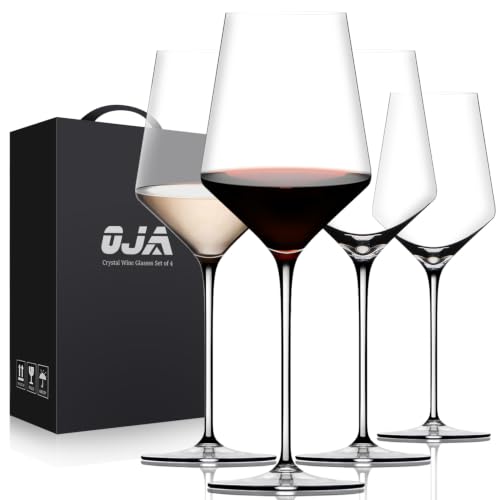
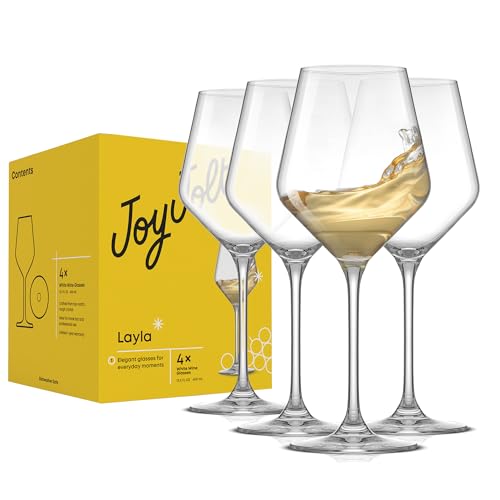

As an Amazon Associate we earn from qualifying purchases at no extra cost to you. Ratings are shown as listed on Amazon.
What makes a Riesling glass different?
Riesling is usually served chilled and valued for high-toned aromas such as citrus, green apple, stone fruit, flowers, and mineral notes. A glass should preserve that freshness while giving the wine enough room to release its aroma. The goal is not simply to find the largest white-wine glass: excessive bowl volume can make a small serving seem thin, while a wide opening can allow delicate aromas to disperse too quickly.
The most useful design features are bowl shape, rim diameter, stem height, and total capacity. They work together, so a glass with a 400 ml capacity may perform quite differently from another glass of the same capacity.
Key dimensions to compare before buying
| Feature | Useful range for Riesling | What it changes | Practical buying implication |
|---|---|---|---|
| Bowl capacity | 350–450 ml | Provides aroma space without encouraging oversized pours | Choose 350–400 ml for everyday use; 400–450 ml for aromatic, mature, or complex Riesling |
| Rim diameter | 55–70 mm | Controls how concentrated the aromas feel and how quickly the wine warms | Stay near 60 mm for a focused, cool presentation |
| Stem height | 90–125 mm | Keeps hands away from the bowl and helps maintain serving temperature | Use a taller stem for formal dining; choose a shorter one for crowded tables or frequent washing |
| Recommended pour | 90–150 ml | Leaves room to swirl and concentrates aromas above the wine | A 120 ml pour is a useful compromise for a 400 ml glass |
| Material thickness | Thin rim preferred; durable lead-free crystal is common | Changes mouthfeel, weight, lightness, and breakage risk | Prioritize a thin, even rim over an unusually large bowl |
How bowl shape and rim diameter affect Riesling
A narrow bowl helps retain volatile aromas above the wine. When you swirl, the wine spreads over the lower bowl and releases aromatic compounds into the air space. A gently tapered upper bowl then directs those aromas toward the nose rather than allowing them to spread across a very wide opening.
Rim diameter affects concentration. A 58–62 mm opening generally gives young Riesling a precise, lifted aroma. A 65–70 mm opening offers a broader aromatic presentation and can be useful for fuller dry Riesling, aged bottles, or other white wines with more texture. A very wide bowl and broad rim may be enjoyable for Chardonnay, but it can make a delicate Riesling seem less focused and can expose more wine to room temperature.
Capacity is not a serving instruction. A 400 ml glass does not call for a 400 ml pour. Filling it to one-quarter or slightly less usually leaves enough room for swirling and keeps the wine below the bowl’s widest point. For an especially aromatic wine, a 90–100 ml pour may smell more expressive than a larger pour because it creates a bigger air space above the liquid.
Strong choices by situation
Best all-purpose option: a 350–400 ml Riesling or white-wine glass
This is the safest choice for most homes. Look for a tapered bowl, a rim around 58–65 mm, and a stem tall enough to hold without touching the bowl. Riedel Vinum Riesling Grand Cru is a recognizable example of this category, with a focused white-wine profile and a capacity of about 400 ml. It suits Riesling, Sauvignon Blanc, Grüner Veltliner, Albariño, and lighter Pinot Gris.
Best for aromatic or serious Riesling: a larger, narrow white-wine glass
A 400–450 ml glass with a tall bowl gives mature Spätlese, dry Grosses Gewächs, and intensely aromatic wines more room to develop. Zalto Denk’Art White Wine is an example of an ultralight, tall white-wine design. Its large bowl can reveal layered aromas, but its thin construction and tall profile demand careful handling and adequate cabinet space.
Best for frequent everyday use: a durable machine-made glass
For weeknight dinners, choose lead-free crystal glass or soda-lime glass with a slightly thicker rim and a stable foot. Schott Zwiesel’s Tritan crystal white-wine range is designed around durability and is often easier to replace than hand-blown stemware. The trade-off is usually a little more weight and a less delicate rim than an ultralight glass.
Best for mixed white-wine collections: a versatile universal glass
If you do not want separate Riesling, Sauvignon Blanc, and Chardonnay glasses, choose a universal glass around 400–550 ml with a moderately narrow opening. Spiegelau Definition White Wine is an example of a lightweight universal style. A universal glass is convenient, but the larger models may be less precise for very light, sweet, or highly chilled Riesling.
Head-to-head comparison
| Glass type or example | Approx. capacity | Approx. height | Rim profile | Best use | Main compromise |
|---|---|---|---|---|---|
| Riedel Vinum Riesling Grand Cru | 400 ml | About 218 mm | Narrow to medium | Focused Riesling and other aromatic whites | Less versatile for very full-bodied white wines |
| Zalto Denk’Art White Wine | About 400 ml | About 230 mm | Narrow, tapered | Layered wines and formal tasting | Higher breakage risk and more delicate handling |
| Spiegelau Definition White Wine | About 400 ml | About 230 mm | Medium-narrow | Lightweight, multipurpose service | May feel too generous for small pours |
| Durable machine-made white-wine glass | 350–400 ml | 190–215 mm | Medium | Daily meals, larger households, dishwasher use | Heavier rim and less dramatic aroma concentration |
Dimensions can vary by production year and regional version, so treat these figures as buying guidance rather than laboratory specifications. Check the manufacturer’s current product page for exact measurements before ordering a tightly sized cabinet or rack.
Decision matrix: which Riesling glass fits your home?
| Your situation | Recommended specification | Why it fits |
|---|---|---|
| Budget-conscious and occasional use | 350–400 ml, machine-made, medium-thin rim | Good aroma performance without paying for fragile construction |
| Frequent Riesling drinker | 380–450 ml, tapered bowl, 58–65 mm rim | Balances aromatic lift, temperature control, and serving flexibility |
| Small kitchen or limited storage | 350–400 ml, under 215 mm tall, stable foot | Fits more cabinets and is less likely to tip on a crowded table |
| Formal tasting or collector | 400–450 ml, tall stem, very thin rim | Maximizes aroma separation and mouthfeel |
| Dishwasher-dependent household | Durable lead-free crystal, reinforced stem, moderate height | Reduces the ownership penalty of frequent cleaning |
Serving setup that gets the most from the glass
- Chill Riesling to approximately 7–10°C for dry styles and around 8–12°C for richer or sweeter styles. Very cold wine can suppress aroma, while warm wine can lose its refreshing balance.
- Pour 90–150 ml, keeping the liquid below the bowl’s widest point.
- Hold the stem or the lower part of the foot rather than the bowl. Hand warmth is especially noticeable with a small, chilled pour.
- Swirl gently once or twice. A narrow bowl needs less movement than a broad Burgundy-style glass.
- Allow a few minutes in the glass before deciding that a wine lacks aroma. More complex Riesling can open gradually.
Cleaning, durability, and ownership realities
The rim is usually the first part to chip, while the stem is the part most likely to break during loading and unloading. Avoid twisting the bowl against the stem, lifting a glass by its rim, or stacking stemware unless the manufacturer specifically permits it. A divided glass rack can prevent contact between neighboring bowls.
For hand washing, use warm water, a small amount of unscented detergent, and a soft brush. Rinse thoroughly and dry by supporting the bowl rather than twisting the stem. If using a dishwasher, place glasses securely away from plates and cutlery, select a gentle cycle, and allow them to cool before removing them. Hard-water residue can cloud glass; a brief soak in diluted white vinegar may help, but do not scrub a thin rim aggressively.
Price is best considered against expected use. A set costing $80 and used once a week for three years costs about $0.51 per glass-use if four glasses are used each time: $80 divided by 624 individual uses. A less expensive durable set may be the better value if breakage, dishwasher use, and replacement availability matter more than minimum weight.
Bottom line
For most buyers, the best Riesling wine glasses for white wine are 350–400 ml glasses with a tapered bowl, a 58–65 mm rim, a stable stem, and a thin but not excessively fragile edge. Choose an ultralight 400–450 ml design when aroma detail and formal tasting matter most; choose a durable machine-made glass when convenience and replacement cost matter more. The right glass should make a modest pour smell expressive, stay cool in the hand, and remain practical enough to use often.



Write Your Review
No reviews yet. Be the first to share your experience!