

Key takeaways
- Check the decoration first. Gold, silver, hand-painted, and metallic accents may fade or discolor in a dishwasher even when the plain vessel is dishwasher-safe.
- Rinse promptly. Dried sake leaves a sugary, slightly sticky film. Warm water and a soft bottle brush usually remove it without abrasive scrubbing.
- Clean the spout and shoulder. Residue often collects beneath the pouring lip rather than inside the main chamber.
- Dry upside down only when air can circulate. A narrow-neck carafe can trap moisture and develop an unpleasant smell if stored wet.
- Do not use sudden temperature changes. Move ceramic or glass gradually between hot and cold conditions to reduce thermal shock.
- Inspect the rim and base. Chips typically appear first at the lip or where cups contact the counter. Replace damaged drinking vessels rather than continuing to use them.
Best Sake Carafe Sets for a Home Bar
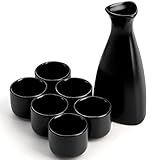
The best sake carafe set for home bar use is usually a 300–360 ml ceramic tokkuri with two to four matching cups: it holds enough for a small pour, fits comfortably in a cabinet, and is easier to handle than a large restaurant-style server.
The right set depends on how you serve sake. A solo drinker may prefer a compact 180 ml carafe, while a couple or small dinner party will get better value from a 360 ml set with four cups. Glass offers visual appeal and easier inspection, ceramic retains a traditional feel and hides fingerprints, and stainless steel is the practical choice for outdoor or high-volume service.
Our top picks


As an Amazon Associate we earn from qualifying purchases at no extra cost to you. Ratings are shown as listed on Amazon.
Quick comparison of the main set types
| Set type | Carafe capacity | Typical cup count | Approx. packed footprint | Dishwasher suitability | Best for |
|---|---|---|---|---|---|
| Compact ceramic set | 180–250 ml | 2 | 18 × 9 × 9 cm | Often yes; check glaze and decoration | One or two drinkers, small bars |
| Standard ceramic set | 300–360 ml | 2–4 | 22 × 12 × 12 cm | Usually yes on undecorated pieces | Most home bars and dinner service |
| Glass carafe set | 250–500 ml | 2–4 | 24 × 13 × 13 cm | Usually yes, but delicate pieces need care | Clear, chilled sake and modern décor |
| Large ceramic service set | 500–720 ml | 4–6 | 28 × 16 × 16 cm | Varies; heavier pieces may need hand-washing | Frequent entertaining |
| Insulated metal set | 300–600 ml | 2–4 | 25 × 14 × 14 cm | Often hand-wash recommended | Patios, travel, and temperature retention |
Best choices by home-bar situation
| Your situation | Recommended specification | Why it works |
|---|---|---|
| Limited shelf or bar-cart space | 180–250 ml ceramic set with 2 cups | Small footprint and less leftover sake after opening |
| Regular use by two people | 300–360 ml ceramic or glass set with 2–4 cups | Enough for two generous pours without taking over storage |
| Hosting four or more guests | 500–720 ml carafe with 4–6 cups | Fewer refills and a more coherent table setting |
| New to sake service | Standard ceramic, wide-mouth, dishwasher-safe set | Forgiving to pour, easy to clean, and not costly to replace |
| Premium chilled sake | Clear glass carafe, 250–360 ml | Lets you see color and sediment while keeping servings moderate |
| Outdoor or high-use service | Stainless steel or thick-walled glass, 300–500 ml | Better resistance to chips and accidental knocks |
How much capacity do you actually need?
Sake cups vary considerably, so cup count alone can be misleading. A small ochoko may hold 30–45 ml, a typical guinomi about 60–90 ml, and a larger serving cup around 90–120 ml. A 360 ml carafe therefore provides roughly four 90 ml pours, or six smaller 60 ml pours.
For a practical calculation, imagine two people each having three 60 ml pours. That requires:
2 people × 3 pours × 60 ml = 360 ml.
This makes a 360 ml carafe a useful all-purpose size. It leaves a little headroom for pouring and avoids the awkwardness of filling a large 720 ml vessel for a modest session. If you typically serve a full 120 ml portion, choose a 500 ml carafe for two people or a 720 ml model for four.
Material comparison: ceramic, glass, or metal?
Ceramic: the safest all-rounder
Ceramic tokkuri are the easiest recommendation for most home bars. The material feels stable in the hand, blocks light, and suits both warm and room-temperature sake. A slightly textured exterior can improve grip, but very rough unglazed surfaces may absorb spills and become harder to keep fresh.
Look for a smooth, fully glazed interior, a stable base, and a pouring lip that does not allow liquid to run down the side. Dark or strongly colored glaze can make small chips less visible, so inspect the rim and spout periodically. Ceramic is often dishwasher-safe, although hand-washing is kinder to painted details and reduces the chance of clattering against other dishes.
Glass: best for visual presentation
Glass is especially useful for chilled sake because it shows the liquid level and color. A narrow neck can slow warming, but an opening that is too narrow makes cleaning difficult. Choose borosilicate or thick soda-lime glass with a base broad enough to resist tipping.
The trade-off is handling. Condensation can make a smooth glass carafe slippery, and thin rims are vulnerable to chips. A dishwasher-safe glass set is convenient, but place it away from metal utensils and avoid sudden temperature changes, such as pouring hot liquid into a cold carafe.
Stainless steel: durable but less traditional
Stainless steel is the most practical option for patios, crowded tables, and households where breakage is a concern. Double-wall construction can help maintain temperature, while a single-wall design is lighter and usually easier to clean.
Metal hides the sake’s appearance and may feel less ceremonial. Check that the interior is seamless or smoothly welded, especially around the spout. Some manufacturers recommend hand-washing because dishwasher detergents can dull exterior finishes or damage decorative coatings.
Pouring comfort matters more than decoration
A beautiful set becomes frustrating if the carafe dribbles. The most useful design details are a pronounced pouring lip, a neck wide enough for easy filling, and a center of gravity that stays over the base when the carafe is nearly empty. For warm sake, avoid a tiny handleless vessel if your grip is uncertain; a side handle or broad waist provides better control.
Test the proportions visually before buying: a carafe that is much taller than it is wide is more likely to tip, especially on a busy bar cart. Cups should also have a stable base and a rim that feels comfortable against the lips. Very small cups look authentic but require frequent refills and can be awkward for guests unfamiliar with sake.
Dishwasher safety and ownership realities
- Check the decoration first. Gold, silver, hand-painted, and metallic accents may fade or discolor in a dishwasher even when the plain vessel is dishwasher-safe.
- Rinse promptly. Dried sake leaves a sugary, slightly sticky film. Warm water and a soft bottle brush usually remove it without abrasive scrubbing.
- Clean the spout and shoulder. Residue often collects beneath the pouring lip rather than inside the main chamber.
- Dry upside down only when air can circulate. A narrow-neck carafe can trap moisture and develop an unpleasant smell if stored wet.
- Do not use sudden temperature changes. Move ceramic or glass gradually between hot and cold conditions to reduce thermal shock.
- Inspect the rim and base. Chips typically appear first at the lip or where cups contact the counter. Replace damaged drinking vessels rather than continuing to use them.
The first component likely to wear is not the carafe itself but a decorative finish, cup rim, or silicone stopper on a specialty design. A plain glazed set may last longer because it has fewer parts and less delicate surface treatment. If storage space is tight, prioritize stackable cups or a carafe whose cups nest around its base; this can reduce the required shelf width by several centimeters compared with storing each piece separately.
What to spend
Basic two-cup ceramic sets generally fall in the broad market range of $20–$45, while better-finished ceramic or glass sets commonly run about $45–$100. Large artisanal, insulated, or hand-decorated sets can cost $100–$200 or more. Price is most defensible when it buys a smoother glaze, a balanced pour, stronger glass, or replacement availability—not simply more decoration.
For most buyers, the best value is a 300–360 ml set with four cups, a dishwasher-safe plain finish, and a footprint under 25 cm in its stored position. Choose the compact 180–250 ml version if you usually drink alone, and move up to 500–720 ml only when you regularly serve several people at once.
Bottom line
Choose a compact ceramic set for a small bar, a 360 ml ceramic or glass set for everyday two-person use, and a larger or metal set for frequent entertaining and outdoor service. Capacity, a clean pouring lip, stable proportions, and realistic storage dimensions will affect your experience far more than ornate styling. For a first purchase in 2026, a plain, glazed, dishwasher-safe 360 ml carafe with two to four comfortable cups is the most versatile starting point.






Write Your Review
No reviews yet. Be the first to share your experience!