

Key takeaways
- Freestanding versus built-in. Built-in and under-counter models vent from the front. Freestanding models typically need clearance on the sides, back and top; Food Network lists 2 inches on the sides and 4 inches at the back and top for the Wine Enthusiast 32-bottle. Putting a freestanding unit in a tight cabinet can cause overheating.
- Door hinge. Check whether the door can be reversed to suit your room. Some models are fixed.
- Temperature range. Maker ranges for the models above run from about 39 to 66 degrees Fahrenheit. Check that the unit can maintain this where you plan to put it.
- Light and vibration. UV-tinted glass, wooden shelves and compressors designed for low vibration help long-term storage.
- Humidity. Most mainstream units do not control humidity. If your climate is very dry, premium models with humidity management may be worth it.
- Electrical. Plug the unit into a properly grounded outlet and avoid extension cords. If the outlet is old, ask an electrician.
- Care. Unplug and wipe the interior periodically, keep the vents clear of dust and follow the manual for defrosting and cleaning.
For most households, a 28 to 36 bottle freestanding compressor wine fridge with a dual zone is the sweet spot: the Wine Enthusiast 32-Bottle Dual Zone suits people who serve both reds and whites, the Kalamera line suits buyers who want built-in options at a lower outlay, the Danby 36-Bottle or GE 31-Bottle suit simple single-zone storage, and EuroCave suits collectors who want the premium end with humidity control. Capacity, zones, compressor versus thermoelectric cooling and where the unit will sit decide the right choice more than any brand name. The notes below rely on published reviews from outlets such as Food Network, Forbes Vetted, Saveur and Reviewed, plus maker specifications, with each claim attributed.
Our top picks


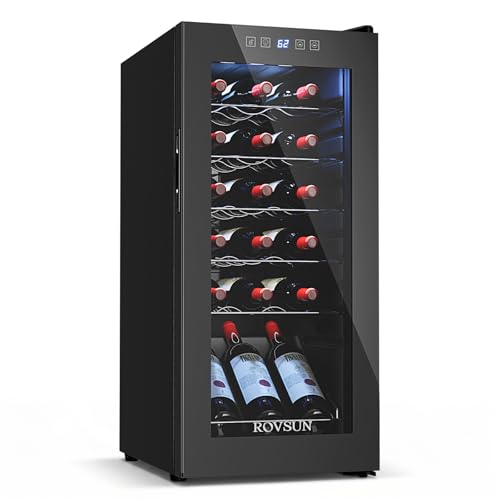

As an Amazon Associate we earn from qualifying purchases at no extra cost to you.
At a glance: the main contenders
| Model | Best for | Stated specs | Limits | Tier |
|---|---|---|---|---|
| Wine Enthusiast 32-Bottle Dual Zone | Mixed reds and whites | 32 bottles, 2 zones, 41 to 64 F, touch controls, LED lighting | Freestanding only; needs 2 in side and 4 in rear and top clearance; hinge not reversible per Food Network | Mid-range |
| Kalamera 12-Bottle | Small spaces | 12 bottles, single zone, 40 to 66 F, compressor, lockable panel | Smallest capacity | Budget |
| Kalamera 50-Bottle | Growing collections | 50 bottles, single zone, 40 to 65 F, reversible hinge, beechwood shelves | One zone; removing racks cuts capacity | Mid-range |
| Kalamera 24-inch dual zone (built-in) | Under-counter installs | Dual zone, built-in design per Forbes Vetted reports | Reviewers mention a compressor that runs often | Mid-range |
| Danby 36-Bottle | Simple storage, either-hand door | 36 bottles, single zone, 43 to 57 F, reversible hinge | Back-mounted unmarked temperature knob | Budget to mid-range |
| GE 31-Bottle | Stable temperature, built-in or freestanding | 31 bottles, single zone, 41 to 61 F, wood shelves | Hinge not reversible; higher outlay | Mid-range |
| Ivation 28-Bottle Dual Zone | Security lock, two zones | 28 bottles, 2 zones, 41 to 64 F, keyed lock | Lock sits on the back | Mid-range |
| EuroCave Performance and La Premiere | Serious collections | Reviewers cite precise temperature and humidity control, adjustable shelving | Premium outlay | Premium |
Compressor versus thermoelectric cooling
Wine fridges use one of two cooling methods. Compressor models work like a kitchen fridge: they cool well even in a warm room, hold the set temperature steadily and are better for larger capacities. Thermoelectric models use a solid-state cooler, have no compressor and run quietly with little vibration, but they struggle when the room is hot because they can only cool a limited number of degrees below ambient. Reviewers often recommend compressor units for garages, basements and warm kitchens, and thermoelectric models for quiet bedrooms or offices in temperate rooms. Kalamera’s compressor units draw comments about frequent cycling and noise in some reviews, which is typical of the category.
Single zone or dual zone
A single-zone fridge holds one temperature, usually somewhere around the mid-50s Fahrenheit, which suits long-term storage and most serving needs for people who drink mostly reds or who chill whites briefly before serving. A dual-zone unit lets you hold reds warmer and whites cooler at once, which is useful if you serve both regularly. The Wine Enthusiast 32-bottle and Ivation 28-bottle are dual-zone models in the Food Network list. Dual-zone units cost more, and the zones are often unequal in capacity, so check how many bottles fit in each.
Capacity: size for the collection you will have
Bottle counts quoted by makers assume standard Bordeaux-shaped bottles with removable shelves set to a specific layout. Burgundy, sparkling and magnum bottles take more space, so the real number can be lower, and Food Network notes that removing racks on the Kalamera 50-bottle reduces capacity. Buy a model that holds somewhat more than your current collection, since most buyers find it fills quickly. Very small units, such as the 12-bottle Kalamera, suit an apartment or a short-term serving cache rather than ageing.
Wine Enthusiast models
Wine Enthusiast is the most frequently named brand in the 2026 roundups. Food Network picks its 32-Bottle Dual Zone as best overall, citing flexible temperature settings, touch controls and display options, but warns it is freestanding only and needs ventilation clearance. Forbes Vetted names two Wine Enthusiast models, a larger smart wine cellar and a 24-bottle unit. The VinoView 28-bottle in the Food Network list has a single zone and forward-facing label display, though its wire shelves offer less vibration damping.
Kalamera, Danby, GE and Ivation
Kalamera
Forbes Vetted names the Kalamera 73-bottle dual zone best value, and Food Network picks the 12-bottle as best small and the 50-bottle as best large. The 24-inch dual-zone is widely rated best for built-in use, with complaints about a compressor that runs frequently and noise.
Danby 36-Bottle
A single-zone, 36-bottle freestanding unit with a reversible hinge, six full and two half wire shelves and blue LED lighting. The temperature knob is on the back and unmarked, so it lacks precision.
GE 31-Bottle
Food Network reports excellent temperature stability, wood shelves that reduce vibration, and the option to install it built-in or freestanding. The hinge is non-reversible and the outlay is higher than basic rivals.
Ivation 28-Bottle
A dual-zone unit with a keyed lock, helpful for households with children or guests. The lock is on the back, which some find inconvenient.
Premium: EuroCave
Forbes Vetted’s top pick is the EuroCave La Premiere L, praised for precise temperature and humidity control and adjustable shelving. Saveur calls the EuroCave Performance 59 built-in, holding 38 bottles, a top choice among wine professionals. Reviewers describe the brand as the premium benchmark for reliability, at a much higher outlay than mainstream models. This tier makes sense for people ageing bottles for years, not for casual storage.
Where to put it
Location affects both performance and lifespan. A wine fridge works hardest in a hot, sunny or unventilated spot, so a cool interior room, a shaded kitchen corner or a basement is kinder to the compressor than a garage that swings from freezing to hot. Keep it level, away from ovens and direct sun, and leave the ventilation gaps the maker lists. Vibration is another factor: wine stored near a washing machine or loud speaker gets shaken constantly, which is why reviewers mention wood shelves and low-vibration compressors when discussing long-term storage. Finally, measure the doorway and the path to the room, since a 50-bottle unit is heavy once loaded and easier to move empty.
Fit, ventilation and care notes
- Freestanding versus built-in. Built-in and under-counter models vent from the front. Freestanding models typically need clearance on the sides, back and top; Food Network lists 2 inches on the sides and 4 inches at the back and top for the Wine Enthusiast 32-bottle. Putting a freestanding unit in a tight cabinet can cause overheating.
- Door hinge. Check whether the door can be reversed to suit your room. Some models are fixed.
- Temperature range. Maker ranges for the models above run from about 39 to 66 degrees Fahrenheit. Check that the unit can maintain this where you plan to put it.
- Light and vibration. UV-tinted glass, wooden shelves and compressors designed for low vibration help long-term storage.
- Humidity. Most mainstream units do not control humidity. If your climate is very dry, premium models with humidity management may be worth it.
- Electrical. Plug the unit into a properly grounded outlet and avoid extension cords. If the outlet is old, ask an electrician.
- Care. Unplug and wipe the interior periodically, keep the vents clear of dust and follow the manual for defrosting and cleaning.
Pick X if …
| If you … | Pick | Why |
|---|---|---|
| Serve both red and white regularly | Wine Enthusiast 32-Bottle Dual Zone | Two temperature zones |
| Have a small apartment | Kalamera 12-Bottle | Compact compressor unit |
| Want to expand a collection | Kalamera 50-Bottle | Large capacity, reversible door |
| Want a built-in under a counter | Kalamera 24-inch dual zone or GE 31-Bottle | Built-in options |
| Want a simple, low-cost single zone | Danby 36-Bottle | Reversible hinge, many shelves |
| Need a lock | Ivation 28-Bottle | Keyed lock and dual zone |
| Age bottles for years | EuroCave | Precise temperature and humidity control |
Alternatives to consider
- Beverage centers that hold wine alongside cans and bottles, for casual entertaining.
- Passive wine storage in a cool interior closet or cellar, if your climate is stable.
- Wine racks plus a small chiller for short-term serving rather than ageing.
Frequently Asked Questions
What temperature should a wine fridge be set to?
Many makers set a range of roughly 40 to 65 degrees Fahrenheit, and storage for most wines is commonly kept around the mid-50s. Serving temperatures vary by style, so use the maker’s guide and adjust to taste.
Is a dual-zone wine fridge worth it?
It is if you regularly serve reds and whites together, since you can hold each at its own temperature. For storage of mostly one style, a single zone is simpler and cheaper.
Can I put a freestanding wine fridge under a counter?
Only if the maker says it is built-in capable. Freestanding units need clearance for ventilation, and without it they can overheat and wear out sooner.
Are compressor or thermoelectric fridges better?
Compressor units hold temperature better in warm rooms and suit larger capacities, while thermoelectric units are quieter with less vibration but work best in cool rooms. Pick based on your room temperature and noise tolerance.
How many bottles should I buy for?
Choose a unit that holds more than your current stock, because collections tend to grow. Remember that large or non-standard bottles reduce the usable count shown by the maker.
Why does my wine fridge run so often?
Compressor units cycle to maintain temperature, and a warm room, frequent door opening or blocked vents increases the running time. Reviewers note frequent cycling on some value models. If the noise or running seems excessive, check the clearances and the manual, and contact the maker if it continues.







Write Your Review
No reviews yet. Be the first to share your experience!