

Key takeaways
- Smooth concrete: 4-inch casters are usually adequate. Locking wheels matter more than large diameter.
- Interlocking pavers: choose 5- to 8-inch wheels with a wide rubber tread and avoid tiny hard plastic casters.
- Grass: use large solid or pneumatic wheels. A loaded two-tier patio cart may sink or tip on soft ground.
- Gravel: select a two-wheel utility design with a large axle, or use a cart only on a compacted path.
- Slopes: two locking casters are a minimum. Never rely on the cart’s wheel locks as a substitute for holding a loaded cart on a steep incline.
The best outdoor serving carts for easy hosting are a weather-resistant two-tier cart with locking swivel wheels for most patios, a wide resin cart for heavy loads, and a folding aluminum cart when storage space matters most.
Our top picks


As an Amazon Associate we earn from qualifying purchases at no extra cost to you. Ratings are shown as listed on Amazon.
Our ranked picks by outdoor hosting situation
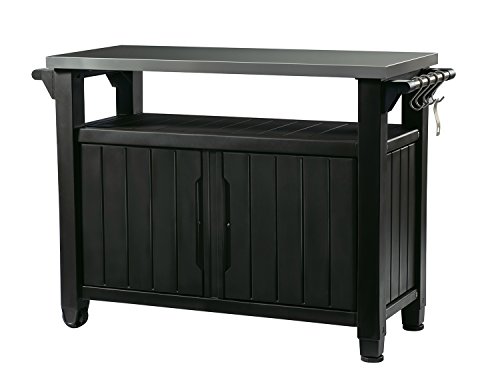
1. Best overall: two-tier resin-and-stainless serving cart
A two-tier cart with a stainless-steel worktop, resin cabinet or shelves, and two locking swivel casters offers the most useful balance of capacity, maneuverability, and weather resistance. Look for a load rating of at least 100 pounds, a top shelf about 34 to 36 inches high, and wheels at least 4 inches in diameter.
This configuration works well for a drinks station, buffet sideboard, or grill-to-table transport. The upper surface can hold a tray, pitcher, or cutting board while the lower shelf carries a cooler, plates, or serving bowls. Resin will not rust, and stainless steel tolerates spilled drinks better than untreated wood or painted mild steel.
Best for: frequent hosts, medium-sized patios, and anyone who wants one cart for both food preparation and serving.
2. Best for heavy loads: wide utility serving cart with large pneumatic or semi-pneumatic wheels
Choose a broad utility-style cart when the main challenge is transporting a full cooler, cast-iron cookware, beverage dispensers, or several dishes at once. A useful target is a 150- to 200-pound total capacity, a 28- to 32-inch-wide shelf, and wheels measuring 8 inches or more.
The larger wheels are more important than an extra shelf when your route crosses lawn, pavers, gravel, or a threshold. Pneumatic tires absorb bumps well, but they require occasional pressure checks and can go flat. Semi-pneumatic or solid rubber wheels sacrifice some cushioning but are easier to own.
The tradeoff is bulk. A wide cart may be difficult to turn between chairs and may occupy a permanent corner of the patio. It is a transport specialist rather than a compact drinks trolley.
Best for: large gatherings, uneven yards, and hosts who move heavy items from a kitchen, garage, or outdoor cooking area.
3. Best for small spaces: folding aluminum or powder-coated steel cart
A folding cart is the practical choice for an apartment balcony, narrow deck, or household that hosts only a few times each season. Prioritize a folded depth under 8 inches, a carry weight below 20 pounds, and a positive locking mechanism that prevents the frame from collapsing during use.
Aluminum resists rust and keeps the cart light, while powder-coated steel can feel more rigid but needs careful inspection if the coating chips. Folding models commonly support about 50 to 100 pounds, so they are better for drinks, plates, and prepared food than for a full cooler or stoneware collection.
Small wheels are acceptable on smooth concrete but frustrating on grass and irregular pavers. If you need both folding storage and outdoor mobility, seek wheels of at least 5 inches with a relatively wide tread.
Best for: limited storage, occasional entertaining, and smooth patios or balconies.
4. Best for style and permanent placement: powder-coated metal bar cart
A metal bar cart can look more furniture-like than a utility cart, especially under a covered patio. It is a good choice for bottles, glassware, napkins, and a small ice bucket, but it is usually less suitable for transporting heavy food.
Look for a rust-resistant powder coat, stainless or galvanized fasteners, a removable tray, and a lower shelf rated for at least 40 pounds. Two fixed wheels and two swivel wheels are easier to control than four small swivels, particularly when the cart is loaded with bottles.
Steel is not automatically weatherproof. A scratch through the coating can expose bare metal, and standing water around wheel brackets or shelf joints can cause corrosion. This type belongs under cover and should be dried after rain.
Best for: covered patios, compact cocktail service, and buyers who value appearance over maximum capacity.
Head-to-head comparison
| Cart type | Typical capacity | Typical size | Wheel setup | Rust resistance | Storage | Uneven-surface performance |
|---|---|---|---|---|---|---|
| Resin/stainless two-tier cart | 100–150 lb | 36–42 in. wide; 34–36 in. high | 4–5 in. casters; 2 locking | Excellent | Usually rigid | Fair to good |
| Wide utility cart | 150–200 lb | 28–32 in. wide; 32–38 in. high | 8–10 in. pneumatic or solid wheels | Good if coated or aluminum | Usually rigid | Best |
| Folding aluminum cart | 50–100 lb | 24–30 in. wide; 31–36 in. high | 4–6 in. wheels | Excellent | Best; often under 8 in. folded | Fair |
| Powder-coated metal bar cart | 40–80 lb | 24–30 in. wide; 30–36 in. high | 3–4 in. casters | Fair to good | Limited | Poor to fair |
How to choose for your patio surface
Measure the route, not just the cart’s parking space. A cart that fits beside the grill may still fail at a 30-inch gate, a tight corner, or a raised threshold. Allow at least 3 inches of clearance on each side of the cart, and check that the handle does not collide with railings or furniture.
- Smooth concrete: 4-inch casters are usually adequate. Locking wheels matter more than large diameter.
- Interlocking pavers: choose 5- to 8-inch wheels with a wide rubber tread and avoid tiny hard plastic casters.
- Grass: use large solid or pneumatic wheels. A loaded two-tier patio cart may sink or tip on soft ground.
- Gravel: select a two-wheel utility design with a large axle, or use a cart only on a compacted path.
- Slopes: two locking casters are a minimum. Never rely on the cart’s wheel locks as a substitute for holding a loaded cart on a steep incline.
Capacity: calculate the load before buying
Cart capacity is often the combined rating of all shelves, not the safe capacity of the top surface. Estimate a typical hosting load before choosing a model. For example:
- Ice and cooler: 45 lb
- Two beverage dispensers: 24 lb
- Plates and bowls: 18 lb
- Food trays and utensils: 25 lb
- Safety margin: 20 lb
This example totals 132 pounds, so a cart rated at 100 pounds is undersized even if the items physically fit. A cart rated for 150 pounds gives a more sensible margin, but distribute the weight low and keep heavy liquids centered between the wheels.
Rust resistance and ownership realities
The first parts to deteriorate are often wheel bearings, fasteners, shelf-edge seams, and finish around screw holes—not the main tabletop. Stainless steel is corrosion-resistant, not corrosion-proof; salty air, chlorine, fertilizer, and trapped moisture can still stain or pit it.
After each use, wipe away sugary drinks and food oils, then dry the cart before covering it. Do not use abrasive pads on powder coating or stainless steel. Once or twice a season, inspect wheel hardware, tighten loose fasteners, and check that locking casters engage fully. Lubricate suitable metal wheel pivots with a manufacturer-approved lubricant, keeping oil away from braking surfaces.
Store folding and metal carts under cover when possible. If a cover is used, leave ventilation at the bottom so condensation does not remain against the frame. Do not store a resin cart beside a heat source; high heat can warp shelves even when rain cannot damage them.
Decision matrix
| Your situation | Best choice | Prioritize | Acceptable compromise |
|---|---|---|---|
| Under $150 and occasional use | Folding aluminum or resin cart | Locking wheels, washable shelves, compact folded size | Lower capacity |
| Weekly hosting | Two-tier resin/stainless cart | 100+ lb rating, 4–5 in. casters, weather-resistant hardware | Rigid storage |
| Large parties | Wide utility cart | 150+ lb rating, 8+ in. wheels, low center of gravity | More floor space |
| Balcony or tiny deck | Folding cart | Folded depth, carry weight, narrow turning radius | Less stability on rough surfaces |
| Coastal or rainy location | Resin and aluminum construction | Non-rusting frame, stainless fasteners, drainable shelves | Less furniture-like appearance |
Bottom line
For most households, the best outdoor serving carts are two-tier resin-and-stainless models with a 100- to 150-pound capacity, 4- to 5-inch locking casters, and a work surface around counter height. Choose a wide utility cart instead when heavy loads or uneven ground dominate the decision. Choose a folding aluminum cart when storage is the limiting factor, and reserve decorative metal bar carts for light loads in protected outdoor spaces.






Write Your Review
No reviews yet. Be the first to share your experience!