

Key takeaways
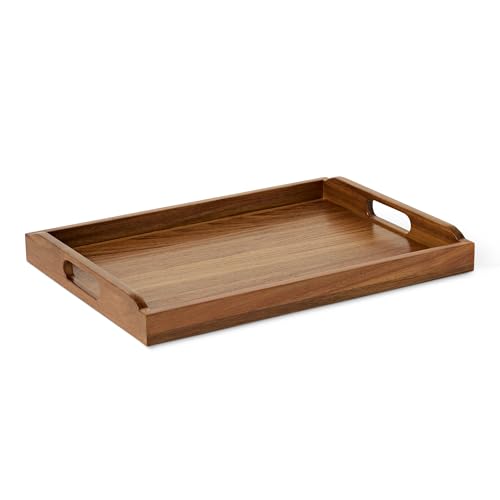
- Cutout handles: Integrated openings are stable, easy to clean, and unlikely to loosen. They work especially well on wooden, melamine, and plastic trays.
- Drop handles: Folding or swinging handles can make storage easier, but hinges and fasteners are common wear points. Check that the handles do not touch the tray surface when folded.
- Side grips: Molded or rubberized grips offer comfort and control on lightweight trays, although they can collect grease at their seams.
- No handles: A rimmed tray without handles provides a clean look and more usable surface, but requires a stronger two-handed grip.
The best serving trays for most homes are a medium, 16-by-12-inch tray with sturdy side handles, a wipe-clean surface, and a nonslip liner; choose a larger wooden tray for meals, a lightweight plastic or melamine tray for frequent use, or a compact metal tray for drinks and appetizers.
Our top picks



As an Amazon Associate we earn from qualifying purchases at no extra cost to you. Ratings are shown as listed on Amazon.
Best serving trays by entertaining situation
| Situation | Best tray type | Useful size | Typical capacity | Why it works |
|---|---|---|---|---|
| Breakfast or dinner for two | Medium handled tray | 16 × 12 inches | 15–25 lb | Fits two plates, glasses, and cutlery without becoming awkward to carry |
| Drinks and small appetizers | Low-profile metal or plastic tray | 14–18 inches diameter or 18 × 12 inches | 10–20 lb | Easy to circulate and quick to wipe after spills |
| Family-style meal | Large wooden or melamine tray | 20 × 14 inches or larger | 25–40 lb | Holds serving bowls, a carafe, and several plates in one load |
| Small kitchen or coffee table | Compact tray with raised rim | 13 × 9 inches | 8–15 lb | Stores easily and reduces the chance of items sliding off a short route |
| Outdoor entertaining | Melamine or polypropylene tray | 18 × 12 inches | 15–25 lb | Lightweight, moisture-resistant, and less fragile than glass or ceramic |
What separates a good serving tray from a frustrating one?
Tray size is the first decision, but it should be judged by both floor area and usable interior space. A tray advertised as 18 inches wide may lose 1 to 2 inches on each side to thick walls or handles. Measure the interior before assuming it will hold a dinner plate.
For a useful sizing check, measure the items you normally serve and add about 2 inches of clearance around the group. Two 10-inch plates placed side by side need approximately 22 inches of interior width, before adding glasses or cutlery. That is why a 16-by-12-inch tray is better for two cups and small plates than for a complete dinner for four.
Raised edges
A rim between 1 and 2 inches helps contain condensation, crumbs, and small spills. A low ½-inch lip looks sleek but offers little protection when carrying glasses. Very tall walls can make loading and unloading harder, particularly when the tray is full of bowls.
Handles
- Cutout handles: Integrated openings are stable, easy to clean, and unlikely to loosen. They work especially well on wooden, melamine, and plastic trays.
- Drop handles: Folding or swinging handles can make storage easier, but hinges and fasteners are common wear points. Check that the handles do not touch the tray surface when folded.
- Side grips: Molded or rubberized grips offer comfort and control on lightweight trays, although they can collect grease at their seams.
- No handles: A rimmed tray without handles provides a clean look and more usable surface, but requires a stronger two-handed grip.
For carrying hot food, choose handles that allow your fingers to clear the tray base by at least 1½ inches. This reduces contact with a warm underside and gives better leverage when the tray is loaded.
Material comparison: wood, metal, plastic, and melamine
| Material | Strengths | Weak points | Best use | Care expectation |
|---|---|---|---|---|
| Wood | Warm appearance, rigid base, good grip | Can stain, warp, or absorb odors if neglected | Meals, bread, coffee service, indoor entertaining | Hand-wash and dry promptly; occasional food-safe oil may be needed |
| Stainless steel or aluminum | Durable, slim, heat-tolerant, easy to sanitize | Can dent, show fingerprints, or feel slippery | Drinks, appetizers, modern table settings | Wipe or hand-wash; avoid abrasive pads on polished finishes |
| Polypropylene or other rigid plastic | Lightweight, affordable, moisture-resistant | May scratch, flex, or discolor over time | Outdoor use, everyday breakfasts, large gatherings | Usually easy to wash; confirm whether dishwasher use is permitted |
| Melamine | Rigid, colorful, lighter than ceramic, often outdoor-friendly | Can chip at edges; not suitable for direct stovetop or oven heat | Patio meals and buffet service | Hand-wash or follow the manufacturer’s dishwasher guidance |
| Glass or acrylic | Decorative, visually light, easy to coordinate | Heavier or more breakable than plastic; fingerprints are visible | Light drinks and display-focused serving | Handle carefully and inspect for chips or cracks |
How much weight should a serving tray hold?
For routine use, a 15-pound capacity is enough for two mugs, a coffee pot, pastries, and cutlery. A family meal may reach 25 pounds quickly: four 10-inch plates can weigh 8 to 12 pounds, while a filled serving bowl or carafe may add another 5 to 8 pounds.
Do not judge capacity by the tray’s stated maximum alone. A broad tray with flexible plastic construction may technically support 25 pounds but still bow enough for glasses to tip. Look for a reinforced base, cross-bracing, or a manufacturer-stated load limit with a safety margin. If your expected load is 20 pounds, selecting a tray rated for at least 25 pounds is sensible.
Nonslip surfaces: useful feature or unnecessary extra?
A textured base or removable nonslip mat is particularly valuable for carrying drinks. Smooth lacquered wood and polished metal can allow cups to move when the tray accelerates or stops. A silicone or rubber liner provides traction and also softens the sound of setting down glassware.
Removable liners are more practical than permanently bonded rubber because they can be washed and replaced. However, inspect the edges: a curled liner can catch on glasses, and trapped moisture can mark unfinished wood. For a tray without a liner, thin silicone coasters or a washable service mat can provide similar grip without permanently changing the tray.
Decision matrix for choosing your tray
| Your priority | Choose | Avoid |
|---|---|---|
| Lowest practical cost | Rigid polypropylene, 16 × 12 inches, molded handles | Thin decorative metal that flexes under load |
| Frequent entertaining | Stackable plastic or melamine with a textured base | Unsealed wood that needs drying after every use |
| Small storage space | Nested trays or a 13 × 9-inch tray with folding handles | Oversized trays with fixed projecting handles |
| Formal indoor presentation | Sealed wood, powder-coated metal, or a coordinated lacquered tray | Brightly textured surfaces that compete with the tableware |
| Outdoor use | Melamine or polypropylene with a raised rim | Unsealed wood, fragile glass, and metal that becomes hot in direct sun |
| Limited carrying strength or confidence | Medium-size, lightweight tray with nonslip lining and wide handles | Large trays loaded to the rim |
Ownership details that matter after the first few uses
The finish usually shows wear before the structure does. Wooden trays can develop water rings around glasses, metal trays can pick up scratches, and plastic surfaces can become cloudy from abrasive cleaners. A liner may also wear faster than the tray itself, especially if it is repeatedly removed and dried.
Keep the tray’s load centered rather than placing a heavy carafe at one edge. Carry large trays with both hands, and do not use a tray as a cutting board. These habits reduce flexing, protect the finish, and lower the chance of a side handle pulling loose.
After serving, remove the liner and wipe both surfaces. Wash food-contact areas with mild dish soap, dry wood immediately, and allow the underside to air-dry before stacking. Never leave pooled water in cutout handles or beneath a rubber mat. If a wooden tray begins to feel rough, lightly smooth only the affected area and renew it with an appropriate food-safe finish; do not coat it while damp.
Bottom line
For the broadest usefulness, select a 16-by-12-inch tray with integrated handles, a 1-inch raised rim, a rigid base rated for at least 20 pounds, and a removable nonslip liner. Choose sealed wood when appearance and indoor meals matter most, melamine or polypropylene for frequent and outdoor service, and metal when a slim, easy-clean tray for drinks and appetizers is the priority. The right tray is not the largest one available—it is the largest size you can carry comfortably while keeping the load stable and the tray easy to store.






Write Your Review
No reviews yet. Be the first to share your experience!