

Key takeaways
- Hand wash fine crystal: Use warm water, a soft sponge and mild detergent. Hold the bowl, not the stem, so the joint is not twisted.
- Dishwasher: Some sturdier glasses, such as the Libbey Kentfield as described by a roundup, are listed as dishwasher safe. Follow the maker’s instruction, and keep stems from touching one another.
- Drying: Dry with a lint-free cloth to prevent spots.
- Storage: Store upright. Hanging by the bowl rim on a rack can chip thin edges.
- Chilling: Placing glasses in the freezer for a short time before serving keeps drinks cold, but avoid extreme temperature changes on thin crystal.
For most home bars, a set of 6 to 7 ounce lead-free crystal coupes is the best all-round buy, a Nick and Nora style glass is the better choice for small pours that stay cold and do not slosh, and a budget soda-lime set is fine for parties where breakage is likely. America’s Test Kitchen, updating its martini and coupe ratings in 2026, names the Glasvin Coupe its top coupe and the Stolzle Lausitz Jive Champagne Coupe its best buy. This guide explains what separates the options and who each one suits.
Our top picks



As an Amazon Associate we earn from qualifying purchases at no extra cost to you.
At a Glance: Coupe Glasses Compared
| Glass | Stated capacity | Material | Best for | Limits |
|---|---|---|---|---|
| Glasvin Coupe (America’s Test Kitchen top pick) | 7.2 fl oz | Handblown lead-free crystal | Daily use with a balanced, splash-resistant bowl | Premium tier; thin glass needs care |
| Stolzle Lausitz Jive Champagne Coupe (best buy) | 6.0 fl oz | Lead-free crystal | Crystal quality at a lower cost | Smaller bowl than the top pick |
| Riedel Vinum Martini (ATK top martini glass) | 5.1 fl oz | Lead-free crystal | Martini and stirred drinks served up | Cone shape, not a coupe bowl |
| Spiegelau Perfect Martini (ATK best buy martini) | 6 fl oz | Lead-free crystal | Thin glass at about half the per-glass cost of the winner | Cone shape; slightly thicker |
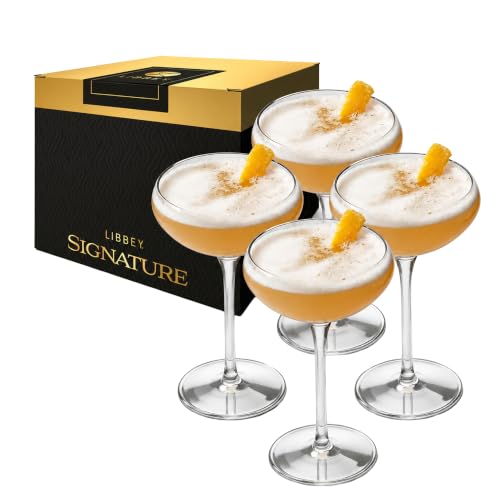
| Libbey Signature Kentfield Coupe | 9 oz bowl, as listed by a roundup | Dishwasher-safe glass | Large pours, sturdy everyday use | Bigger bowl spills more easily; the ranking comes from a lesser-known site |
The capacities for the first four glasses come from America’s Test Kitchen. The Libbey information is from a roundup on a site without a long track record, so treat that ranking cautiously. Cocktail Kingdom coupes, described by Saveur as sold in a set of six with a thick lip and generous capacity, are another widely used bar option.
Coupe, Nick and Nora, or Martini Glass?
A coupe has a broad, shallow, rounded bowl on a stem. It dates to the 1800s, was long associated with champagne, and is now the standard vessel for daiquiris, sidecars, Manhattans and other drinks served up. The shape looks elegant, and the wide rim releases aroma. The downside is that a full coupe spills easily as it travels from the bar to the table, and the wide surface warms the drink quickly.
The Nick and Nora is a smaller, deeper, bell-shaped glass, usually 4 to 6.5 ounces according to the pegshops guide. Because the sides are steeper, it holds temperature longer and spills less. It suits spirit-forward drinks with smaller volumes. The conical martini glass is the most spill-prone of the three, and many bartenders have moved away from it.
Capacity should match your recipes. A standard drink built with two ounces of spirit plus mixers and dilution typically lands near four to five ounces in the glass. A 6 ounce coupe fits that with a little head room, and a 9 ounce bowl will look empty unless you are pouring a larger cocktail.
Crystal Versus Soda-Lime Glass
America’s Test Kitchen reports that thin, lightweight crystal improves the drinking experience compared with thicker soda-lime glass, and that a stem length between about 2.5 and 3.5 inches suited a range of hand sizes. Crystal can be blown very thin, which makes the glass feel refined, but the same thinness makes it more fragile. Lead-free crystal, which the winning glasses use, avoids the lead concerns of older crystal.
Soda-lime glass is heavier and thicker. It tolerates more rough handling, and it often costs far less, which is why it dominates restaurant supply lines and party sets. Look for chip-resistant rims and a firm stem-to-bowl joint. A thicker stem may feel clunky but survives a bar cart.
Care, Cleaning and Storage
- Hand wash fine crystal: Use warm water, a soft sponge and mild detergent. Hold the bowl, not the stem, so the joint is not twisted.
- Dishwasher: Some sturdier glasses, such as the Libbey Kentfield as described by a roundup, are listed as dishwasher safe. Follow the maker’s instruction, and keep stems from touching one another.
- Drying: Dry with a lint-free cloth to prevent spots.
- Storage: Store upright. Hanging by the bowl rim on a rack can chip thin edges.
- Chilling: Placing glasses in the freezer for a short time before serving keeps drinks cold, but avoid extreme temperature changes on thin crystal.
Notes on Each Option
Glasvin Coupe
America’s Test Kitchen describes these as handblown, lead-free crystal with a well-balanced design and a 7.2 ounce capacity that prevented drinks from splashing over the rim. They are the premium choice here, suitable for someone who entertains often and will hand wash.
Stolzle Lausitz Jive Champagne Coupe
ATK calls this a relative bargain, offering crystal quality at reduced pricing. At 6 ounces, it matches the size most cocktail recipes need. It is the pick for a buyer who wants crystal without paying for handblown glass.
Riedel and Spiegelau Martini Glasses
If you prefer the classic conical shape, ATK ranks Riedel Vinum as the top martini glass thanks to its extremely thin crystal, and Spiegelau Perfect as the best buy, described as nearly as delicate at roughly half the per-glass cost. These are not coupes but are relevant for people who mostly serve martinis and Gibsons.
Libbey Signature Kentfield
Described by a roundup as a 9 ounce coupe with dishwasher-safe glass, it fits big parties and everyday sets. Its larger bowl suits generous pours, though it has more surface area and warms faster.
Cocktail Kingdom Coupes
Saveur describes them as a six-piece set with more capacity and a thicker lip than a Nick and Nora style glass. They are a favorite among bartenders for durability, although their thicker construction feels less delicate than thin crystal.
Matching Glasses to Drinks
Classic coupe drinks include the daiquiri, sidecar, Manhattan, Aviation, Clover Club and any egg-white sour, since the wide surface shows off foam. Stirred, spirit-forward drinks look neat in a smaller Nick and Nora style glass. Champagne cocktails are traditional in a coupe, though the wide bowl lets bubbles fade faster than a flute does, so serve them quickly. If you pour a full 3 ounce measure of spirit with dilution, a glass under 5 ounces will overflow. When building a set, buy at least six so a small dinner party is covered, and keep one or two spare for breakage. Consider how glasses nest in the cabinet, because tall stems and wide bowls take more shelf space than tumblers, and a stem rack above the bar can free room.
Weight and balance also matter in daily use. Thin crystal is light and delicate, while soda-lime sets feel more substantial in the hand. If a glass tips easily when empty, the base may be too narrow for its bowl, which is a point reviewers such as America’s Test Kitchen weigh when they call a design well-balanced. Rim thickness changes how a drink feels on the lip, with finer rims often preferred for sipping spirits.
Budget, Mid-Range and Premium Tiers
- Budget: Machine-made soda-lime coupes, sold in sets of six or eight. Good for large gatherings and casual use.
- Mid-range: Machine-made lead-free crystal such as Stolzle Lausitz or Spiegelau, which offers thinner walls without the handmade premium.
- Premium: Handblown crystal such as Glasvin, or Riedel stemware, for people who value feel and presentation over durability.
Pick X If… Decision Table
| If you… | Pick | Why |
|---|---|---|
| Want the best rated coupe | Glasvin Coupe | ATK’s top coupe, 7.2 ounces, balanced |
| Want crystal on a smaller budget | Stolzle Lausitz Jive | ATK best buy, 6 ounces |
| Serve mostly martinis | Riedel Vinum or Spiegelau Perfect | Thin crystal in cone shape |
| Host big parties | Libbey Kentfield or similar | Dishwasher-safe, larger bowl |
| Want sturdy bar-style glasses | Cocktail Kingdom coupe | Thicker lip, set of six |
| Prefer small, cold pours | Nick and Nora style | Deeper bowl, less spill |
Alternatives Worth Considering
- Nick and Nora glasses: Better for smaller, spirit-forward drinks and fewer spills.
- Vintage or antique coupes: Charming, but sizes vary and older pieces can be much larger than modern recipes expect.
- Double rocks glasses: Practical if you serve a mix of stirred and iced drinks and want a single glass type.
Frequently Asked Questions
What size coupe should I buy?
Six to seven ounces fits most modern cocktail recipes. Larger 9 ounce coupes suit generous pours but can look underfilled. Match the glass to the drinks you make most often.
Are coupes better than martini glasses?
Coupes are less prone to spilling because the curved bowl is shallower and rounder than a cone. Many bartenders prefer them for that reason, though a classic martini still looks the part.
Can coupes go in the dishwasher?
Some can, but thin crystal is safer washed by hand. Follow the maker’s care card, space the glasses apart, and avoid high heat drying cycles on fragile stems.
Why is thin crystal considered better?
America’s Test Kitchen found thin, lightweight crystal improves the drinking experience compared with thicker soda-lime glass, because it feels delicate at the lip. The trade-off is that it breaks more easily.
What is the difference between a coupe and a champagne saucer?
They are essentially the same shape. Coupes were once used for champagne, and the term “champagne coupe” persists, though flutes are now typical for sparkling wine.
Should I chill the glasses?
A chilled glass keeps drinks colder for longer. A short stay in the freezer or a fill of ice water while you mix works, but avoid sudden temperature extremes with thin crystal.





Write Your Review
No reviews yet. Be the first to share your experience!