

Key takeaways
- Front vent: Look for a grille at the bottom front, often under the door.
- Cutout size: Most 24 inch units are designed for a standard base cabinet opening. Confirm height, which can vary by leg adjustments.
- Door swing: Reversible doors help in corners or next to appliances.
- Power outlet: A dedicated outlet within reach is helpful. If you are unsure about wiring or the cabinet cutout, consult a licensed electrician or installer.
For a true built-in install, a front-venting 24-inch under-counter unit from Kalamera suits most kitchens on a mid-range budget, EdgeStar suits tight spaces and larger collections, and Zephyr suits buyers who want a premium look with a matching finish. The key spec is not bottle count, it is where the heat leaves the cabinet: only front-venting models are meant to sit flush inside cabinetry. This guide leans on roundup reviewers, since public independent lab tests of under-counter wine fridges are limited, and it attributes each claim.
Our top picks

As an Amazon Associate we earn from qualifying purchases at no extra cost to you.
Built-In Wine Fridges at a Glance
| Model or line | Best for | Reported details | Limits |
|---|---|---|---|
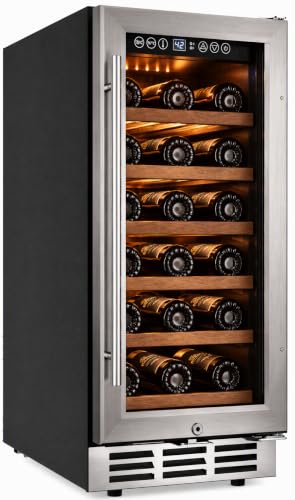
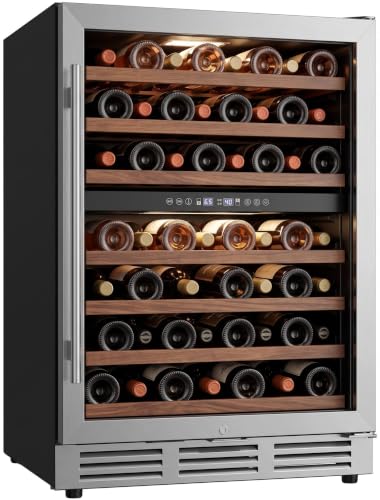
| Kalamera 24-inch, 46-bottle dual zone | Mid-range built-in with two temperature zones | A roundup calls it a best seller and lists beech wood racks, stainless trim, LCD control and a reversible door | Bottle counts in listings assume standard Bordeaux bottles |
| Kalamera 30-bottle single zone | Smaller kitchens, one wine style | Saveur picks it as best overall in its guide | Single temperature only |
| EdgeStar 15-inch, 26-bottle dual zone | Narrow cabinet gaps | Roundups cite a 15 inch width and two zones | Smaller capacity |
| EdgeStar larger dual-zone models | Bigger collections | One site lists a 101-bottle front-venting model for collectors | Taller, wider, heavier; source is an aggregator |
| Zephyr Presrv 24-inch wine and beverage fridge | Premium design look | Listed by one roundup as the most premium option | Premium tier; little independent detail in public reviews |
Built-In vs Freestanding: Why Venting Matters
A freestanding wine fridge usually vents heat out the back and sides, so it needs a gap around it. Putting that type inside a cabinet traps heat, forces the compressor to run harder and can shorten its life. Models sold as built-in or under-counter use a front grille so the cabinet around them stays cool. When a maker lists a unit as built-in capable, read the manual for required clearances and the size of the cutout.
- Front vent: Look for a grille at the bottom front, often under the door.
- Cutout size: Most 24 inch units are designed for a standard base cabinet opening. Confirm height, which can vary by leg adjustments.
- Door swing: Reversible doors help in corners or next to appliances.
- Power outlet: A dedicated outlet within reach is helpful. If you are unsure about wiring or the cabinet cutout, consult a licensed electrician or installer.
Key Specs to Compare
Zones and temperature range
Single-zone units hold one temperature across all shelves, which suits a collection that is mostly red or mostly white. Dual-zone units separate whites and sparkling from reds, typically with an upper and lower compartment. Makers list temperature ranges in their manuals; reviewers often add that actual shelf temperature varies slightly from the display.
Bottle count
Capacity numbers usually assume standard Bordeaux bottles with the racks fully loaded. Wide-shouldered Burgundy and champagne bottles, magnums and wide cans may reduce the number you can really fit. Treat the stated figure as a maximum.
Compressor vs thermoelectric
Compressor models cool more strongly and handle warm rooms better. Thermoelectric models are quieter and lack vibration, but cool less aggressively and struggle when the room is hot. For a kitchen, compressor units are the more common choice.
Racks, glass and light
Beech wood or metal racks, double or triple-pane tinted glass and low-heat LED lighting are common. UV-blocking glass is worth looking for if the unit gets daylight.
Budget Tiers
- Budget: Basic 15 to 24 inch single-zone fridges. Expect plainer finishes, basic controls and fewer shelves.
- Mid-range: Kalamera and EdgeStar dual-zone models sit here, with stainless trim, digital controls and sliding wood shelves.
- Premium: Zephyr and similar makers add panel-ready or designer finishes, stronger build, and more refined control and lighting.
The Brands in More Detail
Kalamera appears most often in roundups: one site calls its 24-inch 46-bottle dual-zone model its best seller and reports no customer returns for three years, though that is a retailer-style claim rather than an independent test. Saveur and 12×75 also include Kalamera picks, including a 30-bottle single-zone and a 37-bottle dual-zone model. EdgeStar usually appears as the runner-up or the specialist, with a 15 inch model for narrow openings and larger front-venting units for collectors. Zephyr is mentioned as the premium option but without a detailed review in the sources found.
Because specs and model numbers change, read the maker’s current product sheet for exact dimensions, the cutout required and the warranty period.
Pick X If You Match This
| If you… | Pick | Why |
|---|---|---|
| Want a standard kitchen built-in on a mid-range budget | Kalamera 24-inch dual zone | Frequently picked in roundups, front-venting design |
| Drink mostly one type of wine | Single-zone model | Simpler and often cheaper |
| Have a narrow gap beside the fridge | EdgeStar 15 inch | Slim dual-zone size |
| Have a collection above a hundred bottles | Large front-venting unit | Capacity with built-in installation |
| Want a premium, designer finish | Zephyr | Premium positioning in roundups |
Installation and Care Notes
- Measure the opening width, height and depth, then compare with the maker’s cutout figures.
- Keep the front grille unblocked; do not store boxes against it.
- Let the unit stand upright for several hours before powering on if the maker says so.
- Clean the interior with a mild soap solution and a soft cloth, and vacuum the front grille occasionally.
- Store bottles away from strong smells, since cork can absorb odors.
Alternatives
- Freestanding wine cooler: Cheaper per bottle, with more choice, if you can leave air gaps.
- Beverage center with glass door: Suits mixed drinks and cans alongside wine.
- Full-size wine cabinet: For serious collections, with better humidity and temperature stability.
Sizing the Unit to Your Collection
Most buyers choose a unit that is too small. A rule of thumb used by many wine writers is to buy a unit that holds roughly one and a half times the number of bottles you own today, because collections grow and bottles of different shapes do not pack evenly. A 15 inch unit that lists 26 bottles can realistically hold fewer if it contains sparkling bottles or wide-shouldered Burgundy shapes. A 24 inch dual-zone unit of 46 bottles listed by the maker may hold fewer when half the shelves are sliding display racks. Ask yourself how many bottles you want to keep ready to serve, how many you plan to age and whether you want space for a few beverage cans or mixers.
Where to Place a Built-In Wine Fridge
- Kitchen island or bar: Convenient for entertaining, but keep it out of direct sun and away from dishwashers and ovens that radiate heat.
- Butler pantry: Usually cooler and a good fit for dual-zone units.
- Basement bar: Cooler ambient temperature helps the compressor, but humidity can be higher, so wipe condensation and keep the grille clear.
- Garage: Most makers advise against installing in spaces with wide temperature swings because the unit may struggle in very hot or very cold conditions. Read the ambient temperature range in the manual.
Reading Reviews With Care
Many public reviews of under-counter wine fridges come from affiliate or aggregator sites rather than independent labs. Claims such as zero returns, best seller status or top ranking are usually retailer-style statements that cannot be compared across sites. Better evidence comes from consistent comments across several reviewers, such as noise level, door seal quality, and whether the unit holds its set temperature. If a roundup says a model is quiet, look for owners who mention living next to it in an open-plan kitchen.
Also notice whether the review mentions front venting at all. Some sites list a freestanding wine cooler in a list of built-in picks, which can lead buyers to install the wrong type. The maker’s installation page is the reliable source for clearances, cutout dimensions and the voltage and outlet needed.
Running Costs and Noise
Compressor units use modest power compared with a full-size refrigerator, but they run all day. Energy use depends on size, ambient temperature, how often the door opens and how cold you set the zones. Noise comes from the compressor and a fan in some models. Thermoelectric units hum softly but may fail to hold temperature in a warm room. If the unit will sit in an open-plan room, choose a model described by reviewers as quiet and avoid placing it directly against a hard wall that can amplify vibration.
Door Seals, Glass and Light Exposure
Wine is sensitive to light and vibration. Double-pane glass with UV-resistant tint protects wine better than single-pane glass. A gasket that seals evenly prevents warm air from creeping in, and a reversible hinge lets you open the door away from the main walkway. If your fridge sits near a window, consider a model with a solid or heavily tinted door instead of a clear display door. Store long-term bottles on their sides so corks stay moist, and keep bottles you plan to drink soon within easy reach.
Frequently Asked Questions
Can I build a freestanding wine fridge into a cabinet?
Generally no, unless the maker says so. Freestanding models vent heat from the back or sides, and trapping them in cabinetry can overheat the compressor.
What is the ideal wine storage temperature?
Many wine guides cite a range around 50 to 59 degrees Fahrenheit for long-term storage. Serving temperature differs by style, so a dual-zone unit gives flexibility.
How many bottles will really fit?
Listings assume standard Bordeaux bottles. Wide bottles reduce the count, and sliding shelves may hold fewer bottles than fixed ones.
Are compressor wine fridges loud?
They produce a low hum and occasionally cycle on. Thermoelectric models are quieter but cool less in warm rooms.
Do I need a professional to install one?
Plug-in models usually only need a cutout and an outlet. If the cabinet needs modification or wiring is unclear, hire a qualified installer or electrician.
Is dual zone worth it?
If you keep both reds and whites or sparkling, yes. If you drink one style, a single zone model is simpler and often more affordable.









Write Your Review
No reviews yet. Be the first to share your experience!