

Key takeaways
- Wide-base, low-profile: Maximum aeration. Suits young Cabernet, Syrah and other structured reds.
- Tall and narrow: Less air contact and a controlled pour. Suits older bottles and lighter wines.
- Swan or duck forms: Attractive, but hard to clean and prone to tipping.
- With stopper: Lets you store leftover wine for a short time. The Spiegelau Definition is highlighted for this.
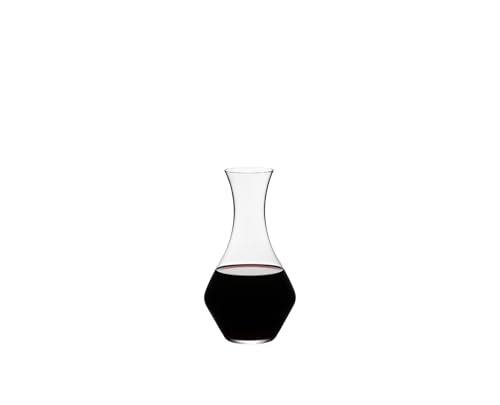
For most home drinkers, a wide-based Riedel Cabernet or a Le Chateau crystal decanter is the best all-round choice, a Spiegelau Style decanter suits those on a tighter budget, and the Riedel Amadeo is the pick for older bottles with sediment. The right decanter depends on what you pour, how you wash up and how much space you have. This guide compares the models reviewers mention most, explains what each shape does to the wine, and covers care and fit.
Our top picks



As an Amazon Associate we earn from qualifying purchases at no extra cost to you.
At a Glance: Decanters Compared
| Decanter | Best for | Reported strengths | Limits |
|---|---|---|---|
| Le Chateau crystal decanter | Everyday reds and gifting | Several 2026 roundups name it best overall; one lists hand-blown lead-free crystal, a built-in aerator and a lifetime replacement policy | One guide warns to keep it away from hard surfaces; care needed |
| Riedel Cabernet decanter | Young, full-bodied reds | Wine and More picks it as best overall for its wide base and aeration; Oak and Rowan calls it compact and dishwasher safe | Wide base takes more room in a cabinet |
| Riedel Amadeo | Older wines with sediment | The Modern Wine Edit recommends it for sediment control | Premium tier; handle with care |
| Spiegelau Style decanter | Budget buyers wanting modern design | Oak and Rowan lists German crystal, 1 litre and dishwasher safe; Weekend Kitchen rates it the best budget pick | Thin glass that will not survive rough handling |
| Spiegelau Definition | Pourers who want a stopper | Weekend Kitchen rates it best with a stopper | Fewer independent reviews |
| Riedel Ultra | Collectors and special occasions | Described as handmade full-lead crystal | Premium tier; lead crystal needs gentle, short-term storage of wine |
| Riedel Apple NY | Hosting large groups | Listed as best large capacity | Heavy and bulky |
Capacity and materials differ between versions, so check the maker’s current page for dimensions before buying.
What a Decanter Actually Does
Decanting does two things. It separates the clear wine from sediment that older bottles throw, and it exposes the wine to air so that tight, young reds open up. A wide base increases the surface area of the wine, which is why shapes such as the Riedel Cabernet are popular for young, tannic wines. A narrower, taller shape such as the Amadeo is aimed at older bottles where you want to pour slowly, leave the sediment behind and avoid over-exposing a delicate wine.
White, rose and light red wines can benefit from a short decant too, but many drinkers treat them with less air time. If you are unsure, pour a small glass first, taste, and decide how much more air the bottle needs.
Shape Matters More Than Price
- Wide-base, low-profile: Maximum aeration. Suits young Cabernet, Syrah and other structured reds.
- Tall and narrow: Less air contact and a controlled pour. Suits older bottles and lighter wines.
- Swan or duck forms: Attractive, but hard to clean and prone to tipping.
- With stopper: Lets you store leftover wine for a short time. The Spiegelau Definition is highlighted for this.
Models Reviewed
Le Chateau
This decanter appears at the top of several 2026 lists. One guide describes it as hand-blown, lead-free crystal with a built-in aerator and a lifetime replacement policy, and gives it an editor’s choice. A reviewer cautions that crystal should be kept away from hard surfaces, which is a fair warning for any thin hand-blown glass. It is a good fit for people who want a gift-worthy piece for everyday use.
Riedel Cabernet
Wine and More picks it as best overall for its wide base and aeration, and Weekend Kitchen also ranks it first. Oak and Rowan notes it is compact and dishwasher safe, which makes it appealing for people who dislike hand washing. Dishwasher care is only safe when the maker says so, so check the label before you try it.
Riedel Amadeo
The Modern Wine Edit recommends the Amadeo for sediment control with older wines. Its shape is built for slow, steady pours, which helps keep the dregs in the bottle or in the bottom of the decanter.
Spiegelau Style and Definition
The Style decanter is listed by Oak and Rowan as the best modern design: German crystal, one litre, dishwasher safe. It also warns the glass is thin and will not handle rough treatment. Weekend Kitchen rates it the best budget pick and ranks the Definition as the best with a stopper.
Riedel Ultra and Apple NY
The Ultra is described as a handmade full-lead crystal piece, aimed at special occasions. The Apple NY is listed as best large capacity for parties. These two are about display and volume rather than value.
How Much Air Is Enough?
There is no single rule, and reviewers disagree on the exact time. A rough guide is that young, bold reds gain from thirty minutes or more, medium reds need less, and older wines are often poured soon after decanting so they do not fade. Sparkling wine is not decanted. The decanter’s wide base speeds up aeration, so a short stay in a Riedel Cabernet can do the work of a longer one in a narrower shape.
Decanting for sediment
Stand the bottle upright for several hours so sediment settles. Pour slowly and steadily, with a light behind the neck of the bottle so you can see the sediment approach. Stop when it reaches the shoulder. This is where the Amadeo’s shape is useful, because it supports a slow, controlled pour.
Serving temperature and stoppers
A decanter at room temperature warms the wine slightly, so chill a bottle a little first if your room is warm. If you want to keep leftovers, a decanter with a stopper such as the Spiegelau Definition keeps air exposure down for a short time. For longer storage, pour the wine back into a bottle and cork it.
Budget Tiers
| Tier | Examples | What to expect |
|---|---|---|
| Budget | Spiegelau Style | Machine-made crystal glass, thin, easy to use |
| Mid-range | Le Chateau, Riedel Cabernet | Better shapes, hand-blown finish on some |
| Premium | Riedel Amadeo, Riedel Ultra | Handmade, display-quality, careful handling |
Fit, Capacity and Storage
- A standard 750 ml bottle fits most decanters with room to spare; check the stated capacity if you plan to decant magnums.
- Measure shelf height. Wide-base models like the Riedel Cabernet and the Apple NY can be too tall or too wide for standard cabinets.
- Neck width affects pouring and cleaning. A wider neck is easier to wash and fill.
- Weight matters if you have a tipping hazard; broad bases are more stable on crowded tables.
Cleaning and Care
Rinse your decanter with warm water soon after use and let it drain upside down on a rack. Avoid soap if you can, because residue can taint the next pour. Stubborn stains respond to a mix of warm water and a decanter cleaning bead or a soft brush designed for glass. Do not use abrasive pads. If the maker lists the decanter as dishwasher safe, place it on the top rack, away from other items. For lead crystal such as the Riedel Ultra, do not store wine in the decanter for extended periods; follow the maker’s advice and local guidance on lead crystal.
Pick X If …
| If you … | Pick |
|---|---|
| Drink young, bold reds weekly | Riedel Cabernet or Le Chateau |
| Open older bottles | Riedel Amadeo |
| Want a budget decanter | Spiegelau Style |
| Need to stopper leftovers | Spiegelau Definition |
| Host large dinners | Riedel Apple NY |
| Want a collector piece | Riedel Ultra |
Gifting and Display
A decanter is a popular gift, and the Le Chateau and Riedel ranges are the names that come up most often for that purpose. If you are buying for someone else, pick a clean, classic shape rather than a novelty form, and check that the neck is wide enough to clean. Boxed sets that add glasses or a stopper are convenient, but the decanter itself matters most. A heavy base looks elegant on a sideboard, though it takes more shelf space than the slim Spiegelau Style.
Alternatives
- Aerating pourer: A spout that aerates as it pours, useful when you want air without a decanter.
- Wine aerator in the glass: Compact and quick.
- Carafe or jug: A simple glass carafe works for short airing and costs less.
Frequently Asked Questions
Do all red wines need decanting?
No. Young, tannic reds often benefit, while very old or fragile wines may fade quickly in air. Taste as you go and adjust.
How long should I leave wine in a decanter?
Many guides suggest thirty minutes to a couple of hours for young reds, and a shorter time for older bottles. Individual wines vary, so taste along the way.
Is crystal better than glass?
Crystal is usually thinner and clearer, but it is more fragile. Good glass decanters work just as well for aerating wine.
Can I put my decanter in the dishwasher?
Only if the maker says it is safe. Several Riedel and Spiegelau models are listed as dishwasher safe by reviewers, but hand washing protects thin glass.
What about lead crystal?
Full-lead crystal such as the Riedel Ultra is intended for short-term serving rather than long storage. Follow the maker’s guidance, and ask your doctor or local authority if you have questions about lead exposure.
How do I remove stains from a decanter?
Use warm water with a soft brush or cleaning beads, rinse thoroughly and air dry. Avoid hard scouring that can scratch the glass.





Write Your Review
No reviews yet. Be the first to share your experience!