

Key takeaways
- Fridge fit: Ten-cup pitchers are tall. Measure shelf height before buying; the maker lists the LifeStraw Home Essential at roughly 11 inches high, and other sources quote slightly different figures.
- Flow speed: Membranes and ion-exchange cartridges filter slowly. Plan to fill the upper reservoir ahead of time and keep a second jug if the household drinks a lot.
- Priming and rinsing: Follow each manual’s flush instructions before the first pour, and replace cartridges on schedule rather than waiting for slow flow.
- Cleaning: Wash the reservoir and lid with mild soap and warm water on a regular schedule, and do not leave filtered water sitting for days.
- Retest the well: Keep annual lab tests going; the filter does not change what is in the well.
For most well-water households, the LifeStraw Home 10-Cup suits buyers whose main worry is bacteria and cysts, the ZeroWater 10-Cup suits buyers fighting very hard or mineral-heavy water at the tap, and a long-life carbon pitcher such as the Epic Pure line suits buyers who mainly want better taste and lower chemical or metal levels. No pitcher replaces a lab test of your well, and none replaces proper disinfection if your water is microbiologically unsafe. This guide compares the main options using the makers’ own specification pages and independent lab-style reviews, and explains where each one stops being useful.
Our top picks



As an Amazon Associate we earn from qualifying purchases at no extra cost to you.
Read This First: Pitchers Are a Final Polish, Not Well Treatment
Municipal water is treated and monitored before it reaches a tap. Private well water is not. Public-health sources such as state health departments advise well owners to test at least once a year for coliform bacteria and nitrate, and again after flooding, well repairs, or any change in taste, smell, or appearance. Many guides also advise retesting when a pregnancy begins or an infant joins the household. A county or state health department can usually point you to a certified laboratory.
That matters for pitcher shopping because different problems need different tools. Reviewers who cover well water note that standard carbon pitchers do little for nitrate, and that a carbon filter is not a disinfection step. Iron, manganese, heavy sediment, and hydrogen sulfide odor are usually handled upstream with whole-house equipment, and a pitcher filter that clogs with sediment will need frequent replacement. If your test shows bacteria or high nitrate, speak with your health department or a licensed water treatment professional before relying on a pitcher for drinking water, especially for infants.
With that boundary set, a pitcher can still be a sensible point-of-use step for drinking and cooking water once the well itself is tested and, where needed, treated.
At a Glance: Pitchers Worth Considering
| Pitcher | Best for | Key stated specs | Limits |
|---|---|---|---|
| LifeStraw Home 10-Cup | Households worried about bacteria, parasites and microplastics | The maker lists a 0.2 micron membrane microfilter rated up to 264 gallons, plus a carbon and ion-exchange filter rated for 40 gallons; 10-cup capacity | Two filters to replace on different schedules; one independent review questions whether some listed certifications are current; not a fix for heavy sediment or iron |
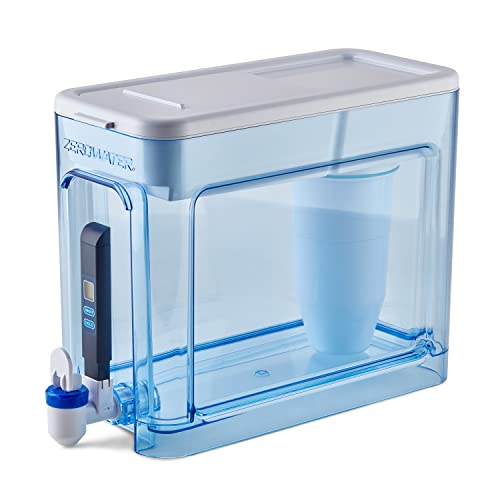
| ZeroWater 10-Cup Ready-Pour | Hard, mineral-heavy or high-TDS water | Five-stage filter with an included TDS meter; certified by IAPMO to NSF/ANSI 42 and 53 for lead and other listed contaminants; rated about 15 gallons | Filters wear out fast on hard water; strips minerals so water tastes flat; does not claim bacteria removal |
| Epic Pure (Pure XP line) | Long filter life and lower running cost | The maker lists 100 gallons per cartridge, NSF/ANSI 42 and 372 certification, testing to 53, 401 and P231, and a 3-year warranty | Maker’s microbial figures are not a substitute for treating unsafe water; sediment will shorten life |
| Clearly Filtered | Broad contaminant reduction for tap water | Reviewers describe a filter life of roughly 100 gallons and strong lab-style results | Premium tier; figures here come mostly from reviewers rather than a retrieved maker page |
| Brita or PUR standard pitchers | Budget taste improvement on already-safe water | Basic carbon-based reduction of chlorine taste and odor | Reviewers say they do not address bacteria or heavy sediment; not designed for raw well water |
LifeStraw Home 10-Cup: The Microbe-Focused Pick
The LifeStraw Home pitcher stands out in well-water roundups because it pairs two filters. According to the maker, a hollow membrane microfilter with a 0.2 micron pore size targets bacteria, parasites such as Giardia and Cryptosporidium, and microplastics, and it is rated for up to 264 gallons, roughly a year of use. A second activated carbon and ion-exchange filter is rated for 40 gallons, about two months, and is listed to reduce lead, mercury, chromium, cadmium, copper, chlorine, PFAS, and certain pesticides and herbicides.
The maker lists the pitcher as meeting NSF standards 42, 53, 401, P231 and P473. An independent lab-style review at one water-testing site, however, says some of the NSF/ANSI listings appear to have expired, so confirm the current certification status on the maker’s own documentation before treating the claim as settled. The capacity is 10 cups, and the upper reservoir holds a little over three cups, so refilling is frequent in a larger household. Reviewers who cost it out estimate a yearly filter spend in the mid-range tier because the carbon element is changed roughly six times a year.
Trade-offs: the membrane does not make heavily cloudy or iron-stained water suitable, since fine sediment clogs it. It also does not lower nitrate on its own. Buyers whose test results show bacteria should treat the well itself rather than leaning only on a pitcher.
ZeroWater 10-Cup: The High-TDS Option
ZeroWater uses a five-stage cartridge with an ion-exchange stage and ships with a handheld TDS meter, which lets you see the dissolved-solids reading of your tap water and of the filtered water. The cartridge is certified by IAPMO to NSF/ANSI 42 and 53 for chlorine taste and odor and for contaminants including lead, chromium-6, mercury, and PFOA and PFOS, according to Culligan, which now sells the brand. Listings give an estimated filter life of about 15 gallons, with a change indicated when the meter reads 006.
Reviewers report that real-world life depends heavily on source water: low-TDS water can stretch a cartridge toward 40 gallons, while hard well water can exhaust it far sooner. One lab-style review ranked ZeroWater at the top of its general pitcher test because it removed nearly everything it measured, but the same coverage points to high ongoing cost and flat-tasting water because calcium and magnesium are removed. The practical reading for well owners is simple. If your water is very hard, expect to replace cartridges often, and decide whether a point-of-use reverse osmosis unit or an upstream softener makes more financial sense.
Epic Pure: Long Life and Warranty
The Epic maker’s page for its Pure XP pitcher describes a cartridge that combines carbon fiber block with nanofiber-engineered media, rated for 100 gallons, or about three to four months of typical use. The page lists reduction claims for lead, PFAS, fluoride, chlorine, microplastics, and microbes, certification to NSF/ANSI 42 and 372, and independent testing to NSF/ANSI 53, 401 and P231. The housing is described as polypropylene and Tritan, free of BPA and BPS, with a 3-year warranty and a replaceable inner cartridge designed to reduce plastic waste.
Other well-water guides mention an Epic Pure Nano variant with an even longer rated life, but those figures come from secondary sources and differ from the maker page retrieved for this guide, so treat the longer number as unconfirmed. One lab-style review scored the Epic Pure line as the best value among the pitchers it examined, noting contaminant levels in the test water were brought below health guideline levels. As with every pitcher here, sediment and high iron will shorten the cartridge life, so a pre-filter upstream is wise if the well runs cloudy.
Clearly Filtered and Premium-Tier Alternatives
Clearly Filtered is often named by reviewers for the breadth of its contaminant reduction, with a filter life around 100 gallons. It sits in the premium tier. Other guides name Aquagear for iron and bacteria concerns on wells, but that comes from a single 2025 buyer guide rather than a maker page, so it is weakly sourced here. If you are considering any premium pitcher, compare the contaminant list on the maker’s performance data sheet with your own lab report, because a filter that excels on lead is not automatically useful if your problem is nitrate or manganese.
Alternatives and Budget Tiers
Beyond pitchers, a point-of-use reverse osmosis unit suits high TDS or nitrate, and whole-house sediment plus UV disinfection installed by a licensed professional is the usual route for wells with bacteria. Budget carbon pitchers cost little but target municipal chlorine taste; mid-range LifeStraw and Epic pitchers add longer rated life; Clearly Filtered sits in the premium tier. Divide cartridge price by rated gallons to compare real running cost.
Match the Pitcher to Your Test Results
| If your water test or situation shows … | Pick this approach | Why |
|---|---|---|
| Bacteria or cysts present | Treat the well first (disinfection plus retest); a membrane pitcher such as LifeStraw Home only as a point-of-use extra | A pitcher is not a primary disinfection method; confirm with your health department |
| High hardness or total dissolved solids | ZeroWater 10-Cup, or a softener or reverse osmosis system | Ion exchange handles dissolved solids, but cartridges wear quickly |
| Lead or chlorine from plumbing or shock treatment | Epic Pure line or ZeroWater | Both makers list certified lead and chlorine reduction |
| High nitrate | Reverse osmosis or ion-exchange system chosen with a professional | Reviewers note carbon pitchers do little for nitrate |
| Cloudy water, iron staining or sulfur smell | Whole-house sediment, iron or aeration treatment first | Pitcher cartridges clog quickly under these conditions |
| Safe, already-treated water and a taste goal | Budget carbon pitcher such as Brita or PUR | Lowest cost for chlorine taste and odor |
Fit, Capacity and Care Notes
- Fridge fit: Ten-cup pitchers are tall. Measure shelf height before buying; the maker lists the LifeStraw Home Essential at roughly 11 inches high, and other sources quote slightly different figures.
- Flow speed: Membranes and ion-exchange cartridges filter slowly. Plan to fill the upper reservoir ahead of time and keep a second jug if the household drinks a lot.
- Priming and rinsing: Follow each manual’s flush instructions before the first pour, and replace cartridges on schedule rather than waiting for slow flow.
- Cleaning: Wash the reservoir and lid with mild soap and warm water on a regular schedule, and do not leave filtered water sitting for days.
- Retest the well: Keep annual lab tests going; the filter does not change what is in the well.
Frequently Asked Questions
Can a pitcher filter make untested well water safe to drink?
No. A pitcher cannot tell you what is in your water, and public-health guidance is to have a private well tested at least once a year for bacteria and nitrate. If the lab finds contamination, treat the source and retest before depending on any point-of-use filter.
Which pitcher is best for hard well water?
The ZeroWater 10-Cup is the usual reviewer choice because its ion-exchange stage lowers dissolved solids and its TDS meter shows when to change the cartridge. Hard water shortens the cartridge life, so expect frequent replacements and consider a softener if that cost bothers you.
Does the LifeStraw Home pitcher remove bacteria from well water?
The maker lists its 0.2 micron membrane for bacteria, parasites and microplastics. Even so, a pitcher should be a final step after the well has been tested and treated, and one independent review questions the current status of some listed certifications.
How often should I replace the cartridge on well water?
Use the maker’s rated life as a ceiling, not a target. Cloudy or hard water can use up a cartridge much sooner, and slow flow, a TDS meter reading, or a change in taste are signs it is time.
Will a pitcher remove iron or sulfur smell?
Not reliably. Iron staining, manganese and hydrogen sulfide are normally treated upstream with whole-house equipment, and a pitcher cartridge that faces them will clog quickly.
Are pitcher filters good enough for infant formula?
Ask a doctor or your local health department before using any filtered well water for infants. Nitrate and bacteria in particular are concerns for young babies, and lab results should guide the decision rather than a filter’s marketing claims.






Write Your Review
No reviews yet. Be the first to share your experience!