

Key takeaways
- Top shelf: tray, mixing tools, napkins, and drinks in active use.
- Middle shelf: bottles, cans, mixers, and a covered ice bucket.
- Bottom shelf: reserve bottles, nonbreakable glassware, and cleaning supplies.
The best outdoor bar carts for entertaining combine powder-coated or stainless-steel construction, large locking casters, at least two usable shelves, secure bottle storage, and a cover that fits without trapping moisture; for most patios, a compact 30- to 36-inch-wide cart with a removable tray is the most practical choice.
Our top picks
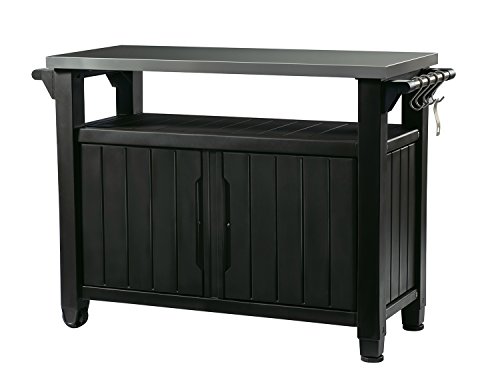


As an Amazon Associate we earn from qualifying purchases at no extra cost to you. Ratings are shown as listed on Amazon.
Our picks by patio situation
| Situation | Best cart type | Key specifications to target | Typical market range |
|---|---|---|---|
| Small balcony or narrow deck | Compact two-tier cart | 24–30 in. wide, 16–20 in. deep, 25–40 lb., two locking wheels | $120–$250 |
| Frequent entertaining | Full-size service cart | 32–40 in. wide, 20–24 in. deep, 50–80 lb., 3 shelves, bottle rail | $250–$600 |
| Wet or coastal climate | Marine-grade or stainless-steel cart | 304 stainless steel or sealed aluminum, rust-resistant fasteners, fitted cover | $300–$900 |
| Occasional use on a covered patio | Powder-coated steel cart | 20–40 lb. capacity per shelf, removable tray, touch-up paint compatibility | $100–$300 |
| Outdoor cooking and drinks together | Prep-and-bar cart | 36–48 in. wide, heat-tolerant worktop, 4–6 bottle slots, towel rail | $350–$1,000 |
What makes an outdoor bar cart worth buying?
An indoor bar cart may look similar, but outdoor use exposes it to ultraviolet light, condensation, wind, spilled citrus juice, salt, and temperature swings. The frame and hardware matter more than decorative details.
Weather-resistant materials
Powder-coated steel is usually the value choice. A thick, intact coating resists ordinary rain and sunlight, but scratches around screws, welds, and wheel brackets can become rust points. Look for a sealed finish on every side of the frame rather than a painted front with unfinished undersides.
Aluminum is lighter and naturally corrosion-resistant, making it useful when the cart must be moved frequently. It can dent more easily than steel, and lightweight models may roll or tip in strong wind. Stainless steel offers the best resistance in damp environments, although fingerprints and water spots are more visible. In coastal areas, 304 stainless steel is a sensible minimum; rinse off salt residue instead of allowing it to dry on the surface.
Wood can be attractive, but it requires the most ownership care. Teak and other naturally durable hardwoods still benefit from regular cleaning, while lesser woods need exterior-grade sealing. Avoid a cart whose shelves are merely indoor wood with a thin decorative coating.
Wheel quality and stability
Wheels determine whether a cart feels useful or frustrating. Two-inch casters are suitable for smooth concrete, but 3- to 4-inch casters handle deck gaps, textured pavers, and thresholds more confidently. At least two wheels should lock; four locking wheels are preferable if children, pets, or sloped paving are nearby.
Plastic casters can work under light loads, but rubber or polyurethane wheels generally roll more quietly and resist cracking. Check the wheel rating against the cart’s loaded weight, not its empty weight. Six bottles, ice, glassware, and a cooler can easily add 35 to 50 pounds.
A wide wheelbase is more important than a tall decorative frame. For a cart around 36 inches high, a footprint at least 18 inches deep gives better resistance to tipping. If the cart has a high handle or bottle rack, stability becomes even more important.
Head-to-head: compact cart versus full-size entertaining cart
Compact two-tier cart
A compact cart is the better choice when storage space is limited or drinks are served near a small table. It typically holds four to six bottles, a beverage tub or ice bucket, and a modest amount of glassware. Its advantages are lower weight, easier storage, and a smaller turning radius.
The compromise is working space. Once an ice bucket occupies the top shelf, there may be no room left for mixing drinks. A removable tray helps: it can carry prepared drinks from the kitchen while the lower shelf stores bottles and napkins.
Full-size service cart
A larger cart is worth choosing when it will serve eight or more people or remain outside during an event. Three shelves, a bottle rail, and a dedicated glassware area reduce repeated trips indoors. Look for at least 36 inches of usable width and 20 inches of depth.
The drawbacks are weight and storage. A large cart can be difficult to maneuver through a doorway, and its shelves may collect rainwater if they lack drainage. It also needs a larger cover, which is more likely to blow off unless it has a drawcord or fastening straps.
Capacity: calculate the cart you actually need
Start with the number of guests rather than the cart’s advertised bottle count. A practical estimate is one 750 ml bottle of wine for every three to four wine drinkers, plus one 750 ml spirit bottle for roughly 12 to 16 mixed drinks. For a gathering of 10 people, a reasonable starting load might be three wine bottles, one spirit bottle, 10 to 15 cans or bottles of beer, 10 glasses, mixers, and ice.
That load can weigh approximately 45 to 60 pounds. Distribute it across the shelves instead of putting every bottle on top. A cart rated for 20 pounds per shelf may be adequate for light service, but a cart rated for at least 30 pounds per shelf provides a safer margin once ice and glassware are added.
- Top shelf: tray, mixing tools, napkins, and drinks in active use.
- Middle shelf: bottles, cans, mixers, and a covered ice bucket.
- Bottom shelf: reserve bottles, nonbreakable glassware, and cleaning supplies.
Features that matter more than appearance
Bottle storage
Horizontal bottle slots prevent bottles from sliding when the cart moves, but measure the openings carefully. A slot designed for standard wine bottles may not fit wide sparkling-wine or spirits bottles. A raised rail is more versatile than fixed slots, especially if you switch between wine, cocktails, and nonalcoholic drinks.
Shelves and drainage
Slatted shelves improve airflow and let rain escape, while solid shelves are easier to clean and better for small items. The most useful compromise is a solid worktop with a slight lip and ventilated lower shelves. Avoid deep gaps that trap citrus peel, bottle caps, and standing water.
Cover compatibility
A cover should be breathable, water-resistant, UV-resistant, and secured at the bottom. A completely airtight plastic cover can trap condensation against metal and accelerate corrosion. Measure the cart with its handle, bottle rail, and wheels included; a cover that is only an inch or two too short will leave the most vulnerable parts exposed.
Foldability and footprint
Foldable carts save storage space, but inspect the locking mechanism and hinge hardware. A folding design is worthwhile if the cart is stored weekly; it is less valuable if the hinge reduces shelf strength or creates a wobbly frame. Before buying, reserve at least 3 inches of clearance on each side for turning and 6 inches behind it for the handle.
Durability and maintenance realities
The parts most likely to wear first are caster bearings, wheel locks, shelf fasteners, and the cover—not necessarily the frame. Tighten fasteners at the beginning and end of the outdoor season, particularly after moving a heavily loaded cart. Replace a cover when its seams split or water begins pooling inside.
- Wipe spilled juice, wine, and saltwater promptly; acids and salts attack finishes faster than ordinary dust.
- Wash with mild soap and water, then dry the undersides of shelves and wheel brackets.
- Do not use abrasive pads on powder coating or stainless steel.
- Touch up exposed steel promptly with an exterior-compatible coating.
- Store glassware and ice-making accessories indoors, even when the cart remains covered.
- Use wheel locks on level ground, but do not treat them as a substitute for securing the cart in high wind.
Bottom line
Choose a compact aluminum or powder-coated steel cart if you have limited space and entertain occasionally. Choose a wider, three-shelf cart with 3- to 4-inch locking casters if drinks are part of regular gatherings. For uncovered patios, wet climates, or coastal locations, spend more on stainless steel or well-sealed aluminum, a breathable fitted cover, and corrosion-resistant hardware. The best outdoor bar carts are not the ones with the most decoration; they are the ones that stay stable under a full load, roll over your actual surface, and remain easy to clean after the party.





Write Your Review
No reviews yet. Be the first to share your experience!