

Key takeaways
- Wash wood boards by hand with warm soapy water and dry on edge. Never soak or run them through a dishwasher.
- Oil wood boards when they look dry and pale, roughly monthly for heavy use.
- Clean plastic boards in the dishwasher and retire them when grooves become deep.
- Keep separate boards for raw meat and ready-to-eat foods to reduce cross-contamination, following general food safety guidance from public health agencies.
- Anchor a sliding board with a damp towel or a rubber mat to prevent injuries.
The best cutting board for most kitchens in 2026 is a thick maple board such as the John Boos reversible, paired with a dishwasher-safe plastic board like the OXO Good Grips for raw meat. If you want one low-maintenance board, a composite such as the Epicurean Kitchen Series is the easiest to live with. Choose by material first, size second, and thickness third, because those three decisions determine how long the board lasts and how kind it is to your knives.
Our top picks


As an Amazon Associate we earn from qualifying purchases at no extra cost to you.
Quick comparison of the best cutting boards
| Pick | Best for | Material and size | Care | Price range |
|---|---|---|---|---|
| John Boos Maple reversible board | Best overall | Edge-grain maple, about 20 x 15 in, 1.5 in thick | Hand wash, oil monthly | Mid-range to premium |
| John Boos end-grain block | Best premium | End-grain maple or walnut, 2.25 in thick and up | Hand wash, oil monthly | Premium |
| Epicurean Kitchen Series | Best low maintenance | Paper-fiber composite, about 17.5 x 13 in, thin | Dishwasher safe | Mid-range |
| OXO Good Grips board | Best budget and raw meat | Polypropylene with juice groove, non-slip edges | Dishwasher safe | Budget |
| Bamboo board | Best light everyday | Bamboo, about 0.75 in thick | Hand wash, oil occasionally | Budget |
| Large plastic prep board | Best for butchery | HDPE, 0.5 in thick, 18 x 24 in | Dishwasher or bleach rinse | Budget |
Best overall: John Boos Maple reversible board
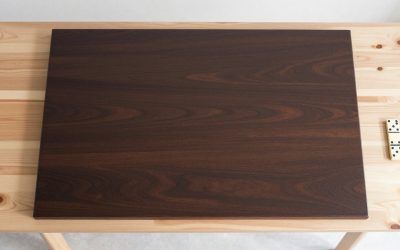
John Boos is the name most roundups reach for in wood. The reversible edge-grain maple board, commonly sold around 20 by 15 inches and 1.5 inches thick, is heavy enough to stay put on a counter and thick enough to resist warping. Hard maple is a classic cutting surface because the fibers are dense enough to survive heavy chopping but still soft enough to protect a knife edge.
It suits anyone who cooks daily and does not mind a once-a-month oiling routine with food-grade mineral oil. The trade-off is upkeep and weight. It must be hand washed, never soaked and dried upright, and a board this size weighs well over ten pounds, so it lives on the counter rather than in a drawer.
Best premium: John Boos end-grain block
In an end-grain board, the wood fibers point up like a bundle of straws, so knife edges slip between them and the surface can recover from cuts. That is why butchers and professional kitchens favor end-grain blocks. They are noticeably gentler on edges and look dramatic with a checkerboard pattern. The trade-off is price, weight and a greater tendency to absorb moisture, which means more frequent oiling and no sitting in water.
Best low maintenance: Epicurean Kitchen Series
Epicurean boards are made from layered paper fiber pressed with resin. According to the manufacturer, they are dishwasher safe, heat resistant and NSF certified. At roughly a quarter inch thick, the Kitchen Series is thin and light, which makes it easy to slide into a cabinet and carry to the sink. It will not stain or hold odors like wood, and it is kinder to knives than glass or stone.
The compromise is feel. It is harder than wood, so it develops light marks that show color, and the thinness means it can slide on a smooth counter unless you add a damp towel underneath.
Best budget and raw meat: OXO Good Grips board
A plastic board with a juice groove and rubberized edges does one job well: handling raw chicken, fish and other protein that you want to run through the dishwasher afterward. The deep groove catches runoff and the non-slip edge keeps the board from skating. Plastic boards develop knife scars over time, and deep grooves can harbor bacteria, so plan to replace them every few years.
Best light everyday: bamboo board
Bamboo is technically a grass, harder than most woods, which means it can dull knives faster than maple. It is lightweight and affordable, so it works well for bread, cheese and light vegetable prep. If you chop daily with a good knife, choose maple or composite instead.
Best for butchery: large plastic prep board
A big HDPE slab, around 18 by 24 inches, gives you room to break down poultry or carve a roast. Because it can be sanitized in a dishwasher or with a diluted bleach rinse, it is the practical choice for raw proteins. Choose a color-coded set if you want to keep produce, meat and fish separate.
How to choose a cutting board with numbers
Match size to the work
A good rule is a board at least 6 inches longer than your chef’s knife blade. With an 8-inch knife, a 14-inch board is the minimum and a 20-inch board is comfortable. Bigger boards mean fewer spills and less crowding, but they must fit in your sink for washing. Measure your sink and counter first.
Thickness decides warping and longevity
| Thickness | Typical material | Use | Warp risk |
|---|---|---|---|
| 0.25 in | Composite | Light prep, easy storage | Low |
| 0.75 in | Bamboo, plastic | Everyday prep | Moderate |
| 1.5 in | Edge-grain maple | Daily heavy chopping | Low if oiled |
| 2.25 in and up | End-grain wood | Butcher block work | Very low |
Run the cost-per-year math
A premium wood board at several times the price of plastic that lasts fifteen years costs less per year than a plastic board replaced every three. Oil adds only a small yearly cost, so wood is cost-effective if you maintain it.
Avoid glass, marble and stone
These surfaces look elegant but dull a knife edge within a few uses. Keep them for serving cheese or rolling dough.
Care and ownership realities
- Wash wood boards by hand with warm soapy water and dry on edge. Never soak or run them through a dishwasher.
- Oil wood boards when they look dry and pale, roughly monthly for heavy use.
- Clean plastic boards in the dishwasher and retire them when grooves become deep.
- Keep separate boards for raw meat and ready-to-eat foods to reduce cross-contamination, following general food safety guidance from public health agencies.
- Anchor a sliding board with a damp towel or a rubber mat to prevent injuries.
Which board should you buy first?
A simple decision matrix helps if you are building a set from scratch.
| Your situation | Buy this first | Add later | Reason |
|---|---|---|---|
| Cook daily, hand wash willingly | 20 x 15 in edge-grain maple | Plastic board for raw meat | Best knife feel and longevity |
| Want everything dishwasher safe | 17 x 13 in composite | Large plastic prep board | Low maintenance, no oiling |
| Tight budget | Two 0.5 in plastic boards | One wood board | Separates raw and ready-to-eat foods cheaply |
| Small kitchen, limited storage | Thin composite, 0.25 in | Small bamboo board for bread | Slides into a narrow cabinet |
| Carve roasts and butcher | Large board with juice groove | End-grain block | Catches liquid and gives room to carve |
A worked cost-per-year example
Imagine a wood board that lasts 15 years and a plastic board replaced every 3 years. Over 15 years, you buy one wood board and five plastic boards. Even if the wood board costs three times as much as a single plastic board, five plastic boards cost more in total, before counting the time spent shopping. The calculation flips if you neglect the wood: a board that warps or cracks after two years is a worse deal than plastic.
Common mistakes
- Buying a board that is too small, which causes food to fall off and encourages cutting in the hand.
- Washing wood in a dishwasher, which swells the glue joints and splits the surface.
- Oiling with cooking oils that can turn rancid, rather than food-grade mineral oil.
- Putting a hot pan directly onto a plastic or bamboo board.
Frequently Asked Questions
Is wood or plastic better for a cutting board?
Wood is gentler on knives and lasts longer when maintained, while plastic is easier to sanitize in a dishwasher. Many cooks use a wood board for produce and bread and a plastic one for raw meat.
How often should I oil a wooden cutting board?
Roughly once a month for frequent use, or whenever the surface looks dry. Use food-grade mineral oil, and finish with a board wax if you want extra moisture resistance.
What size cutting board do I need?
Pick one that is at least 6 inches longer than your main knife. For most home kitchens, a 15 by 20 inch board offers plenty of room without overwhelming the counter.
Are composite cutting boards safe?
Brands such as Epicurean state their boards are NSF certified for food contact and are heat resistant. They are non-porous enough to resist odors and can be run through a dishwasher.
When should I replace a cutting board?
Replace plastic when deep grooves remain after washing, and refinish or replace wood boards if cracks or deep splits appear. Light surface scratches on wood can be sanded away.



Write Your Review
No reviews yet. Be the first to share your experience!