

Key takeaways
- Hand wash and dry immediately. Dishwashers dull edges and loosen handle rivets.
- Use wood or composite boards. Glass and stone boards chew through edges in weeks.
- Hone a few strokes before each major prep session; sharpen on whetstones or a guided system when honing no longer restores bite.
- The first thing to wear is the paring knife edge, because it sees the most small, rough tasks.
The best knife set for most home cooks in 2026 is a forged German block set such as the Wüsthof Classic, with the Mercer Genesis as the value alternative and the Victorinox Fibrox Pro as the low-cost workhorse. A good set only needs three blades you use daily: an 8-inch chef’s knife, a 3.5 to 4-inch paring knife and a serrated bread knife. Everything beyond that is storage, steak knives or filler, so judge a set by the quality of those three, not by the piece count printed on the box.
Our top picks


As an Amazon Associate we earn from qualifying purchases at no extra cost to you.
Quick comparison of the best knife sets
| Pick | Best for | Construction | Typical set size | Price range |
|---|---|---|---|---|
| Wüsthof Classic block set | Best overall | Forged, full tang, X50CrMoV15 steel at about 58 HRC | 6 to 8 pieces | Premium |
| Mercer Genesis block set | Best value forged set | Forged high-carbon German-style steel, full tang | 6 pieces | Mid-range |
| Victorinox Fibrox Pro set | Best budget | Stamped, lightweight, textured Fibrox handle | 5 to 8 pieces | Budget |
| Zwilling Pro block set | Best for comfort grip | Forged, curved bolster, ice-hardened steel | 7 to 8 pieces | Premium |
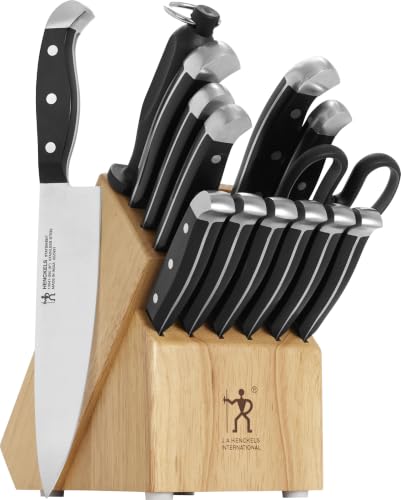
| Henckels Statement set | Best for large piece counts | Stamped, includes steak knives | 15 pieces | Budget to mid-range |
| Shun Classic block set | Best Japanese-style edge | VG-MAX core, 16-degree edge angle, D-shaped handle | 5 to 7 pieces | Premium |
Best overall: Wüsthof Classic block set
The Wüsthof Classic is the benchmark that most 2026 roundups return to. According to the manufacturer’s specifications, the blades are forged from X50CrMoV15 stainless steel at roughly 58 on the Rockwell scale, with a full tang running through a triple-riveted handle and a PEtec factory edge. That hardness sits in the sweet spot for home use: hard enough to hold an edge through weeks of dinners, soft enough that a honing steel realigns it quickly instead of chipping.
It suits cooks who want one set to last decades and are willing to hand wash. The trade-off is cost and weight. The forged bolster adds heft that some cooks love and others find tiring during long prep sessions. Smaller block versions with six or seven pieces give you the three essential knives plus a utility knife and kitchen shears without paying for blades you will not use.
Best value: Mercer Genesis block set
Mercer Culinary supplies many culinary schools, and the Genesis line is its forged, full-tang entry. It uses a high-carbon German-style steel with a taper-ground edge and a soft, grippy handle, and the block holds about five knives. For roughly half of what a Wüsthof set costs, you get a similar blade profile, which is why it appears in several best-value lists.
The compromise is polish. Fit and finish, handle contouring and edge retention are good rather than exceptional, and the factory edge needs touching up sooner. If your budget is mid-range and you want forged construction, this is the set to beat.
Best budget: Victorinox Fibrox Pro set
Victorinox makes the knife that professional kitchens buy by the dozen. The Fibrox handle is textured plastic that stays grippy when wet and survives years of abuse, and the blades are stamped rather than forged, which keeps them light and the price low. An 8-piece set covers every essential task.
The downside is looks and balance. The handles feel utilitarian and the lighter blade does less of the work for you when cutting dense squash. Cooks who value performance per dollar over appearance rarely regret it.
Best for comfort: Zwilling Pro block set
Zwilling’s Pro line features a curved bolster that encourages a proper pinch grip, which reduces strain on the hand during extended chopping. The steel is ice-hardened and the blades are forged, with the manufacturer’s sloped design letting you rock the knife through herbs more smoothly. It is a strong choice for people who cook most nights and care about hand fatigue.
The main trade-off is price, which lands in the premium band, and the sculpted bolster takes slightly more care to sharpen evenly at the heel.
Best for large piece counts: Henckels Statement set
If you want steak knives and a full block without a large bill, the 15-piece Henckels Statement set delivers volume. The blades are stamped and use softer steel than the forged lines, so expect to hone frequently and sharpen a couple of times a year. Treat it as a practical starter set and a good housewarming or first-apartment option rather than a lifetime purchase.
Best Japanese-style edge: Shun Classic block set
Shun sharpens its blades to a 16-degree angle per side, thinner than the 20 degrees typical of German knives, around a VG-MAX core clad in layered Damascus-pattern stainless. The result is very clean slicing of tomatoes, fish and vegetables. The cost is brittleness: the harder, thinner edge can chip if used on bones, frozen food or twisted against a hard board. It suits careful cooks who always use a wood or soft composite board.
How to choose a knife set with numbers
Work out cost per useful knife
Divide the set price by the number of blades you will actually use. A 15-piece set at a budget price that includes eight steak knives gives you only seven working blades, and a 6-piece forged set gives you roughly five. Counting only chef’s, paring, bread and utility knives, a four-blade forged set often beats a 15-piece stamped set on cost per useful blade over ten years.
Match steel hardness to your maintenance habits
| Steel type | Typical hardness | Sharpen how often | Risk |
|---|---|---|---|
| Soft stamped steel | 54 to 56 HRC | Hone weekly, sharpen every 3 to 4 months | Dulls quickly |
| German forged steel | 56 to 58 HRC | Hone weekly, sharpen every 6 to 12 months | Heavy |
| Japanese-style hard steel | 60 to 62 HRC | Sharpen every 6 to 12 months | Chips if misused |
Check the block and the counter space
Most blocks are 9 to 11 inches tall and 5 to 7 inches wide. A slim in-drawer tray or magnetic strip frees counter space and avoids moisture traps inside the slots. Look for blocks that store knives edge-up or horizontally so the blades are not dragging against wood each time you draw them.
Handle fit matters more than steel
A knife that does not fit your hand gets used less. If you have small hands, a lighter stamped chef’s knife is easier to control. If you have large hands, a full bolster and 4.5-inch handle are more comfortable.
Care and ownership realities
- Hand wash and dry immediately. Dishwashers dull edges and loosen handle rivets.
- Use wood or composite boards. Glass and stone boards chew through edges in weeks.
- Hone a few strokes before each major prep session; sharpen on whetstones or a guided system when honing no longer restores bite.
- The first thing to wear is the paring knife edge, because it sees the most small, rough tasks.
Frequently Asked Questions
How many pieces should a good knife set have?
Five to eight pieces is enough for nearly every kitchen. Focus on a chef’s knife, paring knife and serrated bread knife, then add a utility knife and shears if you cook often. Anything past that is usually steak knives or filler.
Are expensive knife sets worth it?
For people who cook several times a week, yes. Better steel holds an edge longer, and forged construction adds balance. For occasional cooks, a budget stamped set with regular honing performs well enough.
How often should I sharpen kitchen knives?
Hone before most uses and sharpen two to four times a year depending on how often you cook. If a knife slips on a tomato skin instead of biting, it is time to sharpen rather than hone.
Is it better to buy a set or individual knives?
Individual knives give you a better chef’s knife for the same money, but sets are cheaper per blade and include storage. A good compromise is a small set of three to five knives you will use, plus one specialty knife bought separately.
Can knife sets go in the dishwasher?
Manufacturers including Wüsthof and Zwilling recommend hand washing. Heat, detergent and banging against racks wear down edges and can damage handles over time.




Write Your Review
No reviews yet. Be the first to share your experience!