

Key takeaways
- Check that the glasses are dishwasher-safe before loading them.
- Use a low-temperature cycle and keep glasses away from pans, utensils, and hard spray zones.
- Leave space between bowls so vibration does not cause contact chips.
- For hand washing, use warm water, a mild unscented detergent, and a soft brush that does not twist the stem.
- Dry with a lint-free cloth by supporting the bowl; never twist the stem and bowl in opposite directions.
- Do not store delicate glasses nested unless the manufacturer specifically permits it.
The best dessert wine glasses are small, tulip-shaped glasses with a 6–12 ounce capacity, a moderately long stem, and a narrow rim that concentrates aromas without making sweet wine taste heavy.
Our top picks



As an Amazon Associate we earn from qualifying purchases at no extra cost to you. Ratings are shown as listed on Amazon.
Quick picks by the wine and occasion
| Situation | Best glass shape | Useful capacity | Why it fits |
|---|---|---|---|
| Late-harvest Riesling, Moscato, or ice wine | Small tulip with a gently narrowing bowl | 6–8 oz | Preserves floral aromas and keeps pours modest |
| Sauternes, Tokaji, or sweet Chenin Blanc | Medium tulip with a rounded lower bowl | 8–12 oz | Allows honeyed, stone-fruit aromas to open while retaining focus |
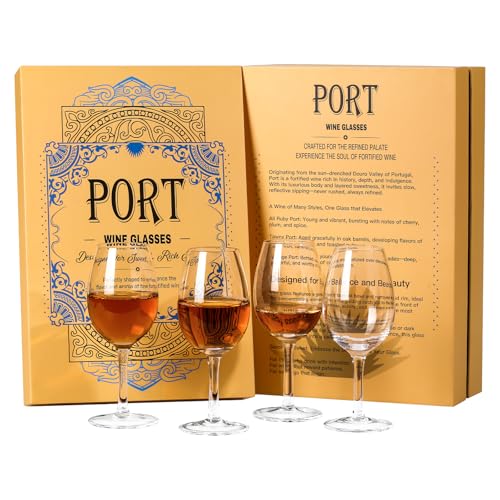
| Port, Madeira, or other fortified dessert wine | Small fortified-wine glass with a narrower opening | 3–6 oz | Balances higher alcohol with a controlled sip size |
| One versatile set for mixed guests | 6–10 oz universal white-wine glass | 6–10 oz | More useful for everyday wine, but less precise for fortified styles |
| Frequent dishwasher cleaning | Machine-made crystal or lead-free crystalline glass | 6–10 oz | Usually offers better consistency and resilience than ultra-thin hand-blown glass |
What separates the best dessert wine glasses?
Dessert wine is not one style. A delicate 7% Moscato, a richly concentrated Sauternes, and a 20% Port need different proportions. The glass should provide enough room for aroma, but not so much volume that a small pour spreads thinly across a large bowl.
Bowl shape: tulip beats a wide balloon
A tulip bowl is the safest choice because it is wider near the base and narrower at the rim. The lower bowl gives fragrant wines room to release aroma, while the tapered top directs those aromas toward the nose. This is particularly helpful with floral, citrus, apricot, honey, and dried-fruit notes.
A very wide bowl is less useful for most dessert wines. It exposes more surface area to air, encourages faster warming, and can make a small serving feel visually lost. A narrow flute, meanwhile, preserves bubbles but restricts aroma. Use a flute only when sparkling dessert wine is the priority.
Capacity: choose for the pour, not the maximum fill
Capacity is the total volume a glass can hold, not the amount you should serve. A practical dessert-wine pour is usually 2–3 ounces; fortified wines are often served closer to 2 ounces. A 6–8 ounce glass makes that portion look intentional, whereas a 15-ounce white-wine bowl can make it appear undersized.
For a mixed collection, 8–10 ounces is the most useful compromise. It accommodates aromatic sweet whites without becoming awkward for Port. If you mainly serve fortified wine, a smaller 3–6 ounce glass gives better control and feels balanced in the hand.
Stem length: stability versus elegance
A longer stem keeps warm fingers away from the bowl, which matters because sweetness and alcohol become less balanced as wine warms. However, an extremely thin, tall stem can be difficult to store and more vulnerable to bending or snapping.
For most homes, look for a stem approximately 3.5–5 inches long beneath the bowl. A shorter stem can be practical for casual tables and dishwashers; a longer stem suits formal service and wines that benefit from staying cool. The foot should be wide enough that the glass does not feel top-heavy when set down.
Rim design: thin is useful, but not everything
A thin, even rim makes the transition from glass to palate feel clean and directs the wine to the front and sides of the tongue. It also reduces the sense of bulk in a sweet wine. A rolled or thick rim is more durable, but may feel less refined and can make a small sip seem heavier.
Ultra-thin rims are not automatically better. If the edge is uneven, sharp, or so delicate that normal washing feels stressful, the design sacrifices too much ownership practicality. A precisely formed, moderately thin rim is the better everyday target.
Head-to-head: the main dessert-wine glass formats
Small tulip glass
This is the strongest all-round choice for sweet whites. Its 6–10 ounce bowl concentrates aromas, supports a 2–3 ounce pour, and remains compact enough for storage. Choose a rounded lower bowl for fuller wines such as Sauternes and a slimmer tulip for floral or lightly sparkling wines.
Fortified-wine glass
Port glasses and similar formats are smaller, often holding 3–6 ounces. Their narrow bowls keep alcohol from dominating the nose and naturally discourage overpouring. They are the best match for Ruby Port, Tawny Port, Madeira, and other concentrated fortified wines, but can feel restrictive with aromatic sweet whites.
Universal white-wine glass
A 9–12 ounce universal glass is the practical choice if dessert wine is only an occasional treat. It handles sweet whites, dry whites, and many sparkling wines, and it reduces the number of glasses in the cupboard. Its compromise is scale: a small dessert pour may look less proportionate than it would in a dedicated glass.
Sparkling-wine flute or tulip flute
A traditional flute preserves carbonation through its narrow surface area, but the tight opening limits aroma. A tulip-shaped sparkling glass is more versatile because it retains bubbles while providing a broader aromatic chamber. Avoid a very wide coupe when serving delicate sparkling dessert wine unless rapid aroma release is more important than carbonation retention.
Decision matrix for buying
| Your priority | Recommended specification | Best material choice | Trade-off |
|---|---|---|---|
| Lowest practical cost | 6–10 oz machine-made tulip | Lead-free glass | Usually a thicker rim and less delicate balance |
| Best aroma performance | 8–12 oz tapered bowl, thin rim | Lead-free crystal or crystalline glass | Higher price and more careful handling |
| Small cabinet | 6–8 oz short-stem or stackable design | Durable machine-made glass | Less formal appearance |
| Frequent entertaining | 8–10 oz, medium-thick stem and foot | Dishwasher-safe crystalline glass | Not as light as hand-blown stemware |
| Collector or special occasions | 6–10 oz hand-blown tulip with thin rim | Lead-free crystal | Greater breakage risk and higher replacement cost |
Materials and brands worth considering
Ordinary soda-lime glass is affordable and can be quite durable. Lead-free crystal and crystalline glass generally offer a thinner profile, clearer appearance, and lighter feel, though the label does not guarantee a particular bowl shape or lasting durability.
Established stemware makers such as Riedel, Spiegelau, Zalto, Schott Zwiesel, and Waterford offer dessert-wine, Port, sweet-wine, or closely related white-wine formats. Their ranges differ substantially: compare the actual bowl capacity, rim thickness, stem profile, and care instructions rather than choosing by brand alone. A well-shaped machine-made glass can outperform an expensive glass that is too large for your usual pour.
As a general market guide, durable everyday sets often sit around $20–$60 for two to six glasses, crystalline or premium machine-made sets commonly fall around $40–$100, and thin hand-blown stemware may cost $30–$80 or more per glass. Prices vary by collection and retailer.
Ownership details that matter after purchase
The rim and stem are usually the first parts to suffer damage. Do not twist the bowl against the stem while drying, and do not hold a glass by the foot while forcing a stuck dishwasher rack. Support the bowl from underneath when washing and allow the stemware to cool before exposing it to hot water.
- Check that the glasses are dishwasher-safe before loading them.
- Use a low-temperature cycle and keep glasses away from pans, utensils, and hard spray zones.
- Leave space between bowls so vibration does not cause contact chips.
- For hand washing, use warm water, a mild unscented detergent, and a soft brush that does not twist the stem.
- Dry with a lint-free cloth by supporting the bowl; never twist the stem and bowl in opposite directions.
- Do not store delicate glasses nested unless the manufacturer specifically permits it.
To estimate whether premium glasses are worthwhile, divide the set price by realistic uses. A $72 set of four costs $18 per glass; at two uses per month over five years, each glass costs about $0.15 per use before breakage. If delicate stemware makes you avoid using it, a $35 dishwasher-safe set may provide better value despite its lower aroma performance.
How to serve dessert wine in the right glass
- Chill sweet whites and sparkling dessert wines according to the bottle’s style, then pour only 2–3 ounces.
- Pour fortified wine into a 3–6 ounce glass, stopping well below the widest part of the bowl.
- Hold a stemmed glass by the stem or foot to avoid warming the wine.
- Swirl gently once or twice. A small bowl needs less agitation than a large red-wine glass.
- Taste before adding more wine. Dessert wine should feel concentrated rather than simply sugary, and a smaller serving helps preserve that balance.
Bottom line
For most buyers, the best dessert wine glasses are a set of 6–10 ounce tulip-shaped, lead-free glasses with a moderately thin rim, a stable foot, and stems around 3.5–5 inches long. Choose a smaller fortified-wine glass if Port or Madeira dominates your table, or a universal white-wine glass if cabinet space and versatility matter more than maximum aromatic precision.





Write Your Review
No reviews yet. Be the first to share your experience!