

Key takeaways
- 500–650 ml: best for a small pour selection, half bottles, or a compact bar. It will not hold a full 750 ml bottle.
- 750–900 ml: the most practical range for one standard bottle, with enough headspace for easy pouring.
- 1,000–1,200 ml: useful for a large entertaining setup, but often too wide or heavy for a narrow shelf.
The best bourbon decanters are lead-free crystal models with a secure, food-safe stopper, a usable capacity of 750–900 ml, and an opening wide enough to clean without special tools; traditional lead crystal remains the most luxurious display option but demands more careful ownership.
Our top picks


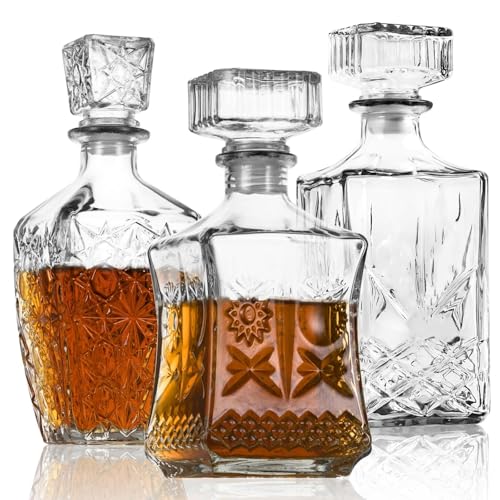

As an Amazon Associate we earn from qualifying purchases at no extra cost to you. Ratings are shown as listed on Amazon.
Quick picks by buying situation
| Situation | Best choice | Why it fits | Typical market range |
|---|---|---|---|
| Best all-around home bar | Lead-free crystal, square or rectangular, 750–850 ml | Good clarity, substantial weight, easier care than lead crystal | $35–$90 |
| Most formal display | Cut lead crystal with a fitted stopper | Maximum sparkle and traditional bar-cart appeal | $100–$350+ |
| Frequent pouring | Clear glass with a rounded pouring lip | Lighter, less precious, and easier to refill and wash | $15–$45 |
| Small bar or apartment | 500–650 ml compact decanter | Uses less shelf depth and holds one standard bottle comfortably | $20–$70 |
| Gift or centerpiece | Heavy lead-free crystal with geometric cutting | Decorative presence without the maintenance concerns of lead crystal | $60–$180 |
Lead-free glass versus crystal: which is better?
The material affects appearance, weight, sound, durability, and care more than bourbon flavor. A decanter does not improve a whiskey in the way aging in a barrel does; its main jobs are presentation, convenient pouring, and temporary storage.
Lead-free glass
Lead-free glass is the safest default for most households. Modern crystal made without lead oxide can still be highly clear and refractive, especially when it contains other mineral additives. It is generally lighter than lead crystal, less expensive, and more suitable for regular washing.
Choose lead-free glass if the decanter will be used weekly, handled by several people, or stored where accidental knocks are possible. It is also the better option if bourbon may remain in the vessel for months rather than days.
Lead crystal
Lead crystal has the dense feel, ringing tone, and faceted sparkle associated with classic barware. Brands such as Waterford and Rogaska are known for traditional crystal decanters, while some vintage and antique pieces may contain lead.
For occasional entertaining, lead crystal can be an attractive display choice. Avoid using an unmarked vintage decanter for long-term storage, however. Do not assume that a heavy, brilliant vessel is lead-free, and do not put lead crystal in a dishwasher. If the material is not clearly identified, use it for short serving periods rather than extended storage.
What capacity should a bourbon decanter have?
Capacity labels can be misleading because the stopper and headspace reduce the amount you can pour comfortably. A standard 750 ml bourbon bottle usually fits best in a decanter labeled 800–900 ml. That leaves room below the neck and prevents liquid from touching the stopper.
- 500–650 ml: best for a small pour selection, half bottles, or a compact bar. It will not hold a full 750 ml bottle.
- 750–900 ml: the most practical range for one standard bottle, with enough headspace for easy pouring.
- 1,000–1,200 ml: useful for a large entertaining setup, but often too wide or heavy for a narrow shelf.
A simple fit check helps: measure the shelf depth, then add at least 2 inches for your hand and stopper removal. A 9-inch-tall decanter may technically fit under a cabinet but still be awkward to use if the stopper cannot be lifted vertically.
Stopper seals matter more than decorative cutting
The stopper is the part most likely to disappoint. A beautiful decanter with a loose stopper can allow bourbon aromas to fade and makes the vessel easy to tip over.
Best stopper designs
- Ground-glass stopper: offers a traditional friction fit. It should seat smoothly and lift without twisting aggressively.
- Silicone or food-safe elastomer seal: usually gives the most reliable everyday closure. It is practical, though less traditional in appearance.
- Cork-lined stopper: attractive on some vintage-style designs, but cork can dry, shed, or absorb odors over time.
Look for a stopper that feels stable when the decanter is gently tilted, but do not force a glass stopper into place. A stopper that becomes stuck can require professional glassware assistance to remove safely. Replacement stoppers are not universal, so a missing or damaged stopper may make an inexpensive decanter uneconomical to repair.
Pour spouts: useful feature or unnecessary hardware?
A molded pouring lip gives a clean stream without adding another part. It is ideal for slow, controlled pours and is easier to clean than a metal or plastic spout.
Some decanters include a separate speed-pour insert. This can be useful for cocktails or a busy party, but it changes the appearance and creates another component that collects residue. Unless the decanter will be used for frequent service, a wide neck and shaped lip are usually the better compromise.
Be cautious with very narrow decorative necks. They may look elegant but can cause glugging, make it difficult to judge the pour, and prevent a proper brush from reaching the interior.
Display appeal: choose a shape that suits the room
Decanter design should match the space as well as the bourbon. A square decanter has strong visual presence and stacks neatly with rectangular barware, while a rounded decanter is easier to swirl and often feels less formal. A globe or novelty shape can be striking but may waste shelf space and be harder to grip when full.
- Faceted geometric styles: dramatic under warm lighting and well suited to a formal bar cart.
- Plain clear glass: highlights the bourbon’s color and works in minimalist kitchens.
- Heavy base designs: feel stable and premium, but verify that the shelf can support the weight.
- Colored or opaque glass: decorative, but it hides the bourbon’s color and makes the fill level harder to see.
Remember the filled weight. A 750 ml bourbon bottle contains roughly 25 fluid ounces, and bourbon itself adds close to 1.5 pounds before the decanter is included. A thick 2-pound vessel can therefore weigh more than 3.5 pounds when full.
Cleaning and ownership realities
Cleaning is where inexpensive, highly ornamented decanters can become frustrating. Bourbon leaves a sugary, aromatic film, particularly around the shoulder and stopper. Rinsing with water alone may not remove it.
A low-risk cleaning routine
- Empty the decanter completely. Do not top up old bourbon with a new bottle; this makes age and flavor difficult to track.
- Rinse promptly with lukewarm water. Avoid sudden temperature changes, which can stress glass or crystal.
- Add a small amount of unscented dish soap and warm water. Swirl rather than shaking forcefully.
- Use a soft decanter brush only if the opening permits it. Never force a brush through a narrow neck.
- Rinse several times. Fragrance left by detergent can affect the next pour.
- Air-dry upside down at an angle. A folded clean towel can support the rim while allowing water to escape.
- Wash the stopper separately. Dry it fully before replacing it to reduce trapped moisture and odor.
Cleaning beads can help with broad, smooth interiors, but they are less useful in sharply cut corners and can become trapped in ornate shapes. Dishwasher use is acceptable only when the manufacturer specifically allows it. High heat, detergent alkalinity, and contact with other dishes can cloud glass or damage delicate cutting.
Recommended types and established examples
For a traditional luxury presentation, Waterford’s crystal decanter ranges are recognizable choices, but they are best treated as display and occasional-serving pieces. Nachtmann offers decorative crystal barware with strong visual impact at a generally more accessible level. Riedel’s decanter designs are worth considering when pouring control and glassmaking quality matter more than ornate cutting.
For regular use, look for a plain lead-free glass decanter from an established tableware maker such as Bormioli Rocco, or choose a lead-free crystal model with a silicone-sealed stopper. The specific brand matters less than confirming the material, capacity, opening diameter, and replacement-stopper availability.
Final buying checklist
- Choose lead-free crystal or glass for weekly use and long-term practicality.
- Select an 800–900 ml labeled capacity for a full 750 ml bottle.
- Prefer a secure silicone-sealed or well-fitted glass stopper.
- Check that the opening is wide enough for rinsing and drying.
- Measure shelf depth, cabinet clearance, and filled weight before buying.
- Choose a shaped lip over a detachable pour spout unless fast service is important.
- Confirm dishwasher guidance and whether replacement stoppers are available.
For most home bars, the best bourbon decanters are not the most elaborate ones. A clear, lead-free, 750–900 ml decanter with a dependable seal, comfortable grip, and washable interior delivers the strongest balance of presentation and daily usefulness. Choose lead crystal when its traditional sparkle is the main reason for buying, and choose simple glass when easy ownership matters more than ceremony.

Write Your Review
No reviews yet. Be the first to share your experience!